
Family run team servicing Queensland and Northern NSW Office 07 3829 9777 Andrew 0478 751 642
Free onsite check
Questions and answers

Lawn care and sports field FAQs for South East Queensland

A lawn that's thinning out or browning off in patches, an oval that's rock hard before round one, a renovation you can't put a price on yet: here are straight answers to the questions we get asked most. Pick a topic below, or book a free onsite check and ask us on the spot.
Jobs from $220 Free onsite check Family-run in Beenleigh
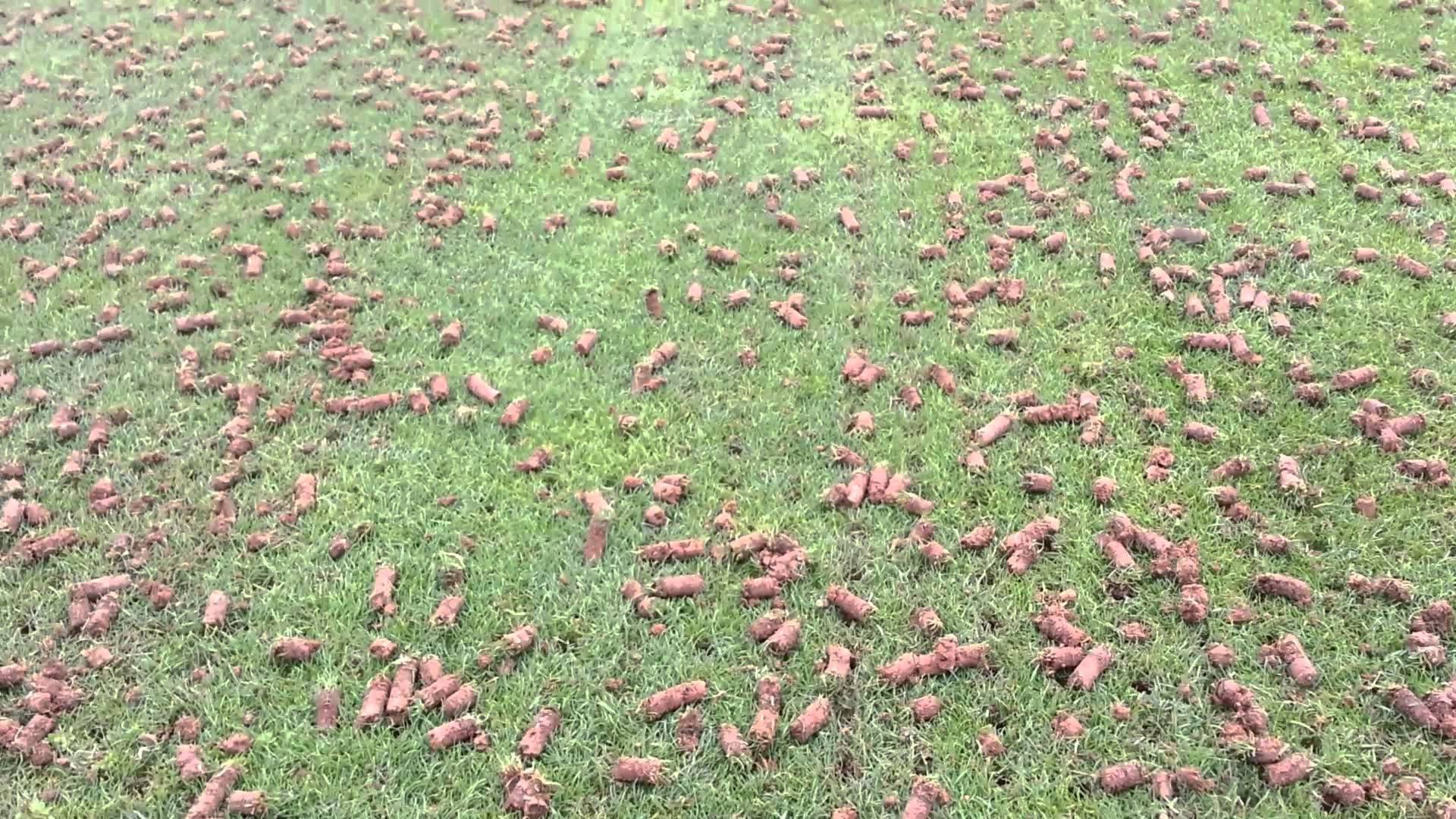
Red clay soil cores scattered across a green lawn after core aeration
Getting started

Booking and pricing

What happens at the free onsite check?
We come out and walk the lawn or field with you. We check how hard and compacted the soil is, how much thatch has built up, where water sits, and whether weeds or pests are doing damage, and we ask how the area gets used. Then we explain what we found and set out the work step by step, with a price. There's no charge and no obligation. On sports fields we usually add Clegg hammer readings.
How much do your services cost?
Jobs start from $220. Beyond that, the price comes down to the size of the area, how easy it is to get machinery in, what the grass actually needs, how much sand or soil goes on and travel for jobs further from Beenleigh. You get a firm price after the free onsite check, before anything is booked. See how pricing works for lawn renovation and for sports field maintenance.
Can you give me a price over the phone?
We're happy to talk through what's likely to be involved, but a firm price needs a look first. Two lawns the same size can need very different work: one only wants a feed, while the other is compacted clay under a thick mat of thatch that won't improve until the compaction is relieved. Seeing it means you pay for work that makes a difference, not a guess. That's why the onsite check is free.
Do you do one-off jobs, or only contracts?
Both. Most home lawns are a one-off job, usually a spring renovation, with nothing ongoing unless you want it. Sports fields can be a single job, such as a pre-season renovation or a surface hardness test, or an ongoing program with the work set on a calendar and costed for the year. A one-off job is a sensible way to see how we work before committing to a turf management program.
How do I book, and how far ahead should I call?
Ring the office on 07 3829 9777 or leave your details in the callback form at the bottom of this page, and we'll arrange a time for the onsite check. Spring is our busiest season for lawn renovation, and February to March is the peak for sports field line marking, so a few weeks' notice helps at those times. If you're working to a date, such as an event or round one, tell us when you call. All our contact details.
Home lawns

Lawn renovation

What does a lawn renovation involve?
A renovation is several jobs done together to fix the soil and thatch under the grass, not just the grass itself. Depending on the lawn, that means scarifying to clear the spongy layer, core aeration to relieve compaction, top dressing to fill the holes and level the hollows, and a feed to push new growth. Not every lawn needs every step, and we only price the ones yours does. Lawn renovation in Brisbane.
When is the best time to renovate or aerate a lawn in South East Queensland?
From September through to about December. The common lawn grasses here (couch, kikuyu, buffalo and zoysia) are all warm-season types: they grow hardest in warm soil and long days, so cores and scarified rows close over quickly, and a spring job leaves the whole growing season for the lawn to thicken. Late summer can also work if you can keep up the watering. Leave heavy work out of winter, when growth stalls and holes sit open for weeks. Why and when to aerate.
How often should I aerate my lawn?
Once a year suits most home lawns in South East Queensland. Heavy clay, or a lawn that copes with kids, dogs, parked cars or backyard cricket every day, may need a second round in late summer or early autumn, before growth slows for winter. A lightly used lawn on sandy soil can often go two years between passes. We'll tell you which group yours falls into at the onsite check. Our lawn aeration service.
What is the difference between hollow tine and solid tine aeration?
Hollow tines lift plugs of soil out and leave them lying on the lawn. That's core aeration, or coring, and it relieves compaction because the surrounding soil can loosen into the gaps. Solid tines punch holes without removing anything, which is quicker and gentler, but in heavy clay it can press the sides of each hole even tighter. If the soil is properly compacted, coring is what fixes it. More about lawn coring.
How do I tell if my lawn has too much thatch?
Part the grass with your fingers and look at the base. If there's a brown, spongy layer of runners and dead material more than 10 to 15 mm thick between the green leaf and the soil, it's holding water and fertiliser at the surface instead of letting them through. Other signs are a lawn that feels bouncy underfoot and scalps brown every time it's mown. Couch and kikuyu build thatch fastest. Dethatching and scarifying clears it before coring.
What should I do before you come to aerate or renovate?
Mow a day or two before we arrive, and water deeply the day before so the soil is soft enough for the tines to go in. Flag sprinkler heads, irrigation pipe, shallow cables and anything else buried close to the surface. Move toys, hoses and outdoor furniture, keep pets inside, and make sure we can get through the side gate. We leave aftercare notes on the day, and our guide to core aeration covers before and after in more detail.
Can you get your machines into my backyard?
Usually, yes. For home lawns we bring a Toro stand-on aerator, which squeezes through most standard side gates, so backyard access is rarely the sticking point. Let us know about tight gates, steps, steep slopes or soft ground when you book, so we bring the right gear. On acreage and large open areas we use tractor-mounted equipment, which covers the ground much faster. Acreage and horse paddocks.
Home lawns

Lawn care and pests

When should I fertilise my lawn, and what should I use?
The feed that counts most goes on in early spring, as warm-season grass starts growing again, with a second in late summer or early autumn to repair summer wear. Hungry couch and kikuyu lawns can take lighter feeds in between. Slow-release fertiliser suits most home lawns because it feeds steadily without a flush of soft growth, and feeding just after coring gets it into the root zone. Lawn fertilising and our three fertilising tips.
Why is my lawn going brown in patches?
Patches that spread fast in summer and autumn, with birds pecking at the lawn, often mean armyworm chewing the leaf or curl grubs eating the roots; if the turf peels back like loose carpet, it's grubs. Rings or blotches that show up in humid spells, or as nights turn cool and damp, can be fungal disease. Patches that stay dry after watering point to compacted or water-repellent soil. Each needs a different fix, so we find the cause first. Lawn grub treatment and lawn fungal diseases.
Can you get rid of the weeds in my lawn for good?
No one can honestly promise that. We identify the weeds, treat what's growing now with products that suit your grass type, and can put down a pre-emergent to hold back summer weeds before they come up. Some, like nutgrass and oxalis, often need a follow-up, and new seed keeps blowing in. The lasting answer is a thick, healthy lawn that leaves weeds less room. Lawn weed control and tips for tackling weeds.
What does my soil need, and should I get it tested?
Most lawn problems start in the soil, so it pays to know what's there. A lab soil test shows the pH and nutrient levels, tells you whether lime is needed, and stops you spending money on fertiliser the lawn can't use. Home lawns usually only need testing every few years, or before a renovation. Sports fields are best tested once a year. We explain the results in plain terms. Soil testing.
Do you mow lawns or offer regular maintenance?
We don't mow. Our work is the turf health side: feeding, weed control, pest treatment and renovation. The regular lawn service is a program of feeding, weed control and pest checks every eight weeks, and it works best as follow-on care after a spring renovation, once the soil has been fixed. If you'd rather book work only when the lawn needs it, that's lawn maintenance.

Still not sure what's wrong with your lawn?

Thin patches, weeds and dead spots usually have more than one cause. We'll check the soil, thatch, drainage and pests on the spot and tell you what will actually fix it. Jobs from $220.

Councils, schools and clubs

Sports fields and ovals

Do you offer ongoing sports field maintenance contracts?
Yes. A turf management program puts the year's work on one calendar, from coring and top dressing to feeding, weed spraying, hardness tests and line marking, with a cost for each item. We can line it up with your financial year, starting in July or January, and each year we revisit the scope against the latest test results. Turf management programs.
Can you price the work to fit our budget cycle?
That's how we prefer to work. Talk to us before your budget is set, ideally in autumn for a spring renovation, and we'll walk the field, test it and give you a written schedule with costs per visit and for the year. That gives you a figure for the submission and the evidence to show why the work is needed. If funding only stretches so far, we'll help you decide what to do first. Sports field maintenance.
What is a Clegg hammer test, and why does surface hardness matter?
It's a simple drop test. A 2.25 kg hammer falls down a guide tube from a set height onto the turf, and the meter records how quickly the surface stops it: the harder the ground, the higher the reading. We test across the whole field, with extra readings in the goal mouths and the centre. Hard ground is linked to more impact injuries from falls and tackles, so the readings show where work is most needed. Clegg hammer testing.
When should an oval or sports field be renovated?
For winter-sport fields, straight after the season, from about September to December, while couch is growing strongly and has time to recover before the next pre-season. Cricket ovals are usually renovated in autumn once their season ends, while there's still enough warmth for recovery. Winter is the time to avoid, because couch barely grows and cored or scarified areas stay open. Turf aeration and turf top dressing.
Will the work clash with training, fixtures or school terms?
It shouldn't. The heavy jobs, such as coring, commercial scarifying and top dressing, are booked into the off-season, school holidays or breaks in the draw, and we tell you how long each area needs to recover before play. Lighter in-season work like solid tining, feeding and spraying fits around fixtures and training. Send through your draw or term dates and we'll plan around them.
Do you provide written reports for councils and schools?
Yes. After each program visit you get a written report: the work done and which areas it covered, the product types and application rates, photos, and any issues we spotted, such as a faulty sprinkler or a corner that stays wet. Testing visits also include Clegg hammer readings set against the previous test, plus soil test results and what to do about them. Facilities managers can file the reports with safety records and use them to support budget submissions.

Planning next year's field budget?

We'll walk the field, take Clegg hammer readings and give you a costed plan for the year, ready to go into your budget submission.

Sports fields

Line marking

Which sports and layouts do you line mark?
Rugby league, rugby union, AFL, soccer, touch, cricket and athletics, including junior layouts. We use a GPS line marker, so corners are square, arcs and circles are true, and each re-mark goes down in the same position rather than drifting a little further off over the season. More on football field line marking and AFL and cricket ovals.
When should we book pre-season line marking?
Once you know which codes you're running, how many fields you need and when trials or round one begin. Autumn and winter competitions are usually set out in February or March, the busiest weeks of the marking year, so it pays to get in touch between October and January. Booking early also leaves time to sort out post positions and any surface work the ground needs first. Sports field line marking.
How often do the lines need re-marking during the season?
Weekly or fortnightly for most fields. Line paint sits on the grass leaf rather than the soil, so each mow clips some of it off. Lines fade fastest in the early rounds, when couch is still growing quickly, and last longer through mid-winter. A seasonal contract sets the re-mark schedule around your fixtures and costs the whole season up front, so you're not chasing a line marker every week. Seasonal line marking contracts.
Do you mark school athletics carnivals and cross-country courses?
Yes. We mark running tracks, lane numbers and field event areas on grass ovals, and the course line, turning points and start and finish areas for cross-country. Many Queensland schools run their carnivals in Terms 2 and 3, the same months as winter football marking, so book as soon as the date is set. We usually mark a day or two before the event. School carnival line marking.
Where we work

Service area

How far do you travel for home lawns?
We're based in Beenleigh and look after home lawns and acreage within 100 km. That takes in Logan, Brisbane Southside, the Gold Coast, Ipswich, the Redlands and the Tweed, as well as our home patch around Beenleigh. Every job is done by our own crew with our own machinery.
Do you look after sports fields outside Brisbane?
Yes. Sports fields, ovals and commercial turf are covered up to 400 km from Beenleigh, which reaches across South East Queensland and into Northern NSW: Toowoomba, the Sunshine Coast and the Northern Rivers among them. At that distance it's usually an ongoing program that makes the trip work, and travel is included in the price you're given before anything is booked.
I'm near the edge of your area. Will you still come out?
Give us a call with the address before booking and we'll confirm. Larger jobs, or several jobs done in one visit, are easier to justify at the far end of the range, and for sports fields an ongoing program usually makes the distance work. If we can't help, we'll tell you straight away rather than leave you waiting. See all our service areas.
How it works

Diagnosis first, then the work

  1. Free onsite check

    We walk the lawn or field with you and check the soil, thatch, drainage and any pest damage. On sports fields we take Clegg hammer readings too.

  2. Clear plan and price

    We explain what's actually wrong, set out the work step by step and give you a firm price before anything is booked. Jobs from $220.

  3. The work

    Our own crew brings the right machinery for the access, works around your season, fixtures or event, and leaves aftercare notes or a written report.

Free onsite check

Book a free onsite check

Tell us a little about the lawn or field and when suits you. We'll come out, look at the grass and the soil underneath, and explain what's going on and what it would take to fix, with a clear price. No charge, no obligation.

  • Jobs from $220
  • Homes within 100 km of Beenleigh
  • Sports fields across South East QLD and Northern NSW

Jobs start from $220. We'll call you back during office hours.

Call
Free onsite check