
Sports field top dressing in South East Queensland
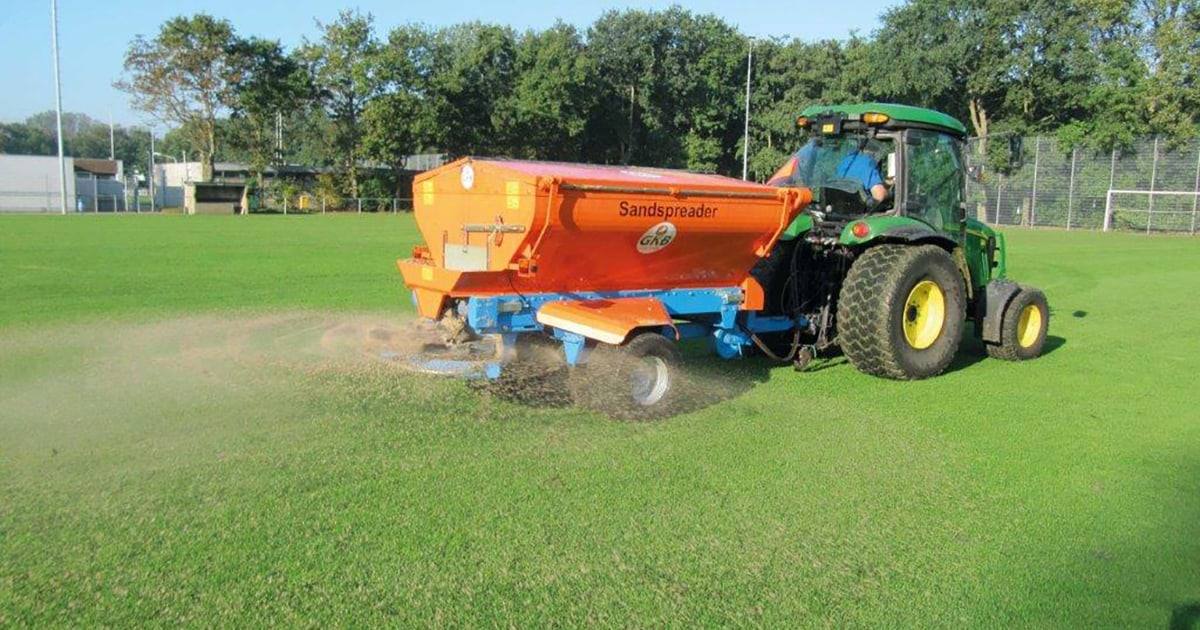
Bare goal squares, hollows that hold water and a surface that has gone soft and uneven by the end of the season. Sand top dressing levels the field, helps it drain and firms it back up before the next season, and our tractor-towed spreader puts it down evenly across a full-size oval.
- Year-round contracts costed for your budget
- In-house Clegg hammer testing and soil sampling
- Tractor-mounted aeration and top dressing gear
- Fields up to 400 km from Beenleigh
Is your field worn, uneven or slow to drain?
A season wears a field down in the same places: goal mouths, the centre circle, the wicket run-ups and the sideline where reserves stand. Add settling and thatch, and by the end of the year the surface is lumpy, soft and patchy even where it looks fine from the fence. For a school, club or council that is a player safety question before it is a looks one, because uneven footing is where ankles roll.
- Goal squares and centre circles that stay bare from one season to the next
- Hollows and low spots that hold water after rain
- A ball that bounces or rolls off line
- A spongy surface where studs sink in, often thatch that needs commercial scarifying
- Sidelines and warm-up areas worn down to bare soil
- A lip where worn turf has dropped below a wicket edge, sprinkler head or path
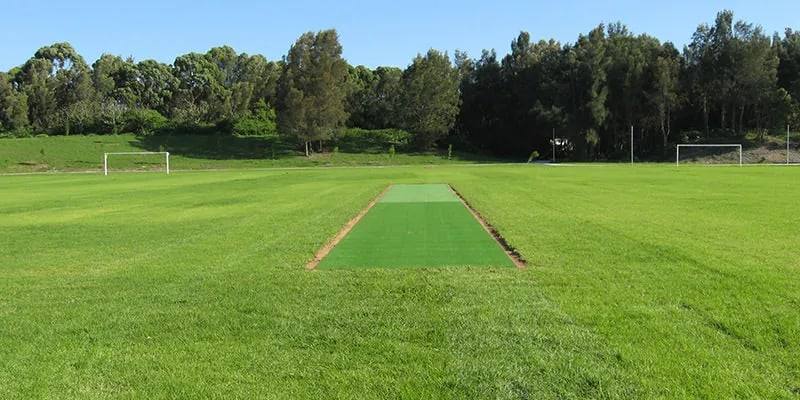
Goal squares bare and the field uneven?
We'll walk the field, check levels, wear and thatch, take Clegg hammer readings and tell you whether top dressing is the right fix and roughly how much sand it will take. Jobs from $220.
Why sand top dressing works on sports fields
Turf top dressing on a playing field means a thin, even layer of sand worked down into the surface. It does three jobs at once, and over a few renovations it changes how the whole field plays.
Levels the surface
Sand settles into hollows, divots and stud marks, and the couch grows up through it. A few millimetres at a time, low spots come back up to the surrounding level, so the ball runs true and the footing is even.
Helps it drain
Sand doesn't pack down the way clay does. Worked into core holes, it leaves channels that carry water down instead of letting it sit on top, so the field dries out sooner after rain.
Firms the surface
Sand mixed through the thatch dilutes it and firms up a soft, spongy surface. The aim is firm, not hard, and Clegg hammer readings before and after show where the field sits.
Whole field or just the worn areas?
Usually both. The whole field gets a dressing in the off-season renovation, and the areas that take the most wear get extra sand then and short top-ups during the season. Turf cricket wickets are different again: the table gets a heavy clay loam, never sand, as part of the end-of-season wicket renovation.
How much sand goes on
Little and often beats one heavy layer. A typical dressing is a few millimetres, enough to fill core holes without burying the leaf, and low spots are built up over two or three dressings. As a guide, every millimetre across a hectare is about 10 cubic metres of sand. A football field with run-off is roughly a hectare and an AFL or cricket oval can be close to twice that, which is why sand is usually the biggest cost.
Top dressing straight after coring
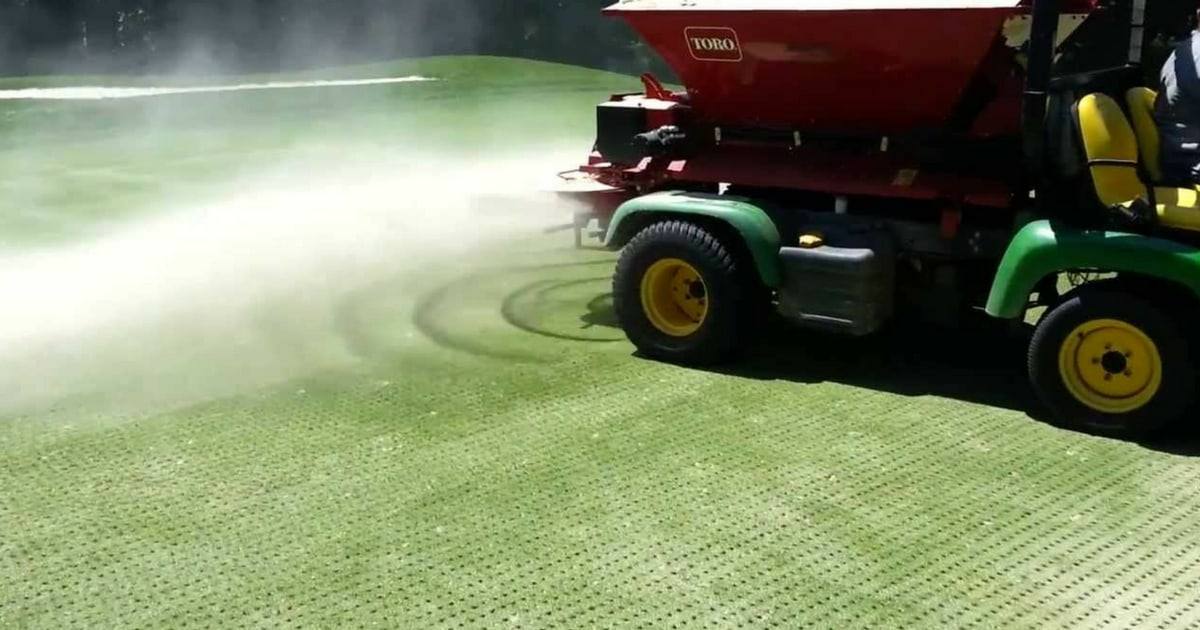
Sand spread over a hard, unopened surface mostly sits on top. Spread straight after hollow tine turf aeration, it drops into the holes. Our John Deere Aercore 800 pulls plugs from the compacted soil, the sand fills them, and each renovation adds more sand-filled channels for water and roots, building a freer-draining surface over time.
- Core first to relieve compaction and open the surface
- Deal with the cores. On sand-based fields they can be broken up and dragged back in. On heavier soils we usually collect them, so clay isn't spread over the new sand
- Dress and work it in so the sand drops into the holes instead of sitting on the leaf
- Feed while it's open. Fertiliser on the same visit gets down to the roots
When to top dress a sports field
Top dressing works best when couch is growing strongly and can push up through the sand, so in South East Queensland it gets planned around your season.
Winter codes
Rugby league, rugby union, soccer and AFL fields finish in August or September. Late September to December is the window to core, dress and feed, with summer for the field to knit together before preseason.
Cricket and summer sport
Cricket outfields and summer-use fields are best done in March and April as the season wraps up, while the soil is still warm enough for couch to recover before winter.
In-season touch-ups
Goal squares, centre circles and sidelines can take a light dressing between fixtures. In winter, when couch is barely growing, we keep to small areas and light rates.
Shared ovals that switch between cricket and football have two short changeovers, so the work is split between them. On an ongoing turf management program we lock these windows in at the start of the year. Our guide to sports field and school oval maintenance shows how top dressing fits with the rest of the year's work.
What sports field top dressing costs
Jobs start from $220, but a whole field is priced on what it actually needs. The main things that move the price:
- The area being dressed and how deep the sand goes on
- The type of sand and how far it has to be trucked
- Truck access and a place to stockpile on site
- Whether coring, scarifying or fertilising happens on the same visit
After the free onsite check you get a written plan with a firm price. For councils, schools, clubs and body corporates we can cost one renovation or a full year of work up front, to suit your budget cycle.
Why grounds managers call us
- We check before we spread: low spots, thatch depth and Clegg hammer readings, written up for you
- We explain what's wrong and lay out the work step by step
- Our own crew and machinery, including a 3 m³ tractor-towed spreader on low-impact balloon tyres
- The right dresser for the area, from greens and tennis courts to full ovals
- Family-run in Beenleigh, looking after fields up to 400 km away across South East Queensland and Northern NSW
From field walk to finished surface
Free onsite check
We walk the field with you, check levels, wear and thatch, take Clegg hammer readings and ask about your fixtures and irrigation.
Written plan and firm price
You get the sand type, depth, areas and timing laid out step by step, with a firm price costed to suit your budget cycle.
Dressing day
We need truck access and a spot to stockpile sand. We spread it, work it in and leave watering notes so it settles before play resumes.
Common questions
How much does sports field top dressing cost?
When should a sports field be top dressed?
Should we top dress with sand or soil?
Will top dressing fix a field that floods?
Can the field be used straight after top dressing?
Can you top dress small areas like greens, tennis courts or goal squares?
Book a free onsite check
We walk the field with you, take spot Clegg hammer readings, look at the soil profile, wear, drainage and thatch, and tell you whether a lab soil test is due. Then you get a clear plan and a price that fits your season and budget. No charge, no obligation.
- Jobs from $220
- Homes within 100 km of Beenleigh
- Sports fields across South East QLD and Northern NSW