When to aerate your lawn in South East Queensland, and why it pays off
Aerating a hard, compacted lawn only pays off if the grass can grow back into the holes quickly, so timing matters almost as much as the job. Here are the best months to aerate couch, kikuyu, buffalo and zoysia in South East Queensland, how often to do it, and why it's worth doing at all.
Aerate a lawn in October and the holes are grown over within a month. Do the same job in May and they sit open all winter, drying out the soil and filling with weeds. So for most Brisbane lawns the question isn’t only whether to aerate, but when. Below we cover why compacted soil holds a lawn back, then the best months to aerate each of the common grasses in South East Queensland. If your lawn is already hard underfoot and shedding water, our lawn aeration service in Brisbane starts with a look at the soil.
Why aerate your lawn at all?
Grass is only as good as the soil it grows in. Healthy topsoil is roughly half solid particles and half open space, and those small gaps are where air and water move and where roots find room to grow. Every footstep, mower pass, parked car and heavy downpour squeezes some of that space out. Clay soils, which cover much of Logan, Brisbane’s south and Ipswich, pack down faster than most.
Once the gaps close, three things go wrong at the same time:
- Roots run short of oxygen, so they stay shallow instead of growing down.
- Water can’t soak in, so it pools on the surface or runs off before it reaches the roots.
- Fertiliser stays on top, where much of it is wasted or washed away.
Aeration punches thousands of holes through the compacted layer so air, water and nutrients can move down again, and gives roots open channels to follow. Short of digging the lawn up and starting again, it’s the most practical way to relieve compaction. For a closer look at the machinery and the method, see our guide to what core aeration is. For the full list of benefits, read six reasons to aerate your lawn.
What happens if you never aerate
Compaction doesn’t fix itself. Roots and earthworms loosen the soil a little, but on a lawn that gets used every week, the ground packs down faster than nature can open it up. The decline is slow, so most people blame the weather:
- The lawn browns off within days of the first hot, dry spell.
- Thin patches appear along fences, gates and the path to the clothesline, and don’t fill back in.
- Water sits for hours after a storm, then the same spots go rock hard once they dry.
- Feeding gives a short burst of colour that fades within weeks.
- Weeds that cope with hard or poorly drained ground, such as crowsfoot grass and nutgrass, start winning the space.
By the time a lawn looks like this, more water and more fertiliser rarely help. The soil has to be opened up first.
Timing: aerate when your grass is growing
The rule that matters most: aerate when your grass is actively growing and has several weeks of good growing weather ahead of it. A lawn in full growth closes the holes over in two to four weeks, pushing new roots and runners into the open soil. A lawn that has slowed down leaves them open for months.
You don’t need a soil thermometer to judge it. If you’re mowing every week or so, runners are creeping over path edges and the colour is back after winter, it’s growing well enough to aerate.
The best months to aerate in South East Queensland
Couch, kikuyu, soft-leaf buffalo and zoysia are all warm-season grasses. They grow hardest from spring through summer and slow down through late autumn and winter. That gives a clear calendar:
| Months | What the grass is doing | Aerate? |
|---|---|---|
| September to November | Waking up and growing strongly as the soil warms | Best window for most lawns. Water first, as spring is often dry |
| December | Close to peak growth, storm season starting | Good, as long as the soil isn’t waterlogged |
| January to February | Strong growth, but heat and humidity can stress the lawn | Fine in moist soil. Avoid heatwaves and dry spells |
| March to April | Still growing, but slowing down | Good for a second pass on busy lawns. Earlier is better |
| May to August | Growth slow or stopped, winter weeds germinating | Avoid unless there’s a specific reason |
Most home lawns only need one pass a year, and spring is the time to do it. It sets the lawn up for summer, when it’s under the most pressure from heat, storms and use.
Timing by grass type
Couch
Couch is one of the quickest grasses to recover. Once it has greened up properly, usually from September, it can be cored and will close the holes within a few weeks. It also copes well with a heavier pass and with scarifying beforehand, which suits couch because it builds thatch quickly.
Kikuyu
Kikuyu is vigorous and keeps growing well into autumn, so it gives you the widest window of the lot. It’s also the most thatch-prone, so it often needs scarifying before coring for the tines to reach the soil. Anywhere from spring to late summer works well.
Soft-leaf buffalo
Buffalo varieties such as Sir Walter have thick runners and recover more slowly than couch. Wait until the lawn is growing strongly, usually from October, and core it by early summer so it has a full season to recover. Buffalo doesn’t like being scalped, so keep the mower on a high setting before and after.
Zoysia
Zoysia is the slowest grower of the four. Give it the warmest part of the year to recover by aerating from late spring into early summer, roughly November to January, and stick to a lighter pass than you would on couch.
Get the soil right on the day
The weather in the week before aeration matters too. The soil should be moist but firm: easy to push a screwdriver into, but not so wet that it sticks to your shoes.
- Too dry, and the tines bounce off hard clay and pull short, shallow cores that do little.
- Too wet, and the tines smear the sides of each hole and seal it over.
- Just right is usually a day or two after a good soaking, from rain or a long session with the sprinkler.
September and October are often dry in South East Queensland, so plan to water the lawn well a day or two before a spring job.
How often, and what to pair it with
How often. For most home lawns, one pass each spring is enough. Lawns on heavy clay, or with dogs, cars or plenty of foot traffic on them, may need a second round in late summer or early autumn. Acreage and horse paddocks packed hard by hooves and vehicles respond well to a spring pass with tractor-mounted gear.
What to pair it with. Aeration works best as part of a wider spring renovation, done in the right order:
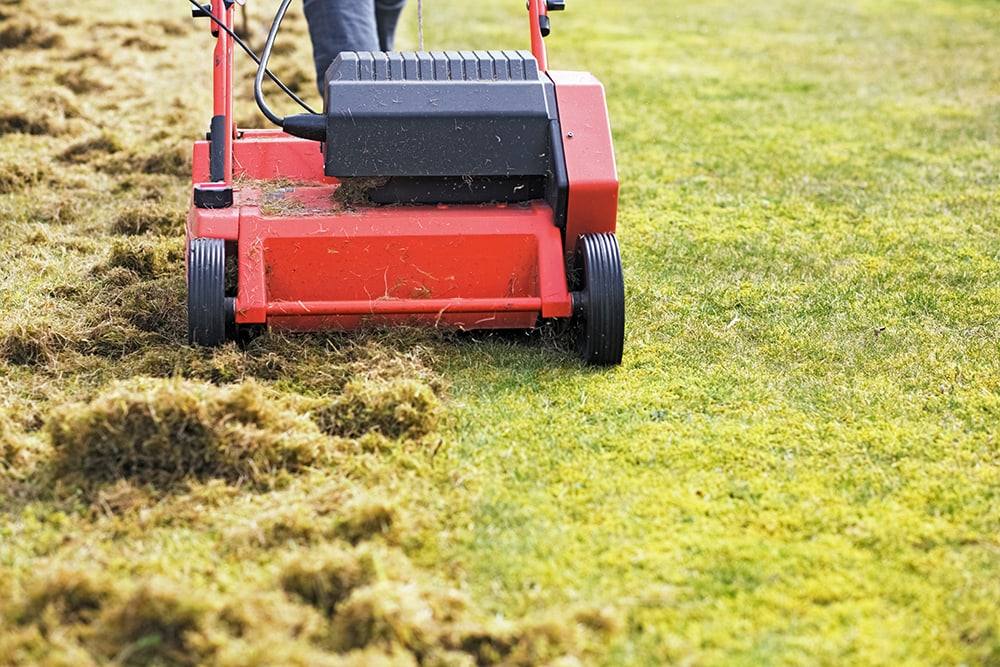
- Scarify or dethatch first if there’s a thick layer of thatch.
- Core the lawn.
- Fertilise straight away, while the holes are open. Our lawn fertilising service can do this in the same visit.
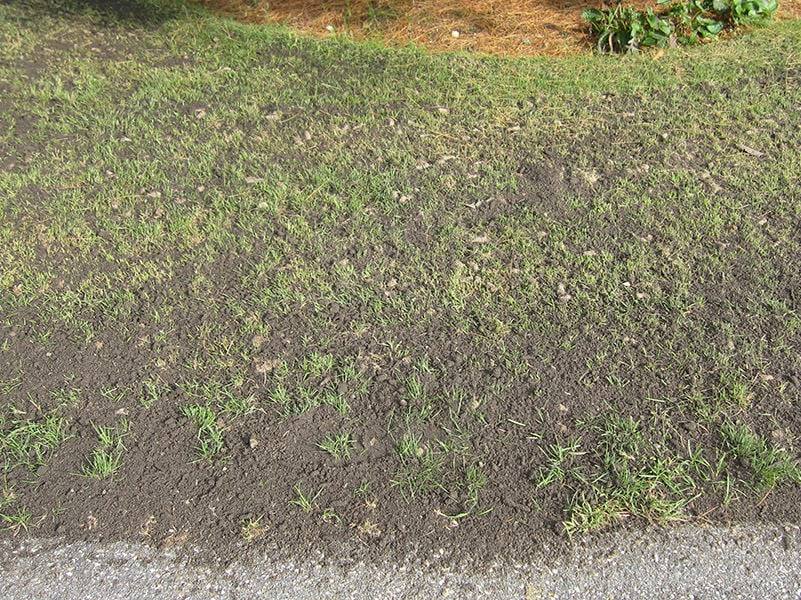
- Top dress to fill the holes and level out hollows.
- Keep up deep watering for a fortnight.
Doing these together means the lawn only has to recover once.
Plan around your calendar. If you have a party, wedding or house sale coming up, aerate four to six weeks beforehand so the lawn has time to close over and thicken up.
Timing for sports fields and ovals
Ovals follow the sporting calendar rather than the garden one. In South East Queensland the winter codes (rugby league, AFL and soccer) run roughly from March to September, so the main renovation window is spring, straight after finals. That’s when fields get their deepest coring, along with top dressing and fertiliser, so the couch has the whole summer to recover. Grounds shared with summer cricket have a much tighter spring window, so they often get a second pass in March, once cricket finishes and while the couch is still growing.
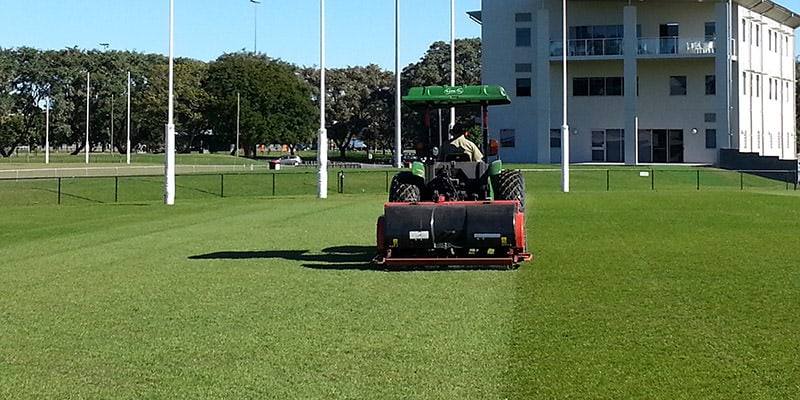
For councils, schools and clubs, it pays to book well ahead of that window so the work can be costed into the budget cycle. Our turf aeration service covers sports fields within 400 km of Beenleigh, and ongoing contracts are costed up front.
Ready to aerate?
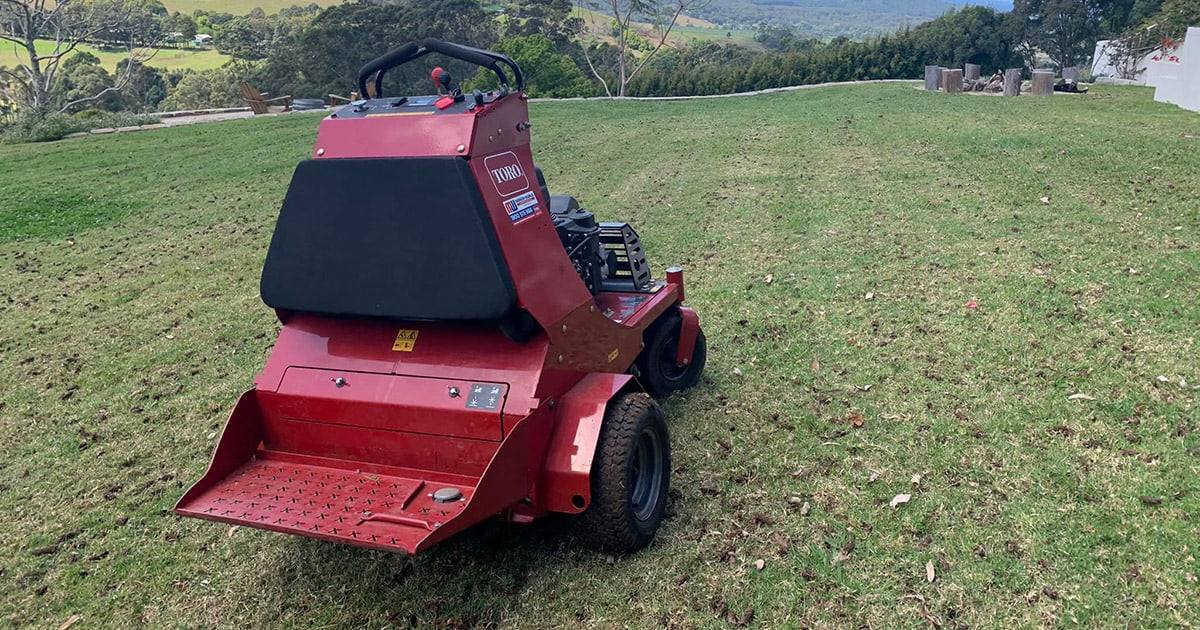
If your lawn is hard, thin or shedding water, and the grass is growing, the timing is probably right. If you’re not sure, that’s what our free onsite check is for. We’ll look at the soil, the thatch and how the lawn gets used, then tell you whether aeration will help and when to do it. Our lawn aeration service covers homes within 100 km of Beenleigh, including Logan, Brisbane Southside, the Gold Coast, Ipswich and the Redlands, and jobs start from $220. The Toro stand-on aerator we use fits through most side gates, so tight backyard access is rarely a problem.