A 3-tip guide to lawn fertilisation in South East Queensland
A well-fed lawn holds its colour, recovers from wear faster and leaves less room for weeds. These three tips cover what your soil needs, which fertiliser to use and when to feed a South East Queensland lawn.

A lawn that stays green, thick and quick to bounce back takes more than water. Grass in South East Queensland grows hard from spring to autumn, every mow with the catcher on carts nutrients away, and heavy summer rain washes nitrogen down past the roots, especially in sandy soil. Sooner or later the lawn runs short. Most people know it needs feeding, but the bag on the hardware store shelf is only half the story. These three tips cover the rest. If you’d rather not do it yourself, our lawn fertilising service in Brisbane works out what your grass and soil are short of and feeds to suit.
First, is the lawn actually hungry?
Feeding fixes a hungry lawn, but not every tired lawn is hungry. The usual signs that a feed is due:
- a pale, yellow-green colour across the whole lawn
- slow recovery after mowing, wear or a dry spell
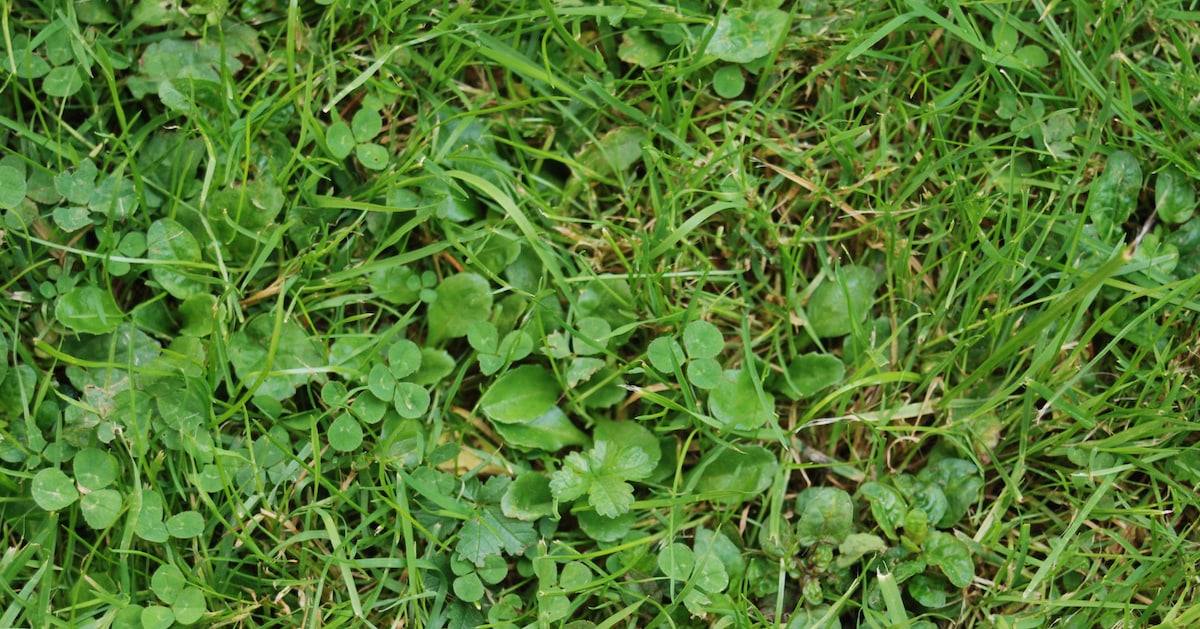
- thin patches where clover and other broadleaf weeds are moving in
- colour that comes back after a feed but fades within a few weeks
Yellow or patchy grass can also come from waterlogged or compacted soil, lawn grubs, fungal disease, or soil with a pH that locks nutrients away from the roots. Fertiliser won’t fix any of those, so it pays to work out the cause before you spend money on a feed.
Tip 1: Find out what your soil needs
A general-purpose lawn food is a best guess at what your lawn is missing. Sometimes the guess is right. Often the soil already has plenty of one nutrient and is short of another, and the money goes on the wrong thing.
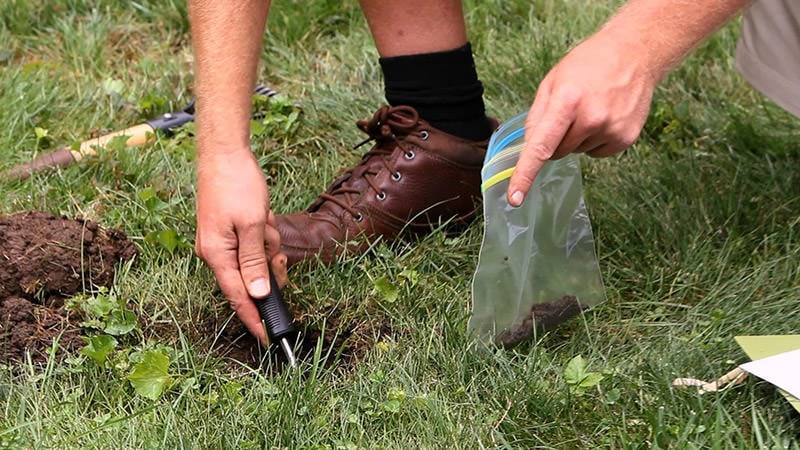
A soil test takes the guessing out. It shows:
- pH, which controls whether the nutrients already in the soil are available to the roots. Most lawn grasses like slightly acidic to neutral soil. Well outside that range, more fertiliser does little, and the fix is often lime or another amendment to bring the pH back.
- Which nutrients are low and which are plentiful, so you can pick a fertiliser with the right balance instead of paying for nutrients the soil doesn’t need.
- Organic matter and salt levels, on a full laboratory test.
A garden-centre pH kit gives a rough reading and is better than nothing. A lab test gives the full picture, and it’s worth doing if the lawn has stopped responding to feeding, has never been tested, or you’re planning a renovation. Read more about our lawn soil testing service.
Tip 2: Choose the right fertiliser
What the numbers on the bag mean
Every bag lists its N:P:K ratio, the share of nitrogen, phosphorus and potassium. Each does a different job.
- Nitrogen (N) drives leaf growth and green colour. Lawns use more of it than anything else, which is why lawn fertilisers are nitrogen-heavy.
- Phosphorus (P) supports root growth and matters most for new turf. Established lawns usually need only a little, and any extra tends to end up in creeks and waterways.
- Potassium (K) helps grass cope with heat, dry spells and wear.
Good lawn fertilisers also carry smaller amounts of magnesium and trace elements such as iron and manganese. Iron and magnesium in particular play a part in that deep green colour.
Quick, slow or controlled release
How fast the nutrients come out matters as much as what’s in the bag.
- Quick-release fertilisers dissolve almost straight away. You’ll see a colour change within days, but it doesn’t last, it’s easy to burn the lawn with too much, and whatever the grass can’t use quickly washes through the soil. Use them sparingly and at the label rate.
- Slow-release fertilisers let nutrients out over several weeks as moisture and soil life break them down. Many organic-based products work this way, as do some coated granules. They give steady growth with less risk of burn, which makes them the backbone of most feeding programs.
- Controlled-release fertilisers have granules coated in a resin or polymer that lets the nutrients out mainly in response to soil temperature and moisture. They cost more per bag but can keep feeding for months from one application, so you spread less often.
Organic, mineral or liquid?
Organic-based fertilisers made from manures and other natural materials feed gently and add organic matter that improves the soil over time. Mineral fertilisers give a precise, reliable dose of nutrients. Plenty of lawns do best on a mix of the two. Liquid feeds are taken up quickly through the leaf and roots, so they’re handy for a fast colour lift or a dose of trace elements, but they wear off sooner and work best on top of a granular base.

Tip 3: Feed at the right time and the right rate
When to fertilise in South East Queensland
Couch, kikuyu, buffalo and zoysia do nearly all their growing between spring and autumn, so that’s when feeding counts.
- Early spring (late August to September). The most important feed of the year, as the soil warms and the grass starts growing again.
- Late spring and summer. The lawn uses plenty, but lighter or slow-release feeds work best. Don’t feed a lawn that is drought-stressed, and hold off if a big storm is forecast.
- Early autumn (March to April). A feed helps the lawn recover from summer and hold its colour into the cooler months.
- Winter. Growth slows right down, and most lawns are better left until spring.
Three or four slow-release feeds a year suits most home lawns here. Couch and kikuyu are hungrier than zoysia and buffalo, and lawns on sandy soil often do better on smaller, more frequent feeds.
How to spread it evenly
Most fertiliser problems come from how it’s spread, not what’s in it.
- Measure the lawn and work out how much you need from the label rate. More is not better.
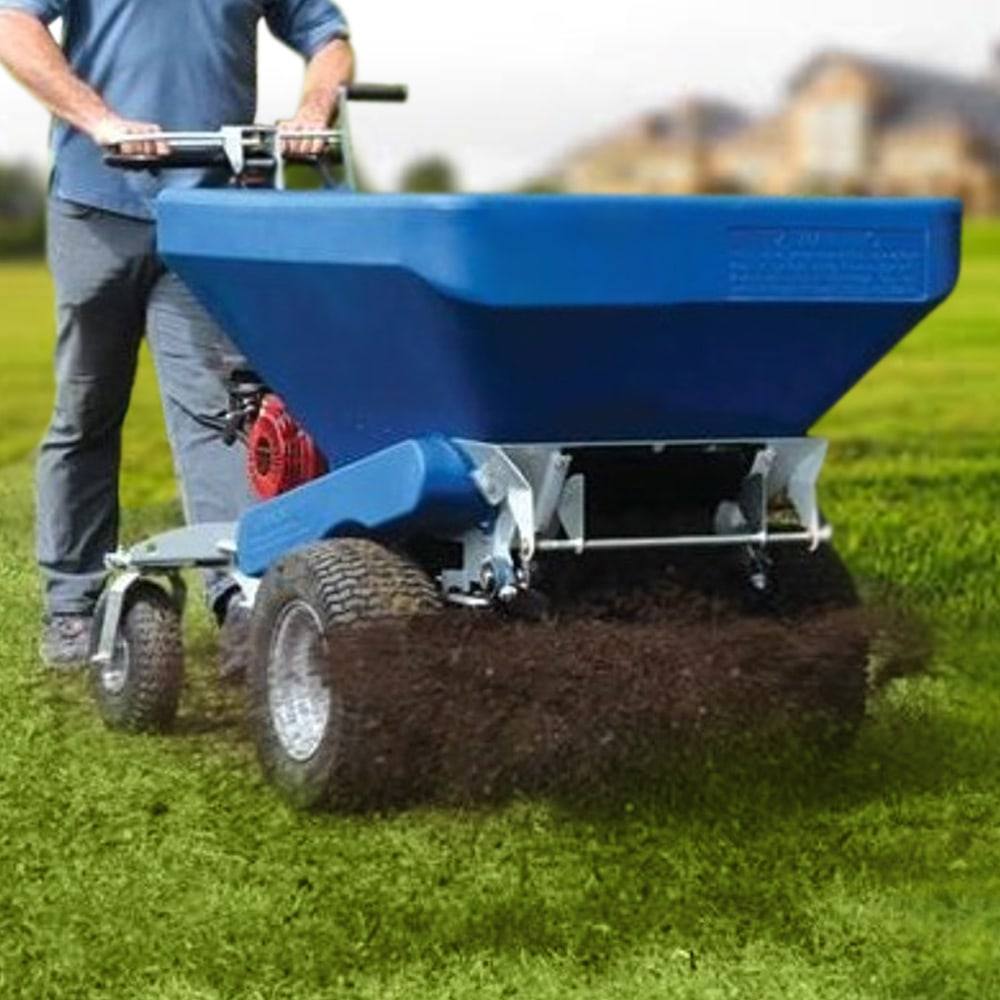
- Split it in two. Spread half walking up and down the lawn and the other half walking across it, so you don’t leave stripes.
- Spread onto moist soil, never onto a lawn that is wilting in the heat.
- Sweep granules off paths and driveways back onto the grass. Anything left on hard surfaces washes into the stormwater and out to local creeks, rivers and the bay.
- Water it in soon after, unless the label says otherwise, and keep children and pets off for as long as the label directs.
Signs you’ve overdone it
Overfeeding shows up as burnt strips or patches, a flush of soft growth that needs mowing twice a week, and a build-up of thatch over time. A lawn pushed too hard with nitrogen also grows soft and becomes more prone to disease. If that sounds familiar, ease back on the rate and switch to a slow-release product.
Get more out of every feed
Fertiliser can only feed the roots it can reach.
- Open up compacted soil. On hard clay, fertiliser and water run off instead of soaking in. Lawn aeration opens channels to the root zone, and a feed spread straight after coring drops right down the holes.
- Pair it with top dressing. If the lawn is also bumpy or thin, our guide to top dressing and fertilising together explains which goes first.
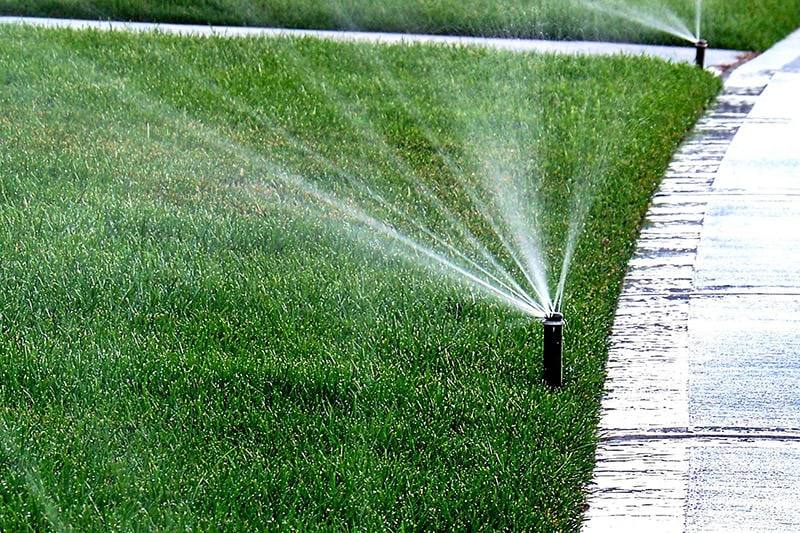
- Water deeply. Fertiliser needs water to dissolve and move down to the roots. See how to make every drop count.
- Leave the clippings when you can. Mulched clippings return some of their nitrogen to the soil.
Get the soil, the product and the timing right and a hungry lawn usually shows it within a few weeks of the spring feed. If yours doesn’t, something else is holding it back, and finding it is the first part of our job. Our lawn fertilising service looks after homes within 100 km of Beenleigh, which takes in Logan, Brisbane’s southside, the Gold Coast, Ipswich, the Redlands and the Tweed. It starts with a free onsite check: we look at the grass and the soil, suggest a soil test only if it’s worth doing, and give you a price before anything is spread.