
Lawn grub treatment in Brisbane
Brown patches that grow bigger by the day, birds pecking at the lawn, grass that lifts like loose carpet. It's often curl grubs or armyworm. We confirm which pest it is, apply a targeted treatment and help the lawn grow back.
- Family-run, based in Beenleigh
- Our own crew and machinery
- We diagnose before we price the work
- Jobs from $220
Is something eating your lawn?
Pests can take a lawn from green to straw in a week, so act on the first signs. In South East Queensland they do their worst from late summer into autumn, when warm, humid nights bring out egg-laying moths and beetles.
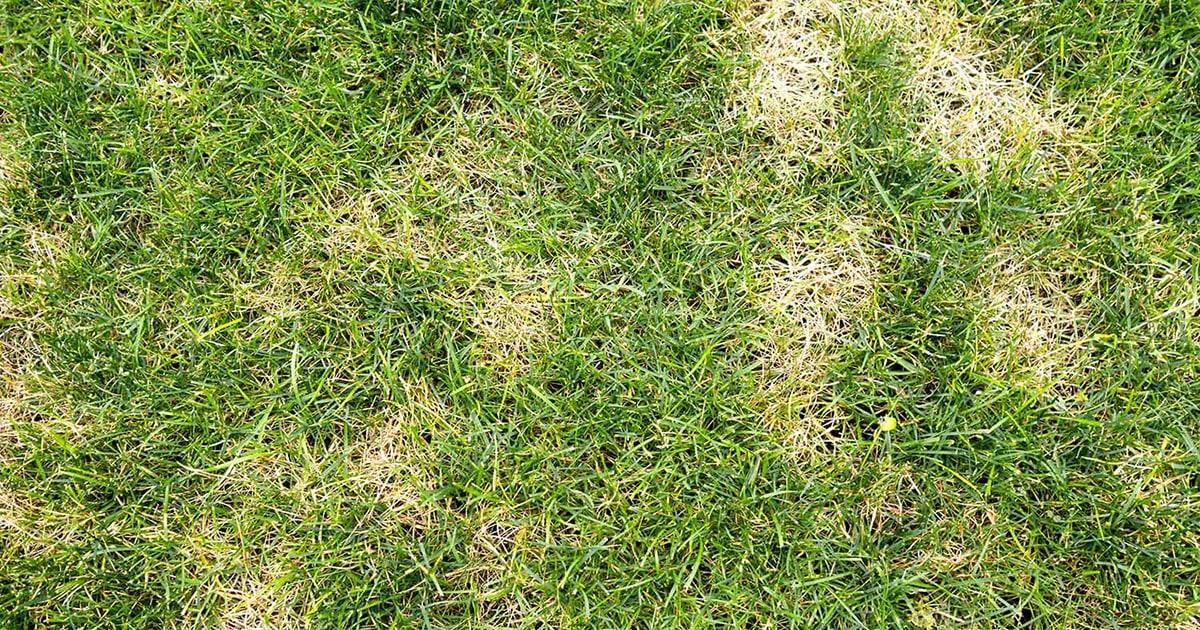
- Brown or straw-coloured patches that spread quickly
- Birds pecking and digging at the same part of the lawn
- Small brown moths lifting out of the grass as you walk across it at dusk
- Grass that pulls up like carpet because the roots are gone
- Chewed leaf tips, or patches that look mown down to the runners
- Shiny black beetles around the lawn, paths or pool
Dry patch and lawn fungal disease can look much the same from a distance, which is why we confirm the cause before treating anything.
Two quick tests for lawn grubs
The soap test, for armyworm and other caterpillars
- Add a good squirt of dishwashing liquid, about two tablespoons, to a full bucket of water.
- Pour it over about a square metre where a brown patch meets green grass.
- Give it ten minutes. The soap irritates any caterpillars sheltering in the thatch and brings them to the surface.
Or lay a wet hessian bag on the same spot overnight and lift it first thing. Caterpillars often shelter underneath.
The dig test, for curl grubs
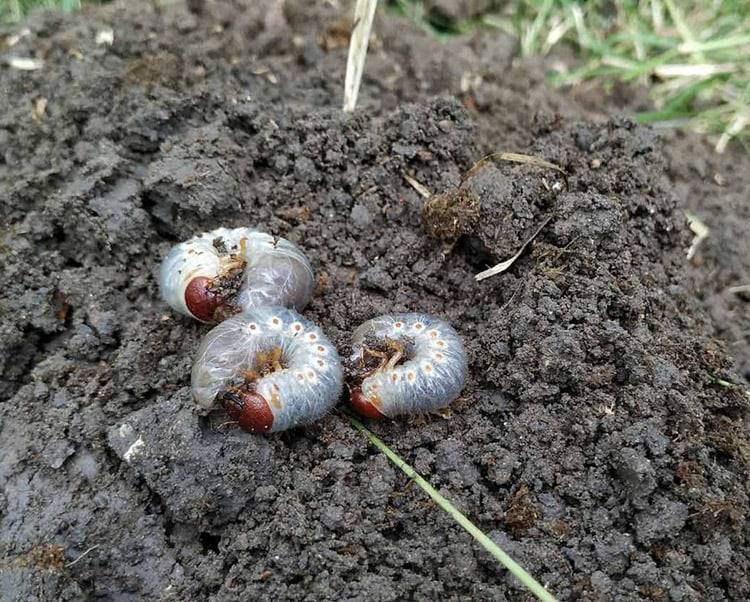
Peel back a spade-width flap of turf where dead grass meets live grass. Curl grubs are creamy white, C-shaped and sit among the roots in the top few centimetres. The odd one is nothing to worry about; several in one spot, with the roots chewed off above them, points to grubs. Our article on the signs of grubs in a lawn goes further.
Not sure what's eating your lawn?
We'll come out, find the pest, check how far it has spread and tell you straight what it will take to fix. Jobs from $220.
Armyworm, curl grubs and other lawn pests
These are the usual suspects in South East Queensland lawns. Our article on turf-eating insects covers the wider list.
Lawn armyworm
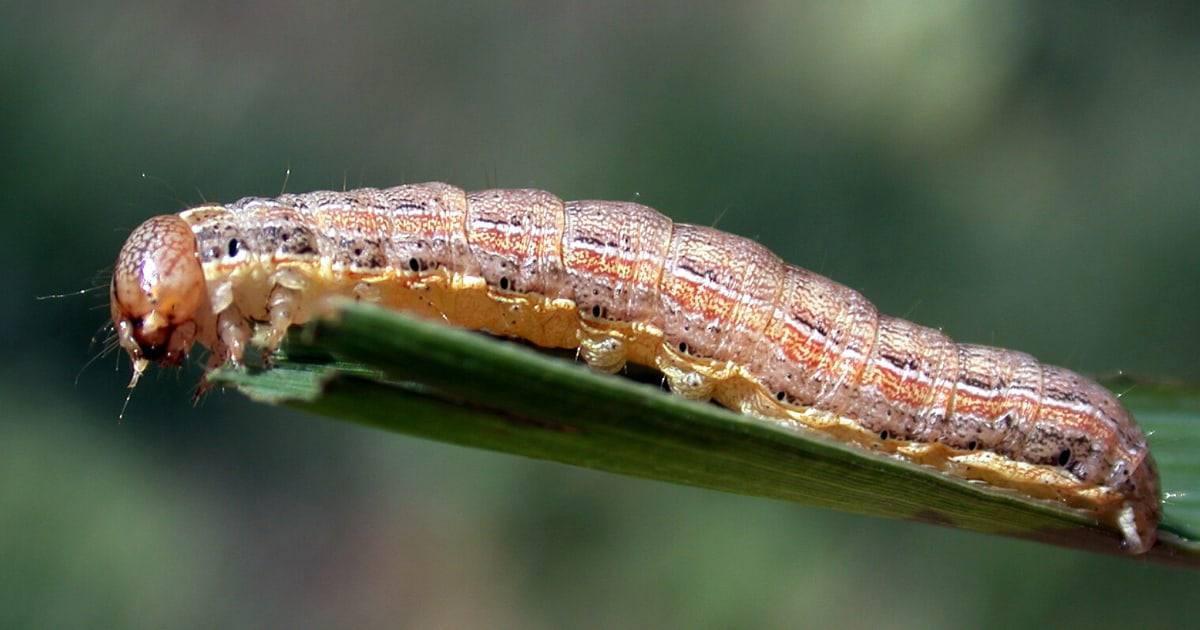
Striped green to brown caterpillars that feed on the leaves at night, often in large numbers. An outbreak can strip a lawn in days. It looks scalped, but the runners and roots usually survive.
Sod webworm
Smaller caterpillars that hide in silk-lined tunnels in the thatch and graze the leaves after dark. Look for ragged brown spots that join up, and moths flying low over the lawn at dusk.
Curl grubs and African black beetle
Curl grubs are the larvae of African black beetles and other scarab beetles. They eat the roots, so the grass dies off and comes away from the soil in your hand. Our African black beetle guide explains their life cycle.
Identify first, then a targeted treatment
Different pests feed in different places. Treating dry patch as grubs, or using the wrong product for the pest, wastes your money and leaves the real problem going.
Confirm the pest
We lift turf and run a soap test where the damage is active to see what is feeding and how far it has spread.
Treat where it feeds
Leaf feeders such as armyworm get a treatment on the grass; curl grubs need one that reaches the root zone. We also treat past the edge of the damage, where the pests are usually feeding hardest.
Check and advise
We tell you what to watch for over the next few weeks. A treatment is aimed at the pests feeding now, and can't promise to keep new moths and beetles from flying in later.
Getting the lawn back after grubs
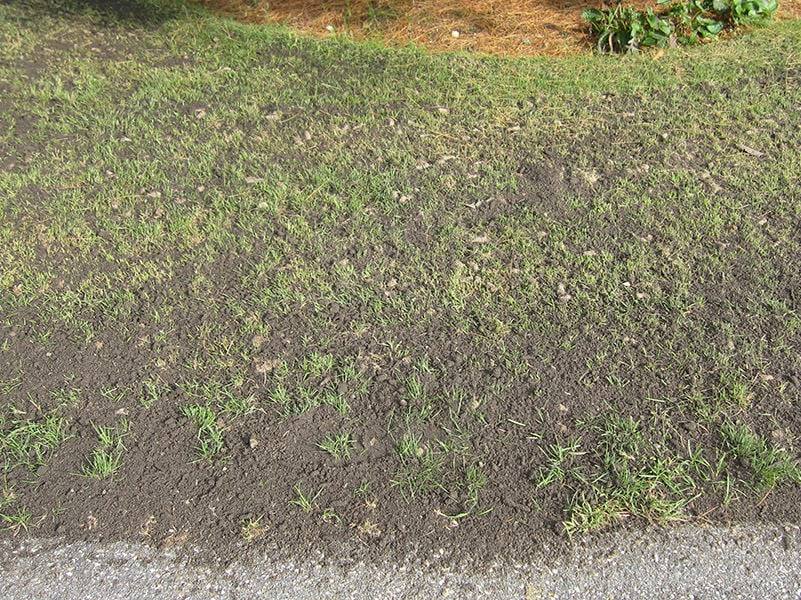
Couch, kikuyu, buffalo and zoysia all spread by runners, so if the runners survive, the lawn can grow back once the feeding stops. Armyworm only takes the leaves, and that damage tends to bounce back quickest in warm weather. Curl grubs take the roots, so those lawns are slower to recover.
- Water deeply, but not every day, to draw new roots down
- A lawn feed once the pests are under control
- Top dressing over thin and bare patches, so runners have something to grow into
- Patching or re-turfing only where the grass is completely dead
What lawn grub treatment costs
Jobs start from $220. What changes the price:
- The size of the lawn and how far the damage has spread
- Which pest it is and where it's feeding
- Whether a follow-up check or second treatment is needed
- Adding fertilising or top dressing to help the lawn recover
You get a firm price after the free onsite check, before any treatment goes on.
We find out what it is before we treat it
- The pest is confirmed before anything goes on the lawn
- You get it explained, with the work laid out step by step
- Our own crew and machinery for the treatment and the recovery work
- A family business based in Beenleigh, covering homes within 100 km
Three steps to getting on top of grubs
Free onsite check
We find the pest, check how far it has spread and rule out look-alikes such as dry patch and fungal disease.
Clear plan and price
You get the treatment, any recovery work worth doing and a firm price. Jobs start from $220.
Treatment day
We apply a targeted treatment where the pests are feeding, then leave you aftercare notes for the weeks ahead.
Common questions
How much does lawn grub treatment cost?
When are lawn grubs and armyworm worst in Brisbane?
How do I tell armyworm from curl grubs?
Can lawn grubs be prevented?
How long do kids and pets need to stay off a treated lawn?
Book a free onsite check
We'll come out, look at the grass and the soil underneath, and tell you straight what's going on and what it'll take to fix. No charge, no pressure.
- Jobs from $220
- Homes within 100 km of Beenleigh
- Sports fields across South East QLD and Northern NSW