
Lawn scarifying and dethatching in Brisbane
Lawn spongy underfoot, scalping every time you mow, browning off in patches even after rain? That's usually thatch, the mat of old runners and dead stems couch and kikuyu build up. Scarifying cuts it out so water, fertiliser and new growth reach the soil again.
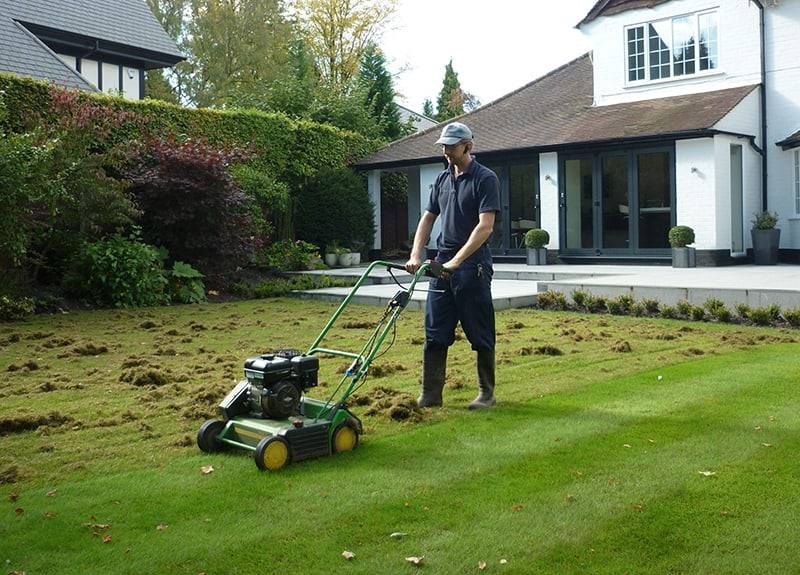
- Family-run, based in Beenleigh
- Our own crew and machinery
- We diagnose before we price the work
- Jobs from $220
Is thatch choking your lawn?
Couch and kikuyu never stop sending out runners. On a well-fed, well-watered lawn, new growth outpaces the breakdown of old stems, and a brown, spongy mat forms under the green. Buffalo and zoysia get there too, more slowly.
- The lawn gives underfoot, like walking on carpet underlay
- Every mow leaves yellow, scalped strips, even at your usual height
- Dig a little after rain and the soil underneath is still dry
- Brown, wiry runners show when you part the grass
- The lawn now sits higher than the path, driveway or garden edging
To check, lift a small wedge of turf with a spade and measure the brown layer sitting on top of the soil. Once it's past 10 to 15 mm, it's holding the lawn back.
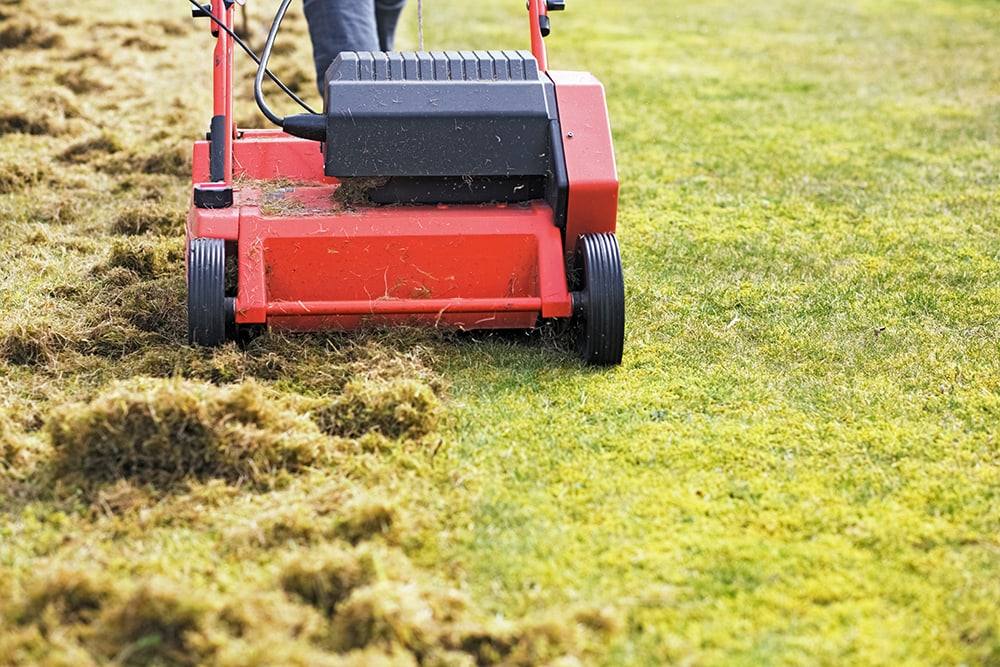
Lawn spongy, scalping and patchy?
We'll cut out a small section, measure the thatch and tell you whether it needs a light dethatch, a full scarify or something else altogether. Jobs from $220.
Dethatching, verticutting and scarifying: what's the difference?
People use the three words for the same job. What really differs is how deep the blades go and how much they take out.
Dethatching
The lightest touch. Spring tines rake dead material out without cutting into the runners. Right for buffalo, zoysia and lawns with a thin layer.
Verticutting
Shallow vertical knives thin the mat and cut through runners, which also prompts new shoots. A middle option for couch that's just starting to feel spongy.
Scarifying
The heavy option. Steel blades cut down through the full depth of thatch to the soil surface and pull the mat out. What most overgrown couch and kikuyu lawns need.
How deep we scarify
We set the blades to reach the top of the soil and stop there. On a couch lawn carrying 25 mm of thatch, that typically means mowing it right down first, then two scarifying passes at different angles. Going deeper doesn't remove more thatch; it just damages the runners and crowns the new growth comes from. Our Scarifying 101 guide covers thatch, timing and DIY pitfalls. Looking after an oval? See commercial scarifying for sports fields.
It looks worse before it looks better
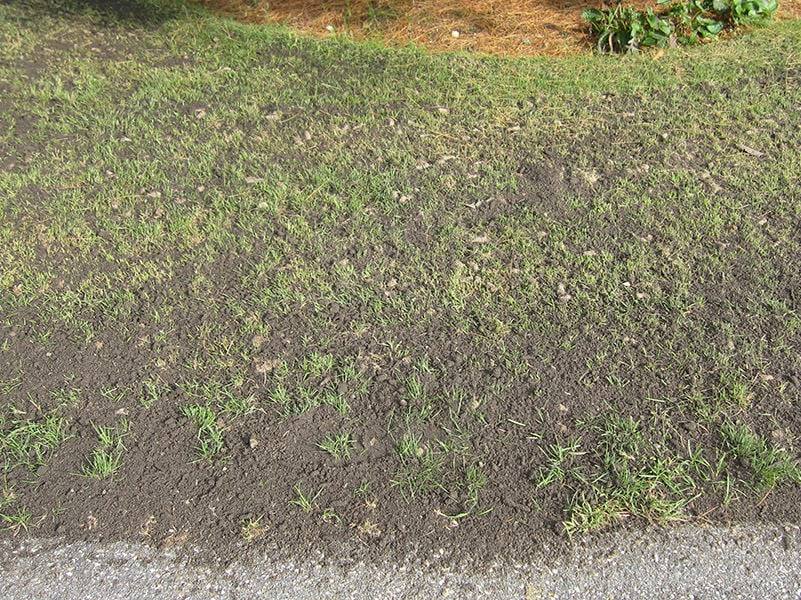
Be warned: the day we finish, a properly scarified lawn looks rough, patchy and raked over, with soil showing through. That's normal.
- Day one: scratchy and brown, with the old thatch cleared off the lawn
- One to two weeks: new green shoots push through, given warmth and water
- Three to six weeks: the gaps close and the lawn sits lower, denser and easier to mow
A light top dressing and a fertiliser application straight afterwards both help the lawn fill in faster.
Getting the most from a scarify
If the ground under the thatch is hard as well, lawn coring can follow straight after, as part of a full lawn renovation: scarify, core, feed, then top dress.
Before we arrive
- Water a couple of days before, so the soil is moist but the surface dry
- Flag sprinkler heads and any cable near the surface
- Pick up toys, hoses and dog mess
Afterwards
- Keep the soil moist for a fortnight, watering every second day if it doesn't rain
- Leave the mower in the shed for about two weeks
- Keep feet and pets off the barest parts until they fill in
What scarifying costs, and why us
Jobs from $220
- Lawn size, and access for the machine through gates and up steps
- How thick the thatch is: one pass or two
- How much debris comes out and has to be cleared
- Add-ons like coring, top dressing or fertilising
You get a firm price after the free onsite check, before anything is booked.
Why All Grass Solutions
- We measure the thatch first, and check the patches aren't really lawn grubs, disease or compaction
- We explain what we found and walk you through each step of the work
- Our own crew and machines, from courtyard lawns to acreage
- Family-run from Beenleigh, covering lawns up to 100 km away
From first look to a fresh start
Free onsite check
We lift a plug of turf to measure the thatch, check the soil underneath, and ask how the lawn is mown, watered and fed.
Clear plan and price
We tell you whether it needs a light dethatch or a full scarify, what should follow, and a firm price for the lot. Jobs start from $220.
Scarifying day
Our crew scarifies at the right depth, clears the debris off the lawn and leaves you aftercare notes.
Common questions
How much does lawn scarifying cost in Brisbane?
When is the best time to scarify a lawn in Brisbane?
Do you scarify and core on the same visit?
How often should a lawn be scarified?
Can you scarify a buffalo lawn like Sir Walter?
Does scarifying get rid of weeds?
Book a free onsite check
We'll come out, look at the grass and the soil underneath, and tell you straight what's going on and what it'll take to fix. No charge, no pressure.
- Jobs from $220
- Homes within 100 km of Beenleigh
- Sports fields across South East QLD and Northern NSW