
Clegg hammer compaction testing across South East Queensland
Players coming off sore, a ball that bounces too high and grass that won't recover all point to ground that's too hard. Our 2.25 kg Clegg hammer puts a number on it, point by point, so you know where the field is a problem and what to fix before the season starts.
- Year-round contracts costed for your budget
- In-house Clegg hammer testing and soil sampling
- Tractor-mounted aeration and top dressing gear
- Fields up to 400 km from Beenleigh
Is your field playing too hard?
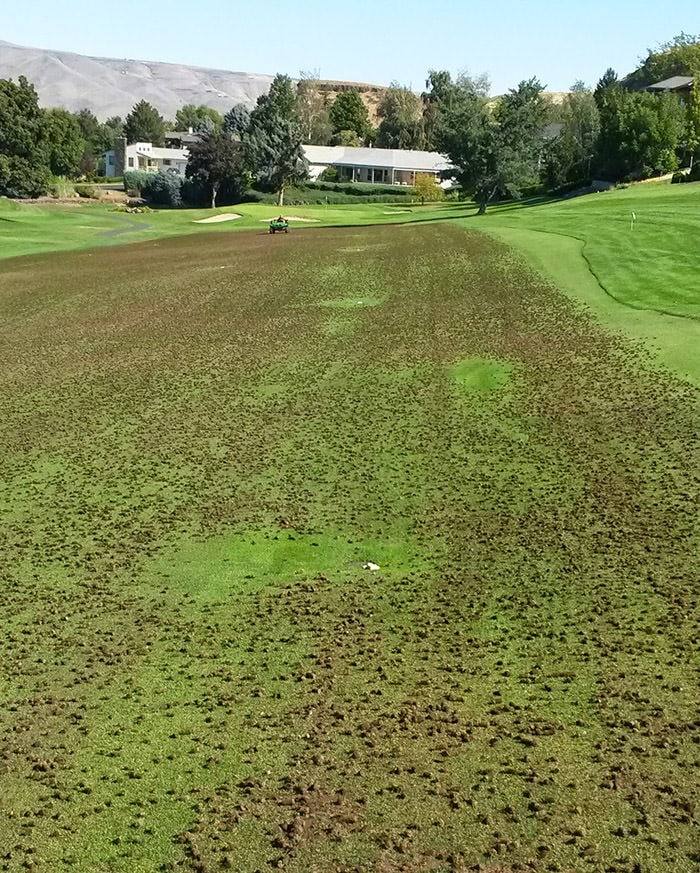
Studs, mowers, line marking rigs and maintenance vehicles all press the soil down, and a dry spell bakes it harder still. You can't always see compaction, but players and coaches feel it.
- Players come off with jarred knees, sore shins or grazes from the ground
- The ball bounces high and runs on instead of holding up
- Grass is thin or bare in goal mouths, the centre and along the race
- Water runs off or pools after rain instead of soaking in
- You aerated last year and aren't sure it made any difference
A Clegg hammer test turns that feeling into numbers you can act on, compare over time and put in front of a committee or council.
Not sure how hard your field really is?
We'll walk the field with you, take spot readings in the worst areas and tell you straight whether it needs a full survey, aeration or both. Jobs from $220.
What a Clegg hammer reading means
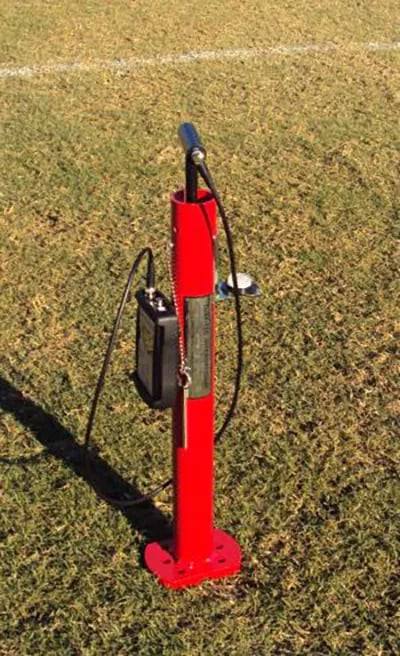
The hammer is a 2.25 kg weight that drops down a guide tube onto the turf from a set height. A sensor measures how quickly it stops, and the meter shows that as a reading in gravities, written as G or Gmax.
The higher the number, the harder the surface. Soft ground gives and slows the hammer gradually. Hard, dry or compacted ground stops it almost dead. It's a simple, repeatable stand-in for what a player meets when they hit the ground.
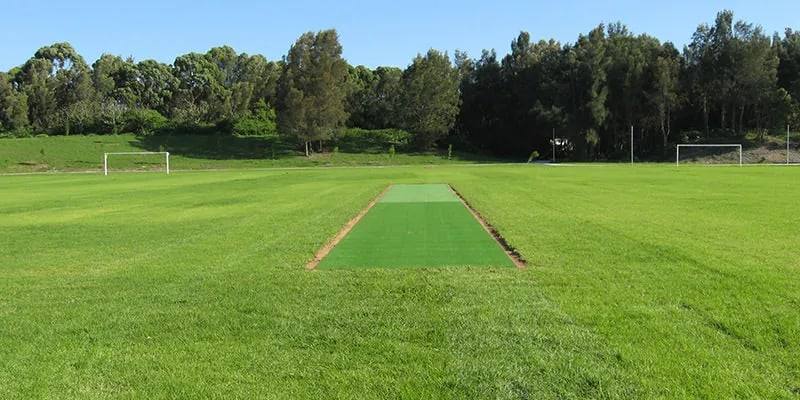
There's no single right number. A cricket square should be far firmer than the outfield, and a reading can be too low as well as too high: soft ground cuts up under studs. We compare your results with recognised guidance for your sport and explain where your field sits.
Why surface hardness matters
Player safety
Hard ground is linked to more impact injuries from falls and tackles, and more jarring through knees and ankles. For schools and councils, a documented hardness check is part of looking after the people who use the field.
How the field plays
Hardness changes ball bounce, pace and footing. A field that's rock hard at one end and soft at the other plays unevenly, and players notice.
Grass recovery
Compacted soil squeezes out air and water, so roots stay shallow and worn areas are slow to grow back. Pair the readings with soil testing to see the chemistry as well.
We test soccer and rugby league fields, AFL and cricket ovals, school ovals and play areas, and natural-surface horse tracks and arenas.
How the survey works, and what you get
Where we test
At the free onsite check we take spot readings in the known trouble areas. A full survey sets an even grid across the playing surface, with extra readings in goal mouths, the centre, wicket ends and player entries.
Every point goes on a plan so it can be retested after aeration or next season. Readings rise as the ground dries, so we note soil moisture on the day.
Your written report
- Readings for each test point on a simple field plan
- Which areas sit outside the usual range for your sport
- The likely cause: compaction, dry soil or thin grass cover
- Recommended works and timing, priced if you want them
- A suggested date to retest
It's written for whoever signs off the budget, not just the groundskeeper.
From readings to a targeted aeration plan
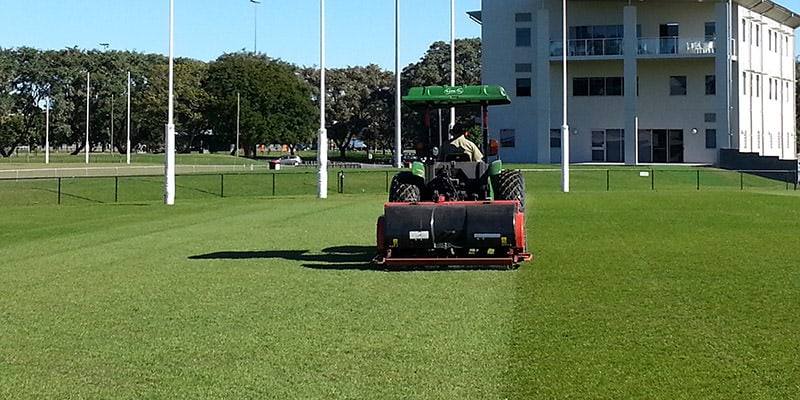
The readings show where the field is hardest, so the work goes where it does the most good. On a tight budget that might mean coring the goal mouths and centre corridor twice and the rest of the field once.
- Turf aeration with our own coring gear in the hardest zones
- Top dressing to fill the core holes and level worn areas
- Watering changes where dry soil is the cause, starting with an irrigation check
- A retest after the works, so you can see the change in the numbers
Many clubs and councils build testing into a year-round turf management program. Our guide to sports field and school oval maintenance shows how the pieces fit together.
What testing costs, and who does it
What it costs
Jobs start from $220. A survey of one field with a written report sits at the lower end. Several fields, a denser grid of test points, retesting through the season or travel to a regional ground costs more. We cover fields up to 400 km from Beenleigh.
You get a firm price after the free onsite check. On ongoing contracts we cost testing into the year up front, so it fits your budget cycle.
Why All Grass Solutions
- Our own 2.25 kg Clegg hammer, so testing isn't handed to someone else
- The crew that tests the field also does the aeration and top dressing, with our own machinery
- We explain what the numbers mean and lay out the work step by step
- Family-run and based in Beenleigh
From first visit to written report
Free onsite check
We walk the field with you, take spot readings in the problem areas and ask how it is used and when your season starts.
Clear plan and price
You get the number of test points, timing that works around your fixtures and a firm price, with any follow-up works laid out step by step.
Testing and report
We run the survey, write up the results in plain terms and recommend what to do next, then retest after the works.
Common questions
How much does Clegg hammer testing cost?
When is the best time to test a field?
Can you just do the testing if our own staff look after the field?
Will the test damage the playing surface?
What can be done if the field is too hard?
Book a free onsite check
We walk the field with you, take spot Clegg hammer readings, look at the soil profile, wear, drainage and thatch, and tell you whether a lab soil test is due. Then you get a clear plan and a price that fits your season and budget. No charge, no obligation.
- Jobs from $220
- Homes within 100 km of Beenleigh
- Sports fields across South East QLD and Northern NSW