School oval and sports field maintenance: a season-by-season guide
A practical guide for school business managers, council officers, grounds staff and club committees: what an oval needs through the year, what you can handle in-house, and when to bring in a contractor.
A school oval or club ground works harder than almost any other patch of grass. In a single week it might carry PE lessons, lunchtime games, three nights of training and a full weekend of fixtures, usually on clay soil and with barely a break between seasons. Whether you’re a school business manager setting next year’s budget, a council officer responsible for several grounds, a groundsperson keeping the field going or a club committee member wondering why the ground keeps getting harder, the question is the same: what does this field actually need, and when? This guide sets out a practical year of oval care for South East Queensland, and where a sports field maintenance contractor fits in.
Why ovals wear out, often before it shows
Most of the damage on a sports field happens below the grass, which is why a field can look fine from the boundary and still play badly.
- Compaction. Feet, mowers and maintenance vehicles squeeze the soil, clay in particular, until water and roots can’t get through. The ground gets harder as the season goes on, and harder again in a dry spell.
- Concentrated wear. Goal squares, centre circles, wicket ends and the path to the change rooms take most of the traffic and go bare first.
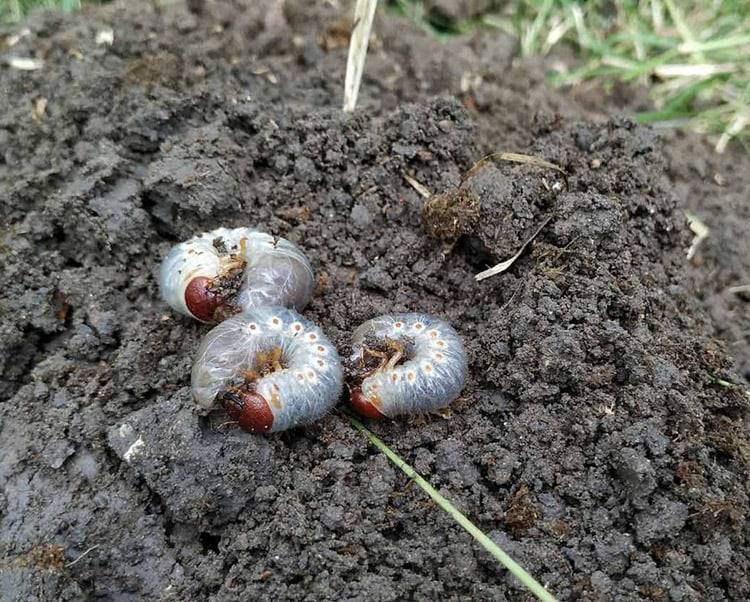
- Thatch. Couch builds a mat of runners and dead leaf at the surface. A little is fine. Too much holds water, plays spongy and harbours disease.
- Drainage. A compacted, sealed surface either sheds rain or holds it in puddles, and wet fields tear up quickly when play goes ahead.
- Too little recovery time. Couch grows hard from spring to early autumn and barely at all in winter, which is exactly when league, union, AFL and soccer are played.
Every field has its own mix of these, which is why a generic program rarely gets the most out of the budget.
Routine care versus renovation
Oval maintenance falls into two kinds of work.
Routine care keeps the field ticking over week to week: mowing at the right height, irrigation, line marking, filling divots and keeping vehicles off. Most schools and clubs handle this in-house.
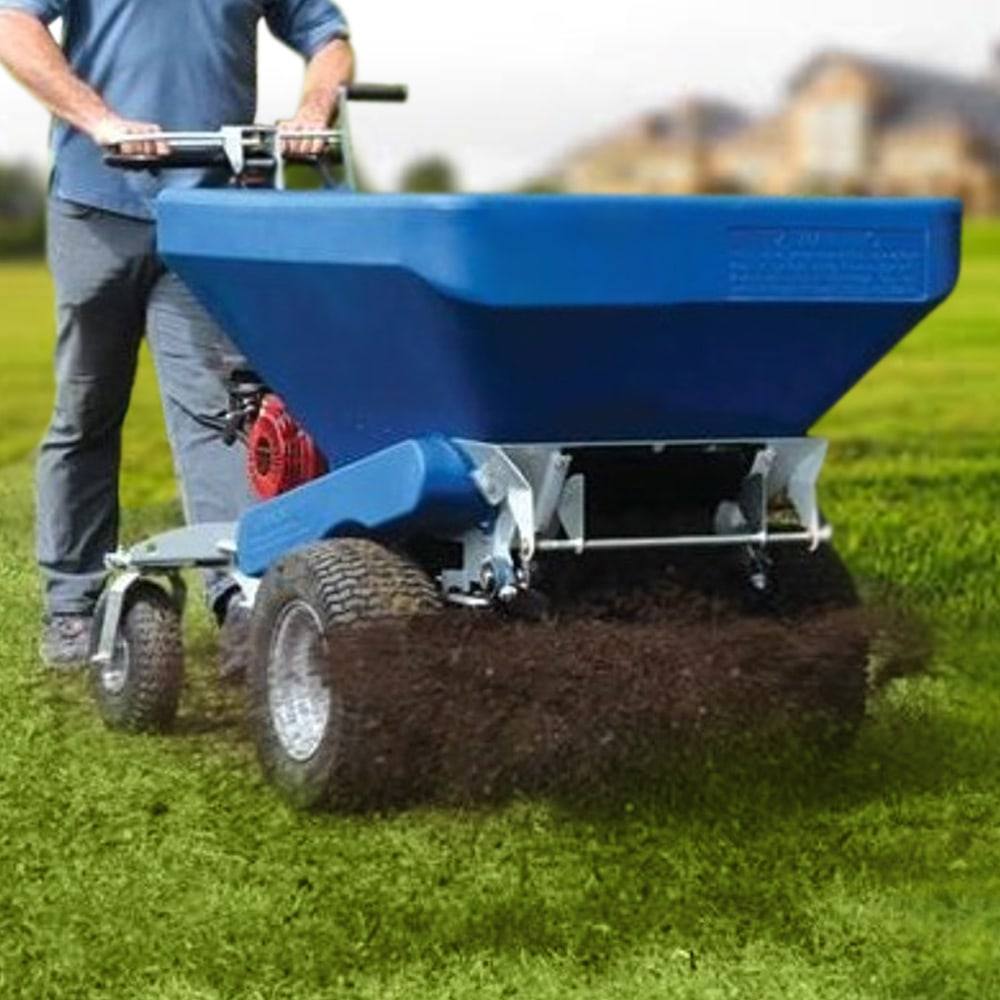
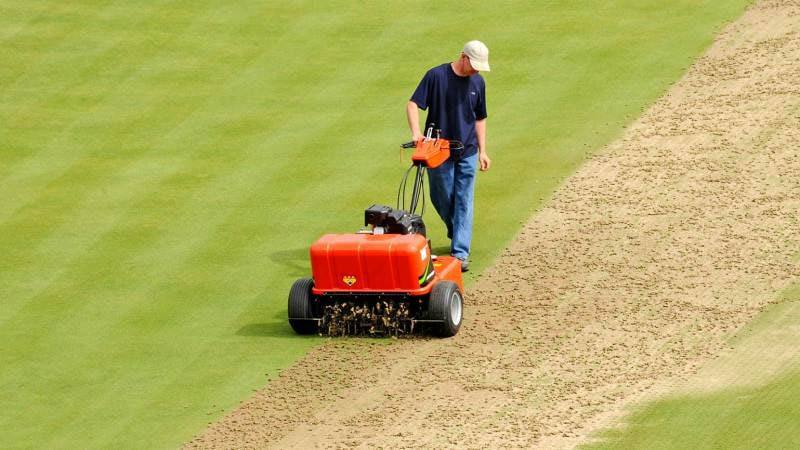
Renovation is the heavier work that fixes the soil and the surface: core aeration, scarifying, top dressing, over-seeding or re-turfing worn areas, and a fertiliser program based on soil test results. It needs specialist machinery and good timing, and a well-used field should get it at least once a year, ideally twice. Our pages on turf aeration, sports turf top dressing and commercial scarifying explain each step in more detail.
Renovation money goes furthest when it’s well timed and is largely wasted when it isn’t. Coring dormant couch in July, for example, leaves the holes open for weeks with nothing growing to fill them.
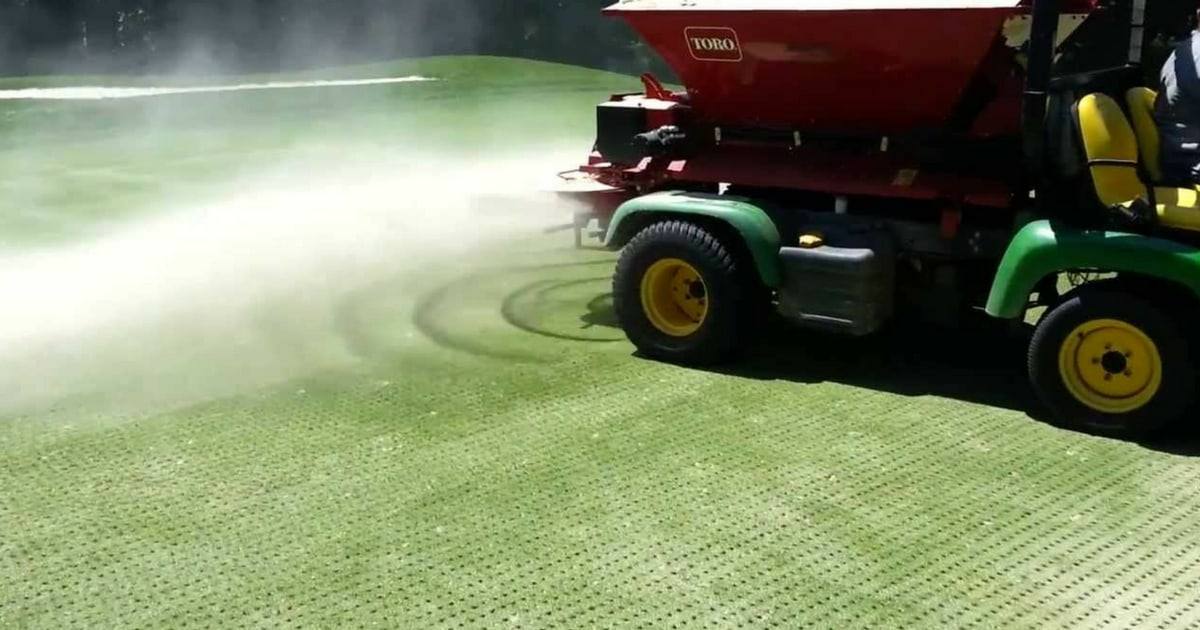
An oval care calendar for South East Queensland
Here’s a typical year on a school oval or winter-sport ground with warm-season couch. Cricket grounds usually renovate in autumn after their season, and ovals shared between summer and winter sports have to fit the work into two short changeovers.
| When | Focus | Typical jobs |
|---|---|---|
| Sep to Nov | Renovate | Core aeration, scarifying where needed, sand top dressing, over-seed worn areas, soil tests |
| Dec to Feb | Grow in | Fertilise, keep the water up, spot weed control, check irrigation coverage, watch for armyworm |
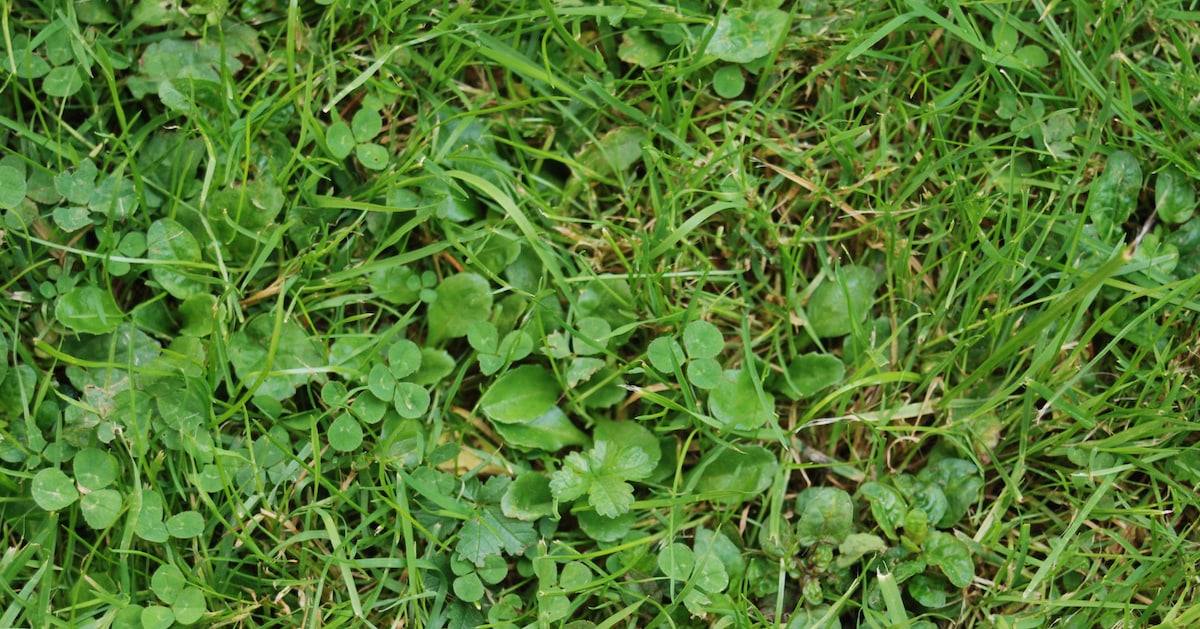
| Mar to May | Get season-ready | Clegg hammer readings, repair hard and bare areas, pre-emergent timing for winter weeds such as bindii, a feed before growth slows |
| Jun to Aug | Play and protect | Mow a little higher, repair divots and goal mouths, rotate training areas, hardness checks in dry spells, cost the spring renovation |
For school ovals, the September holidays are a handy window for the main renovation, and the long summer break suits a second pass on busy fields, as long as someone can keep the irrigation running while the school is empty.
Plan around your own calendar too. Athletics carnivals, cross country, gala days and finals all need the surface at its best, so put them on the plan first and fit the heavy work around them, leaving enough growing weeks for renovated areas to knit back. Book line marking for school carnivals once the surface is ready. Our turf management programs are built from exactly this kind of calendar.
Measuring hardness instead of guessing
A green oval isn’t necessarily a safe one. Firm, dry ground makes every fall, dive and tackle land harder, and it’s commonly linked with more lower-limb injuries over a season. Walking across it won’t tell you how hard it really is.
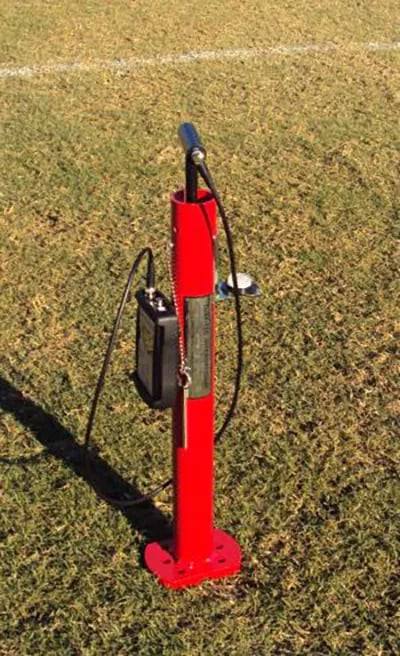
A Clegg hammer will. Ours is a 2.25 kg weight that falls down a guide tube, and the reading shows how sharply the surface stops it. We test each part of the ground separately, from the goal squares and centre to the less-used edges, and note the soil moisture on the day, because readings climb as the ground dries. Comparing the zones shows where the hard spots are and what’s behind them, whether that’s dry soil, compaction, thin grass cover or a combination.
The real value is in retesting after the work. Before and after readings show whether a renovation actually softened the surface, which is useful evidence for a committee, a council officer or a business manager approving next year’s spend. More on Clegg hammer compaction testing.
What grounds staff can do in-house
Good day-to-day habits make every renovation dollar go further. Build these into the routine:
- Mow often, at a consistent height, and never remove more than about a third of the leaf at once. Lift the height a little going into winter so the couch has more cover to wear.
- Water deeply and less often rather than a light daily sprinkle, so roots grow down instead of staying near the surface. Check sprinkler coverage for dry spots.
- Move training around. Shift portable goals, drills and warm-up areas each week so the same strip isn’t worn to dirt.
- Rest the field after heavy rain where you can. Play on a saturated surface does far more damage than the same game on firm ground.
- Keep cars and maintenance vehicles off wet ground, and stick to one track when they have to go on.
- Repair divots and small bare areas promptly with a sandy divot mix, adding seed while the couch is growing, before they spread.
- Keep records of when the field was mown, fed, renovated and tested. It makes planning and budgeting far easier.
When to bring in a contractor
Some work needs machinery and experience most schools and clubs don’t have on hand. Call in a contractor when:
- the field gets harder every season and small-scale coring hasn’t helped
- water lies on the surface for a day or more after rain
- a thick, spongy thatch layer has built up
- worn areas aren’t recovering, even through the growing season
- you need hardness readings and a written report for a committee or council
- a carnival, finals series or event is coming up and the surface has to be right
- the budget needs a costed scope of work for the year
A good contractor starts by testing the field and explaining what’s wrong, not by selling a standard package. Ask for the work laid out in order, with timing against your season, a cost against each stage and follow-up testing so you can see the result.
Budgeting: one-off jobs or an ongoing contract
Most schools, clubs and councils plan grounds spending a year at a time, so the earlier a field’s needs are known, the easier they are to fund.
- One-off renovations suit a field that needs work now, such as a pre-season renovation before round one or recovery work on a ground that’s been let go. Single jobs start from $220.
- Ongoing contracts set out every visit for the year with its cost agreed in advance, so the grounds budget holds and small problems are caught before they turn into a rescue job.
Either way, the price comes down to how big the field is, how many fields are included, which works are needed, how much sand the top dressing takes and how far we travel. We give a firm price once we’ve walked the field at the free onsite check, and a contract is costed for the whole year.
Getting started
Our sports field maintenance service works with schools, councils, sporting clubs and body corporates up to 400 km from Beenleigh, across South East Queensland and Northern NSW. It starts with a free onsite check: we walk the field with you, check hardness with the Clegg hammer and look at wear, thatch, levels and drainage. Then we set out the work stage by stage, with a cost you can take to the committee or put straight into the budget. If your field needs work before next season, the earlier we see it, the more options you have.