
Turf aeration for sports fields in South East QLD
If the field is hard underfoot by mid-season, water sits on top after rain and the grass keeps thinning in the goal mouths and down the middle, the soil underneath is most likely compacted. Aeration opens it back up so water, air and roots get down again, and the surface plays softer and safer.
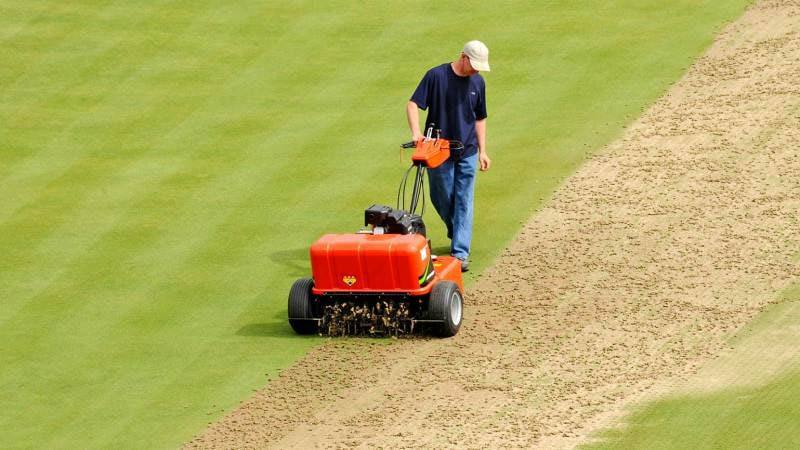
- Year-round contracts costed for your budget
- In-house Clegg hammer testing and soil sampling
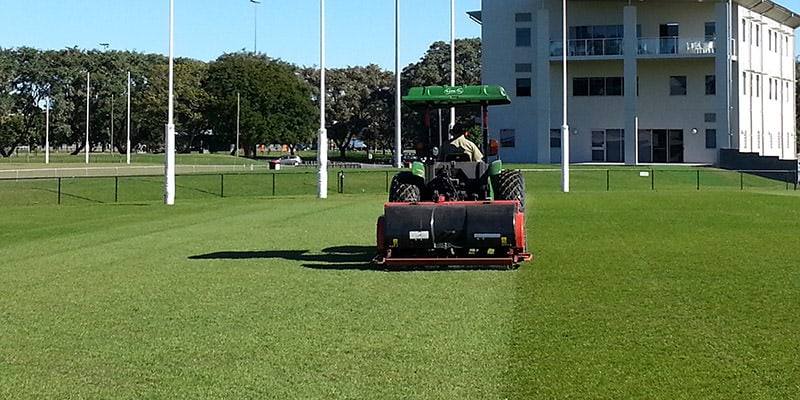
- Tractor-mounted aeration and top dressing gear
- Fields up to 400 km from Beenleigh
Why sports fields set hard
Every training run, game and maintenance pass presses the soil down a little further. On the clay-based soils under many South East Queensland fields, the top few centimetres pack into a dense layer that roots can't get through and water can't soak into. The grass thins, the surface hardens, and players feel it in every tackle and fall.
- Clegg hammer readings climbing, or players and coaches saying the ground is hard
- Water ponding after rain and slow to drain away
- Thin or bare turf in goal mouths, the centre and warm-up areas
- Turf tearing out under studs because the roots are shallow
- Dry patches even when the irrigation runs
- Crowsfoot grass, bindii and other weeds that cope with hard ground moving in
Aeration punches thousands of holes through that layer. Roots follow the channels down, rain soaks in instead of running off, and the surface gets some give back. Our guide to core aeration explains the basics.
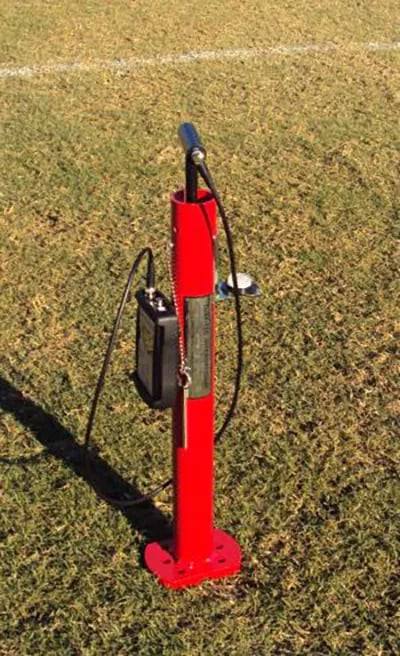
Is the field getting harder every season?
We'll take Clegg hammer readings across the field, pull a soil profile and check thatch and drainage, then tell you which aeration will help and when. Jobs from $220.
Hollow, solid or deep tine: choosing the right aeration
The right method depends on how deep the compaction goes, what the soil is made of and how much play is coming up.
Hollow tine coring
Hollow tines pull out plugs of soil and thatch, which relieves compaction and leaves room for roots and sand. It's the method that changes a surface, but it disrupts play for a while, so it belongs in the off-season.
Solid tine aeration
Solid tines open the surface without removing soil. It's quick, the field can usually be played on the same day, and regular passes through the season stop the surface sealing over and help water soak in.
Deep tine and decompaction
Longer tines reach below the hard layer that forms where regular coring and traffic stop, and loosen the root zone underneath. It's done less often, when a soil profile shows the compaction runs deeper than standard tines reach.
Looking after a home lawn instead? See our lawn aeration service in Brisbane.
The right machine for the field and the access
We run our own gear, so the machine suits the field rather than whatever was free at the hire yard that week.
- John Deere Aercore 800 for hollow and solid tine aeration on playing fields, with tines chosen to suit the depth and the season
- Toro stand-on aerator for smaller school fields, goal areas and grounds behind narrow gates
- 2.25 kg Clegg hammer to measure surface hardness, so the work is based on readings
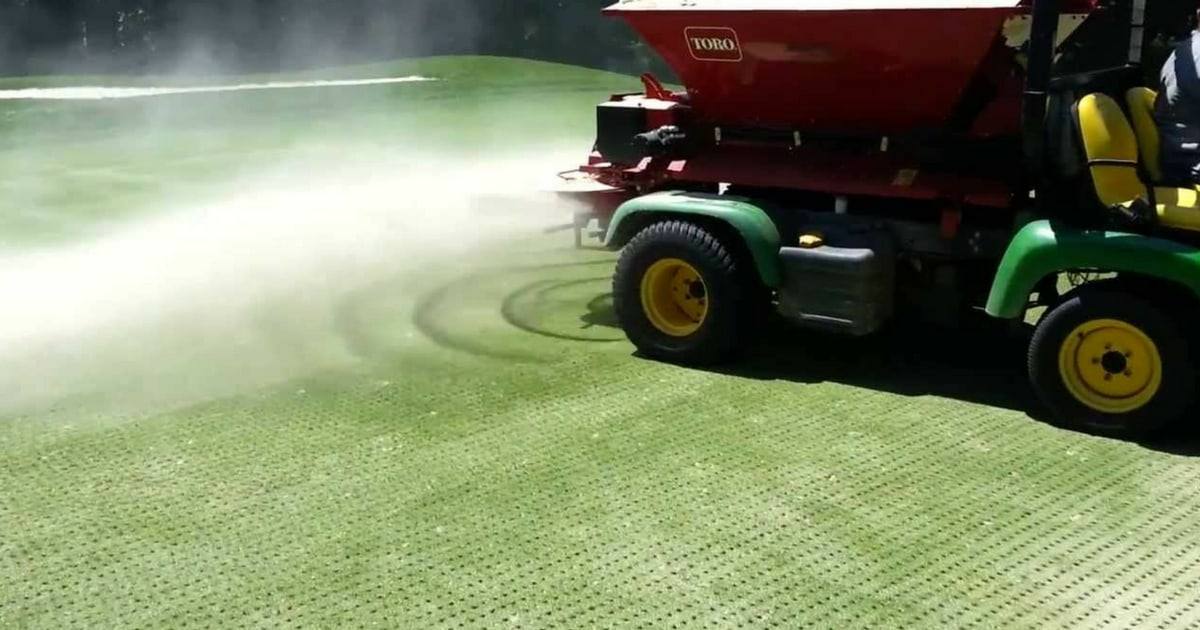
- 3 m³ tractor-towed sand spreader, plus a Metermatic Top Drop for goal squares, to spread sand straight after coring
If the field also carries a lot of thatch, we scarify first so the tines go into soil, not a spongy mat.
When to aerate around the playing season
Aeration has to fit two calendars: the grass's and the fixture draw's. Couch fields in South East Queensland recover fastest from spring to early autumn, when it's warm and the grass is growing strongly.
Off-season coring
Hollow tining goes in once the season ends: September to December for winter football fields, March for summer cricket grounds while it's still warm. The couch needs two to four weeks of growing weather to close up before play resumes.
In-season solid tining
A solid tine pass every month or two keeps water soaking in and helps stop the surface setting hard, with almost no disruption. We fit it between rounds, around training nights.
Before round one
A pre-season Clegg hammer test shows where the surface sits. If readings are high, a solid tine pass and a good watering a few weeks out can take the edge off before the first game.
Schools usually book coring for the September or summer holidays, clubs for the weeks after their last game, and councils can have several grounds done in one run, costed for the financial year. We don't core soil that is waterlogged, where the tines smear and seal the holes, or bone dry, where they barely go in. If the weather turns, we move the date.
Core processing, top dressing and feeding
What happens in the days after coring decides how much the field gains.
- Core processing: the cores dry out, then get broken up and dragged back across the surface so the soil refills the holes
- Core removal: on heavy clay the cores can be collected and taken away, and the holes filled with sand instead
- Sand top dressing fills the holes, levels wear and, over a few seasons, builds a surface that drains and resists compaction
- Fertilising straight after gets nutrients into the root zone, with rates set from a soil test
- Over-seeding worn areas while the surface is open, where it suits the grass and the time of year
Measured before and after, priced before we start
Clegg readings before and after
How hard a field plays is easy to argue about and simple to measure. A 2.25 kg Clegg hammer dropped at set points across the field, with extra readings in the high-wear zones, gives a hardness figure for each zone. A follow-up test after the work, written up with notes on root depth and thatch, shows what changed. More on Clegg hammer testing.
What sports field aeration costs
Jobs start from $220. A full field is priced on the area, the method, the number of passes, the follow-up work and travel from Beenleigh. You get a firm, itemised price after the free onsite check.
Planning the next renovation? Call 07 3829 9777
Why All Grass Solutions
- We diagnose before we price
- Our own crew and machinery
- Family-run, based in Beenleigh
- Work explained step by step
- Fields up to 400 km away
Aeration works best as one part of a planned year. See how it fits into a turf management program or our wider sports field maintenance, and read our article on looking after school ovals and sports fields.
Three steps to a softer, safer field
Free onsite check
We test the field and dig a soil profile to see how deep the compaction goes. Have your season draw handy so we can talk dates.
Method, timing and price
You get the aeration method, the follow-up work worth doing, dates that suit your draw and a firm price. Jobs from $220.
Aeration day
Our crew does the work, deals with the cores and leaves you notes on watering and when the field can be used.
Common questions
How much does sports field aeration cost?
When is the best time to aerate a sports field?
How soon can the field be used after aeration?
Hollow tine or solid tine: which does our field need?
How often should a sports field be aerated?
Is there anything we need to do before and after aeration?
Book a free onsite check
Tell us where the field is and when your season finishes. We'll walk it with you, test how hard it plays and recommend the aeration method, timing and follow-up work, with a firm price. No charge, no obligation.
- Jobs from $220
- Homes within 100 km of Beenleigh
- Sports fields across South East QLD and Northern NSW