What is core aeration, and does your lawn need it?
Core aeration pulls small plugs of soil out of a compacted lawn so air, water and fertiliser can get back down to the roots. Here's how it works, how to tell if your lawn needs it, and when to do it in South East Queensland.
Walk across a lawn that has had a few busy years and you can often feel it. The ground is hard, water sits on top after rain, and the grass is thin wherever people and pets walk most. More often than not the problem isn’t the grass. It’s the soil underneath, packed so tightly that roots, water and air can’t get into it. Core aeration is the most reliable way to fix that, and it’s what our lawn aeration service in Brisbane is built around.
What core aeration actually is
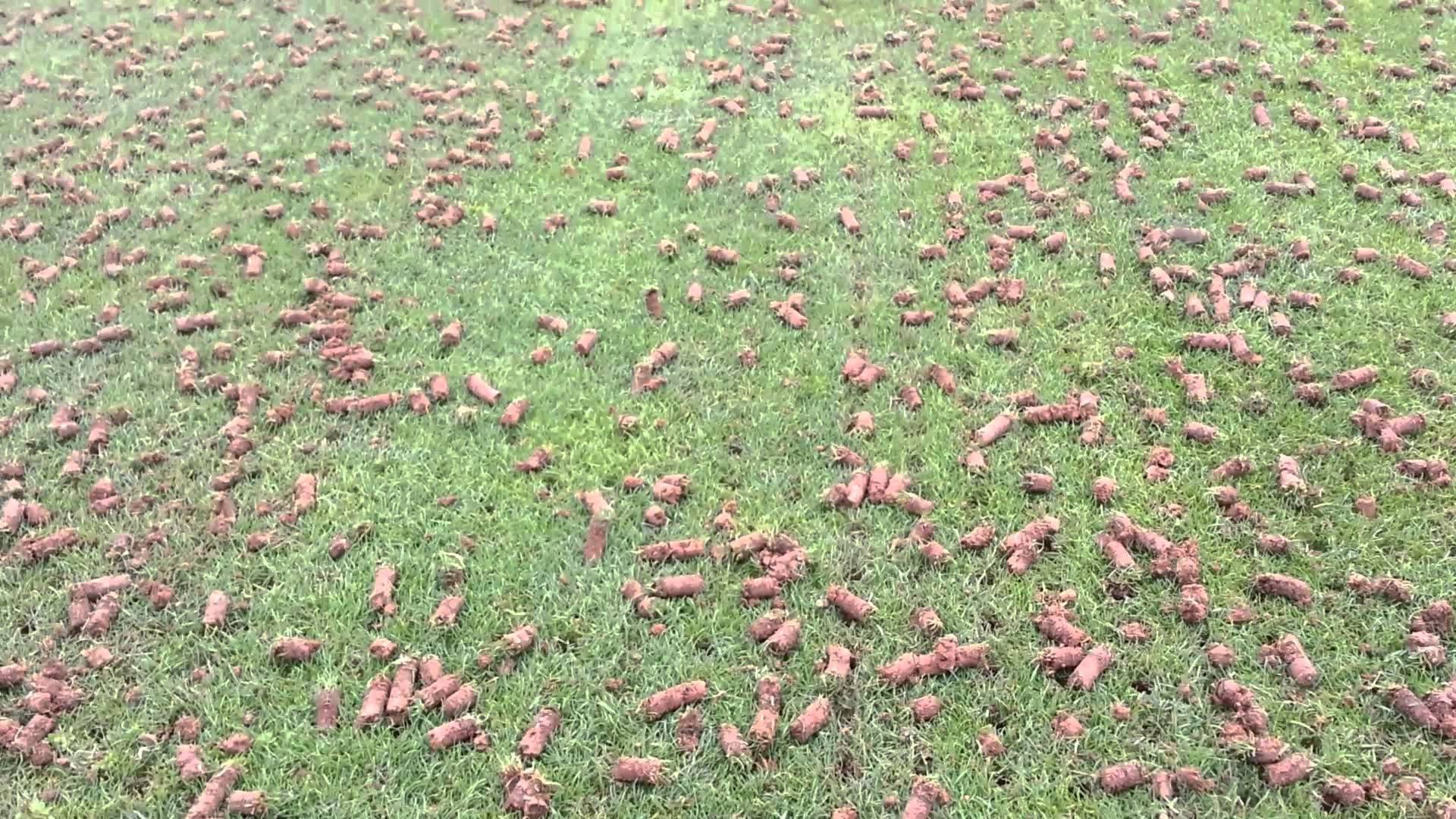
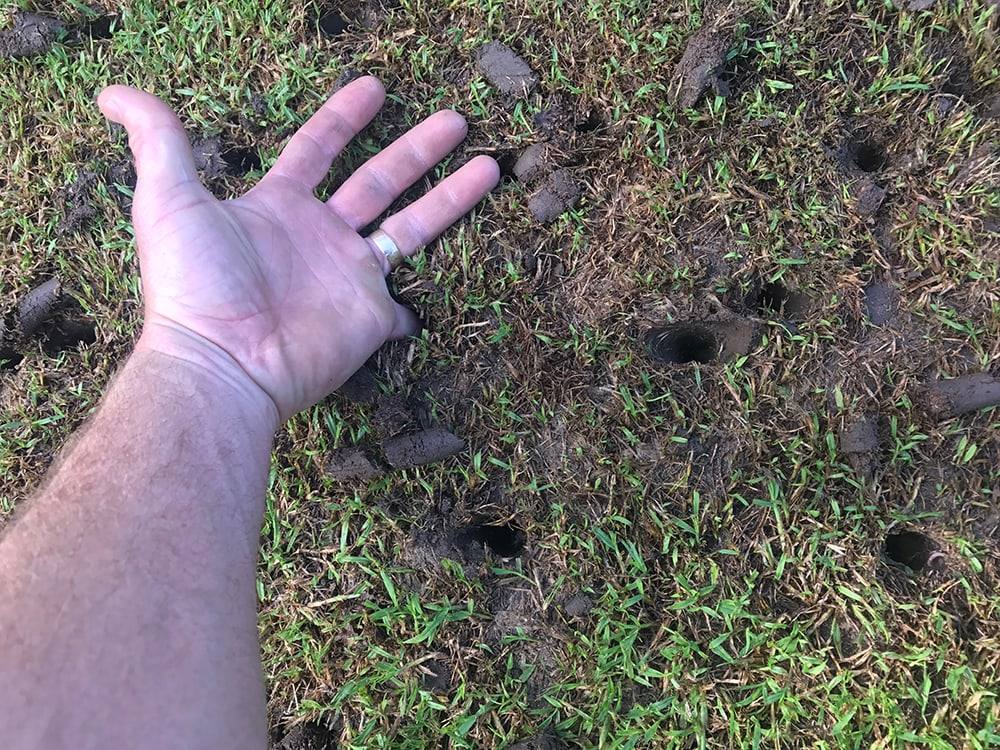
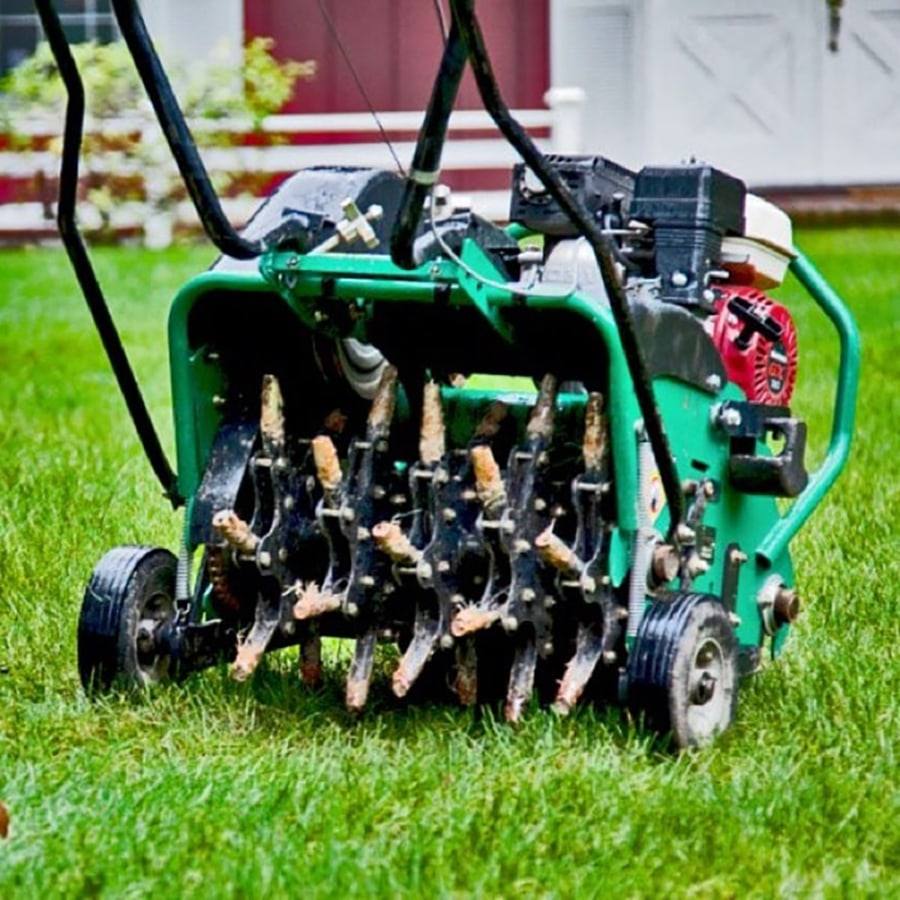
Core aeration, also called lawn coring or hollow tining, uses a machine fitted with hollow metal tines. As it travels across the lawn, the tines punch into the ground, pull out small plugs of soil and thatch about the thickness of a finger, and drop them on the surface. One pass leaves thousands of holes a few centimetres apart.
Taking soil out is the whole point. Every plug removed leaves a gap the surrounding soil can loosen into, and a channel that lets air, water and fertiliser reach the root zone. Roots follow those channels down, so the lawn ends up deeper rooted and better at coping with heat and dry spells.
That’s different from spiking, or solid tine aeration, which pushes holes into the ground without removing anything. Spiking has its place as a light treatment between renovations, but in heavy clay it can squeeze the sides of each hole even tighter. If your soil is genuinely compacted, coring is the method that fixes it. Our lawn coring page covers the differences in more detail.
Why South East Queensland lawns get compacted
Plenty of suburbs from Logan to the Gold Coast sit on clay or clay loam, and newer estates are often built on compacted fill with a thin layer of turf underlay on top. Clay particles are tiny and flat, so they pack down easily under:
- regular foot traffic, kids’ games and backyard cricket
- dogs running the same track along the fence
- cars, trailers and boats parked on the grass
- heavy summer storms hammering bare or thin patches
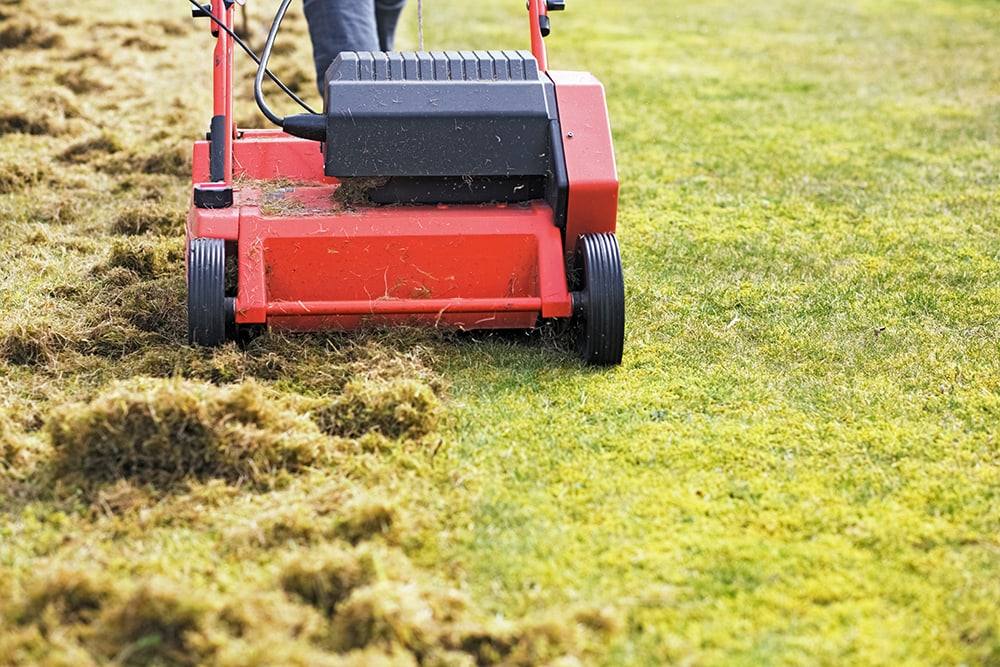
Thatch makes it worse. Couch and kikuyu in particular build up a spongy layer of runners and dead material that sheds water and stops fertiliser reaching the soil. If that’s your lawn, dethatching and scarifying before coring lets the tines get into the soil properly.
Signs your lawn needs core aeration
You don’t need a soil lab to spot compaction. Look for:
- water pooling or running off the lawn instead of soaking in
- a screwdriver that is hard to push into the ground, even after rain or watering
- thin or bare patches along paths, gates and play areas
- a lawn that browns off as soon as the weather turns dry
- fertiliser that makes little or no difference
- weeds that cope well with hard ground, such as crowsfoot grass, bindii and clover, moving in
If you’re ticking two or three of these, aeration is very likely part of the answer. Our article on why you should aerate goes further into the benefits.
How core aeration is done
On a home lawn the job usually runs like this:
- Get the lawn ready. Mow a day or two beforehand and water well the day before, so the tines can get into the soil. Mark sprinkler heads, irrigation lines and any shallow cables.
- Core the lawn. The machine goes over the lawn in overlapping passes. The worst areas, such as a fence line or the path to the clothesline, often get a second pass in a different direction.
- Leave the cores. The plugs stay where they fall. They dry out and crumble within a week or two, returning organic matter to the surface.
- Do the follow-up work. Coring is often the first step in a wider renovation, with fertilising and top dressing straight afterwards.
For backyards with side access we use a compact stand-on aerator that fits through a standard gate. Bigger blocks and acreage get tractor-mounted gear, so the job is done in a fraction of the time.
When to aerate in South East Queensland
Most lawns here are warm-season grasses: couch, kikuyu, soft-leaf buffalo and zoysia. They do their growing from spring through summer, so the best time to core them is spring to early summer, roughly September to December. The soil is warm, the grass is growing strongly, and the holes fill in quickly.
A few timing rules worth knowing:
- Skip winter. Warm-season grasses slow right down in the cooler months, so holes stay open longer and weeds get a head start.
- Don’t core soil that is bone dry or waterlogged. Dry clay is too hard for the tines to get into, and wet clay smears and seals over.
- Busy lawns can take a second pass in late summer or early autumn, while the grass is still growing.
- Aerate before pre-emergent weed control, not after. Coring through a freshly treated surface breaks the barrier the product relies on.
Aftercare: getting the most from aeration
What you do in the few weeks after coring makes a real difference to the result.
- Water deeply for the next two weeks, unless the rain does it for you.
- Hold off mowing for about a week, then mow on a higher setting for the next few cuts.
- Feed the lawn. Fertiliser applied straight after coring drops down the holes to the roots. Our lawn fertilising service matches the product to your grass and soil.
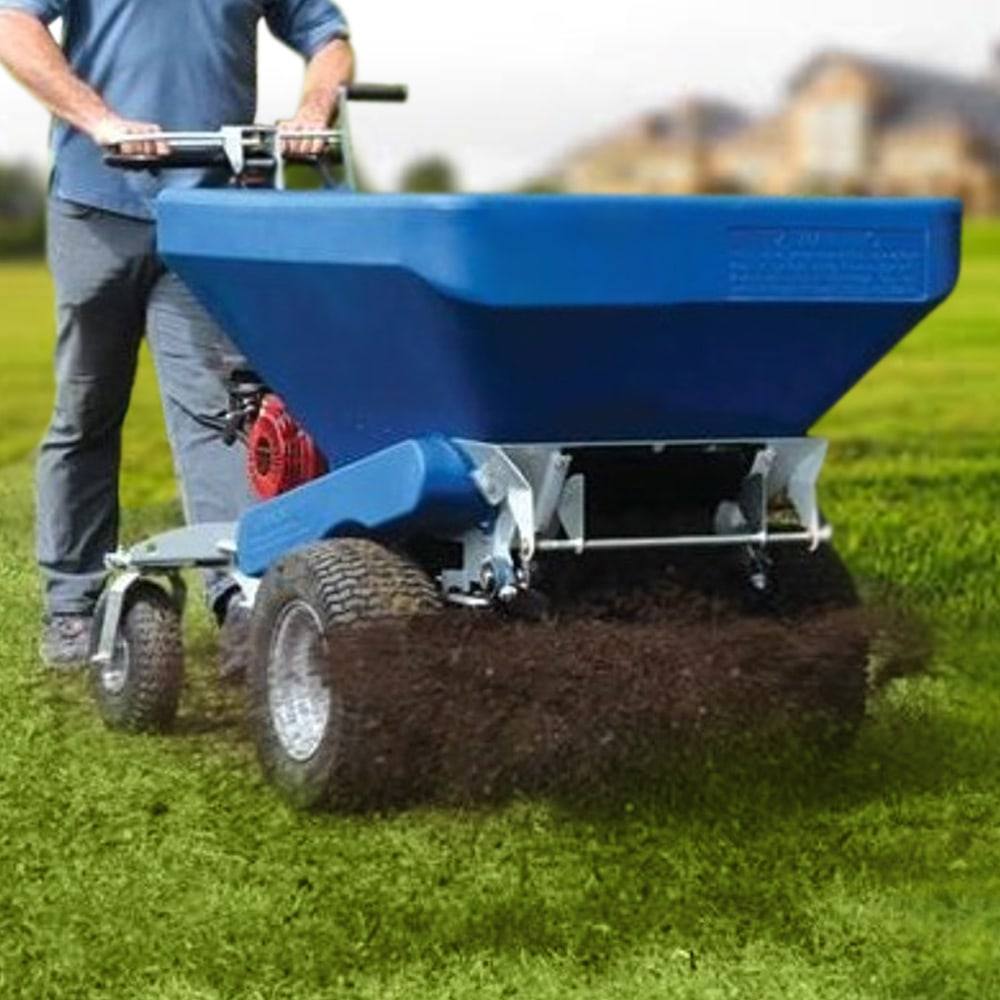
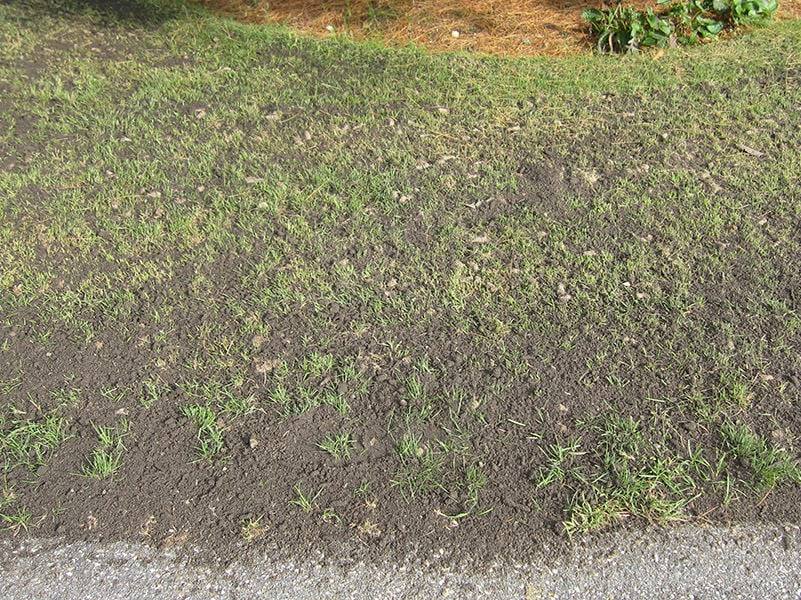
- Top dress if the lawn is uneven. A thin, even layer of sandy loam fills the holes, levels out hollows and improves the soil over time. See residential top dressing.
- Keep heavy traffic off for a week or two while the grass recovers.
Expect the lawn to look a bit rough for a week or so. In the growing season it then thickens up noticeably over the following month.
DIY or professional aeration?
You can hire a core aerator for the weekend from most equipment hire places, and on a flat, open lawn with soft soil that can work. Be ready for a heavy machine that is hard to steer on slopes, shallow cores in hard clay, and a repair bill if it catches a sprinkler. Hand corers are fine for a small patch near the clothesline, but they won’t fix a whole lawn.
A professional service makes more sense when the lawn is large, the soil is heavy clay, access is tight, or there are other problems going on at the same time. Compaction often turns up alongside thatch, uneven levels or lawn pests, and fixing only one of them rarely brings a lawn back. Working out why the lawn is struggling is the part that matters most.
Our lawn aeration service covers homes within 100 km of Beenleigh, including Logan, Brisbane Southside, the Gold Coast, Ipswich and the Redlands. Every job starts with a free onsite check, so you know what your lawn needs and what it will cost before any work begins.