
Hollow tine lawn coring in Brisbane
Been told the lawn needs coring, or already know the soil is packed hard? Hollow tine coring is the hands-on fix: thousands of finger-thick plugs pulled out of the ground, room for water, air and roots to get back down, and holes ready to take a top dressing.
- Family-run, based in Beenleigh
- Our own crew and machinery
- We diagnose before we price the work
- Jobs from $220
When a lawn needs coring, not another feed
Most lawns that need coring aren't short of water or fertiliser. They sit on soil packed so tight that neither can get in. Brisbane's clay, and the compacted fill under many newer estates, make it common.
- You struggle to push a screwdriver in, even the day after rain
- After rain or the sprinkler, water sits on top or runs onto the path
- Thin, worn tracks along the fence, side path and clothesline
- The lawn browns off within days of the rain stopping
If the lawn feels spongy rather than hard, it's more likely thatch, and scarifying the thatch out comes first.
Compaction, thatch, or both?
We'll probe the soil in a few spots, lift a small plug to see what's under the grass, and tell you straight whether coring is the fix or something else has to come first. Jobs from $220.
How hollow tine coring works
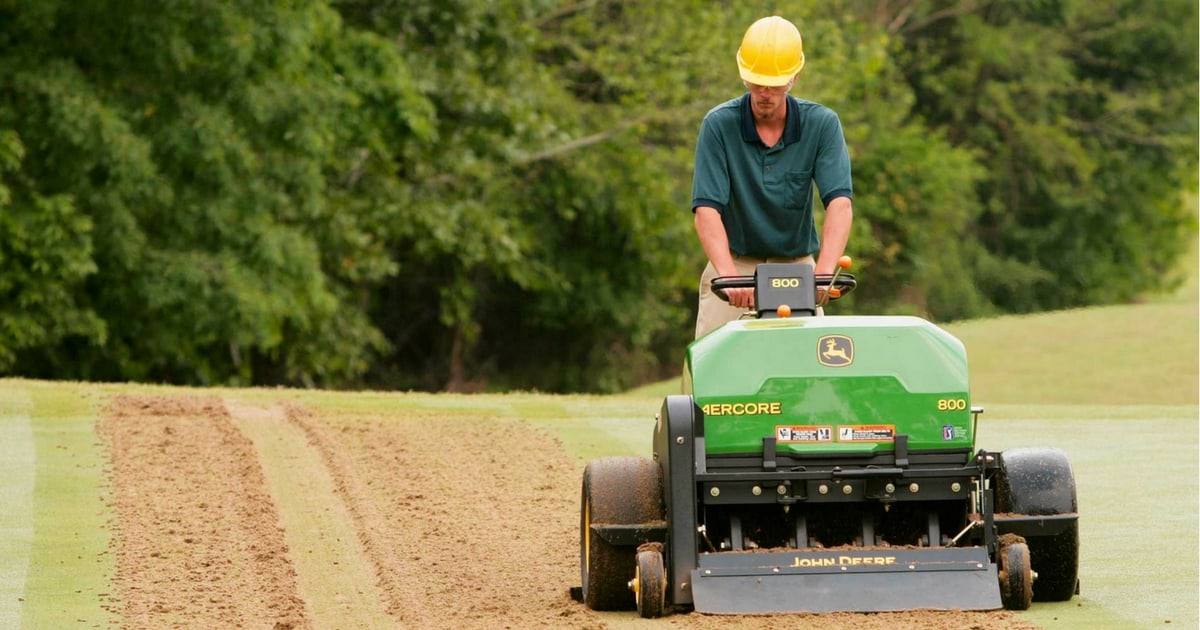
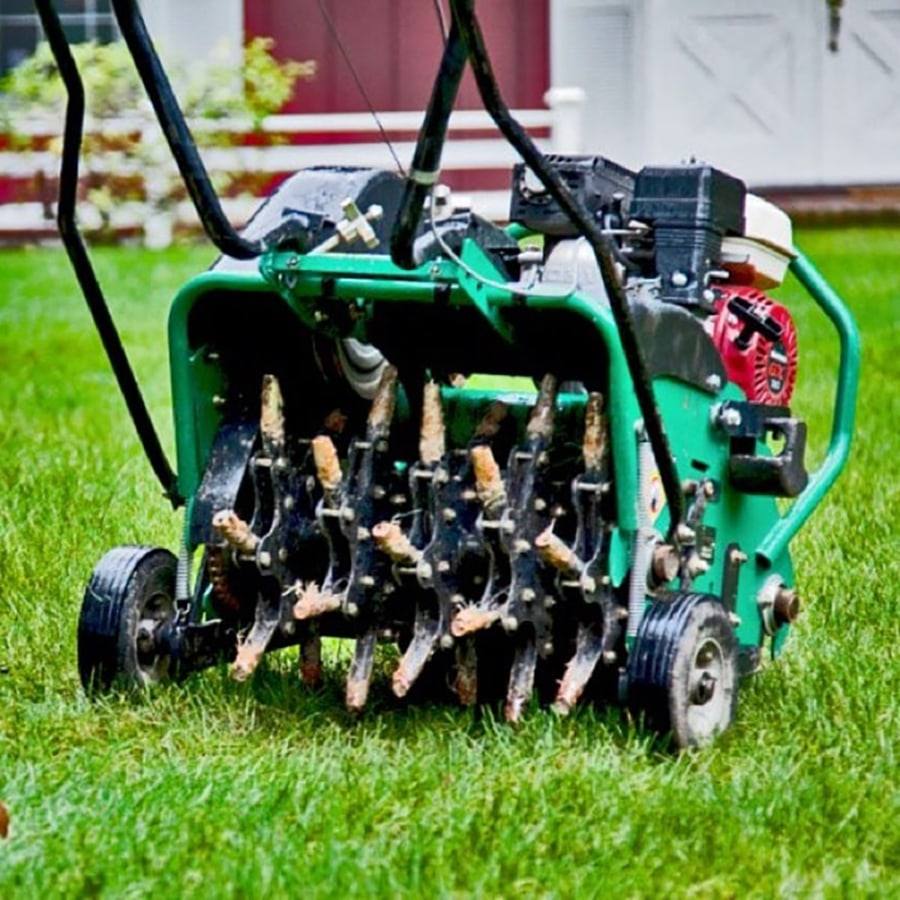
Hollow tines cut plugs of soil, thatch and roots out of the lawn and drop them on the surface, leaving open channels behind.
Coring is one form of aeration: it removes soil, where solid tine aeration only pushes holes in (our lawn aeration service page compares the two). For the background, see our guide to core aeration and compacted soil.
Plug size
Each core is about as thick as your finger. Because the tine lifts the plug out, the hole stays open, where a solid spike pushed into heavy clay squeezes the soil around it even tighter.
Depth
Cores on a home lawn usually come out 50 to 80 mm long. How deep the tines get depends on how hard and how moist the soil is.
Spacing and passes
One pass leaves holes a few centimetres apart. The worst areas, like the side path or the dog's track along the fence, get a second pass in another direction.
What happens to the cores
We leave them where they fall. They crumble within a week or two, and once dry, a mow with the catcher off spreads the soil back over the lawn as a light dressing.
Why coring and top dressing go together
Coring on its own gives heavy clay a season or so of relief before it slowly settles back. Fill the holes with better material and the benefit lasts much longer.
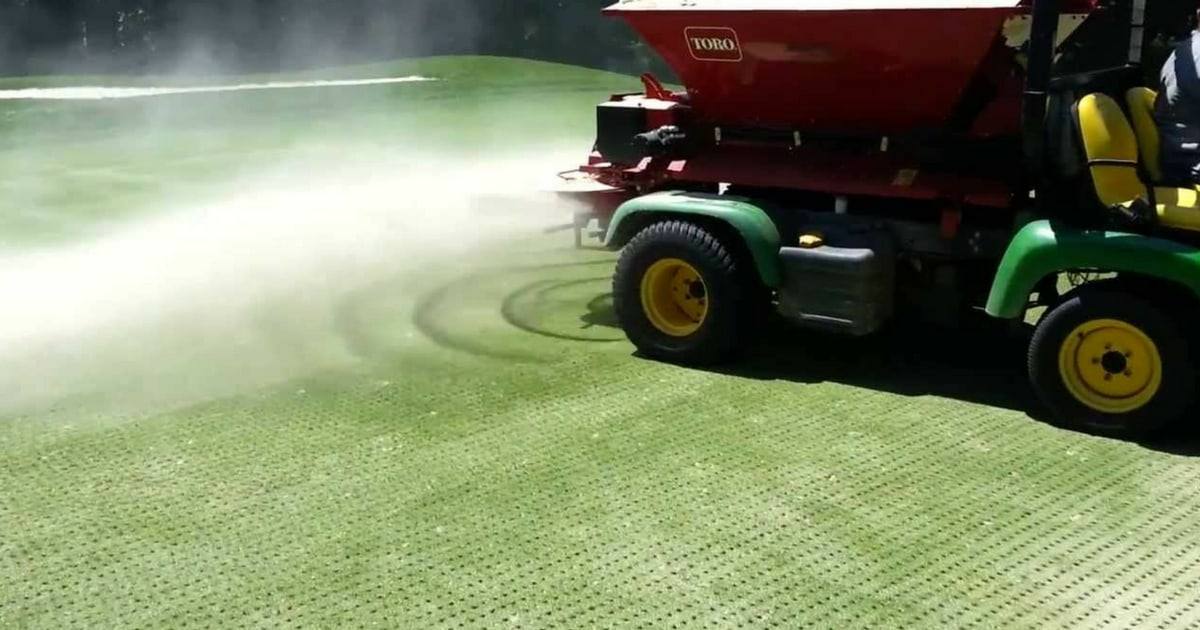
- Top dressing spread straight after coring drops into the holes, leaving columns of free-draining sandy loam through the clay
- The same pass levels out hollows, with the cores worked into the dressing
- Fertilising on the same day lets the granules fall into the holes, right into the root zone
For a lawn that needs the full reset, coring sits in the middle of a lawn renovation: scarify first if there's thatch, then core, feed and top dress.
Your part: the day before and the fortnight after
Before we arrive
- Give the lawn a mow a day or two ahead
- Soak it the day before, so the tines get down to depth
- Flag sprinkler heads, drip line and shallow garden lighting cable
- Clear toys, hoses and dog mess, and leave the side gate unlocked
Afterwards
- Water deeply two or three times a week for a fortnight, unless it rains
- Skip the next mow while the plugs dry out
- Keep cars, trailers and heavy foot traffic off until the holes close
What lawn coring costs
Coring jobs start from $220. What moves the price:
- The size of the lawn and how many separate areas there are
- Access: side gates, steps, slopes and how far the machine travels
- How hard the soil is, and whether parts need a second pass
- Adding top dressing or fertilising, and how much material it takes
You get a firm price after the free onsite check, before any work is booked.
Why All Grass Solutions
- We check the soil and thatch first, and tell you if coring isn't the answer
- You get each step of the work explained, and why it's needed
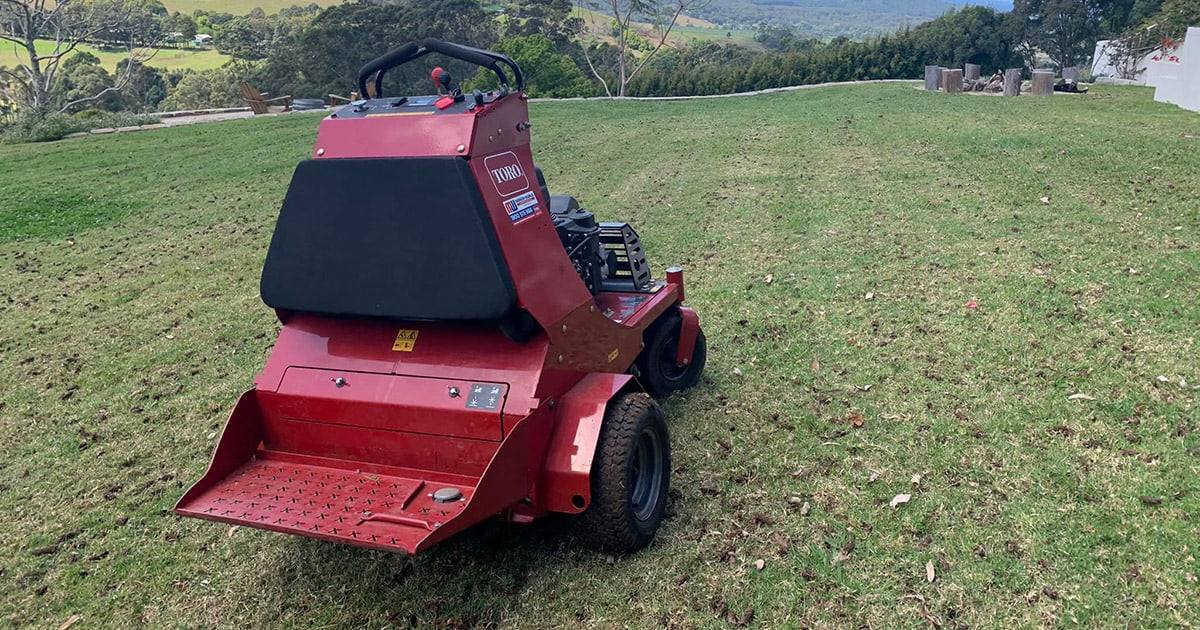
- Our own crew and machines: a Toro stand-on aerator for side gates, tractor-mounted gear for acreage
- Family-run from Beenleigh, coring lawns up to 100 km away
From first look to coring day
Free onsite check
We probe the soil in a few spots, check the thatch depth and where water sits, and ask what the lawn has to put up with.
Clear plan and price
We show you which areas need coring, which need a second pass and whether top dressing is worth adding, with a firm price. Jobs start from $220.
Coring day
Our crew cores the lawn, double-passes the worst areas, top dresses if planned and leaves you aftercare notes.
Common questions
How much does lawn coring cost in Brisbane?
When is the best time for lawn coring in Brisbane?
How long do the coring holes take to close up?
How often should a lawn be cored?
Should my lawn be scarified before it's cored?
Do I need to top dress after coring?
Book a free onsite check
We'll come out, look at the grass and the soil underneath, and tell you straight what's going on and what it'll take to fix. No charge, no pressure.
- Jobs from $220
- Homes within 100 km of Beenleigh
- Sports fields across South East QLD and Northern NSW