A guide to detecting and controlling African black beetle in your lawn
African black beetle larvae feed on lawn roots, and a bad year can leave a South East Queensland lawn dry, patchy and peeling back like carpet. Here's how to recognise the beetle and its grubs, when they do the damage, and what you can do to keep them under control.
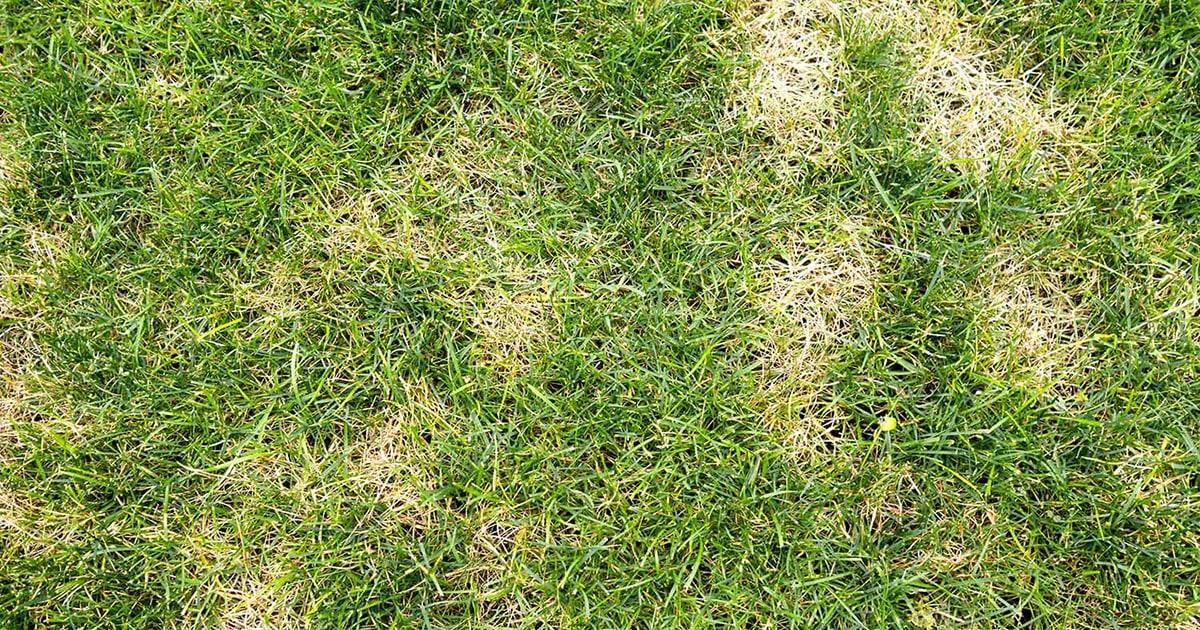
African black beetle is one of the most common lawn pests in South East Queensland, and its damage is often mistaken for a dry lawn. The adult beetles are small, shiny and do limited harm on their own. The real damage comes from their larvae, which spend summer under the lawn eating its roots, and by the time brown patches appear they’ve often been feeding for weeks. This guide covers how to spot them early, what their year looks like, and how good habits and our grub and pest treatment service keep them in check.
What African black beetle looks like
The beetle was introduced from southern Africa and is now established across much of Australia, Queensland included. You’ll come across two stages of it.
- Adults are glossy black, oval beetles about 10 to 15 mm long, with strong front legs built for digging. They fly on warm evenings and turn up around outdoor lights, on paths and in swimming pools.
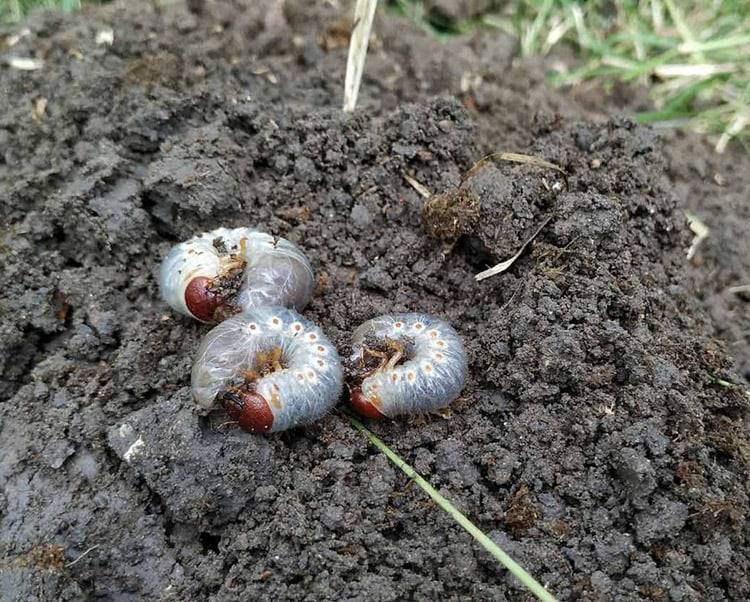
- Larvae are curl grubs: creamy white, C-shaped, with a brown head and three pairs of legs near the head end. They grow to about 25 mm and live in the top few centimetres of soil.
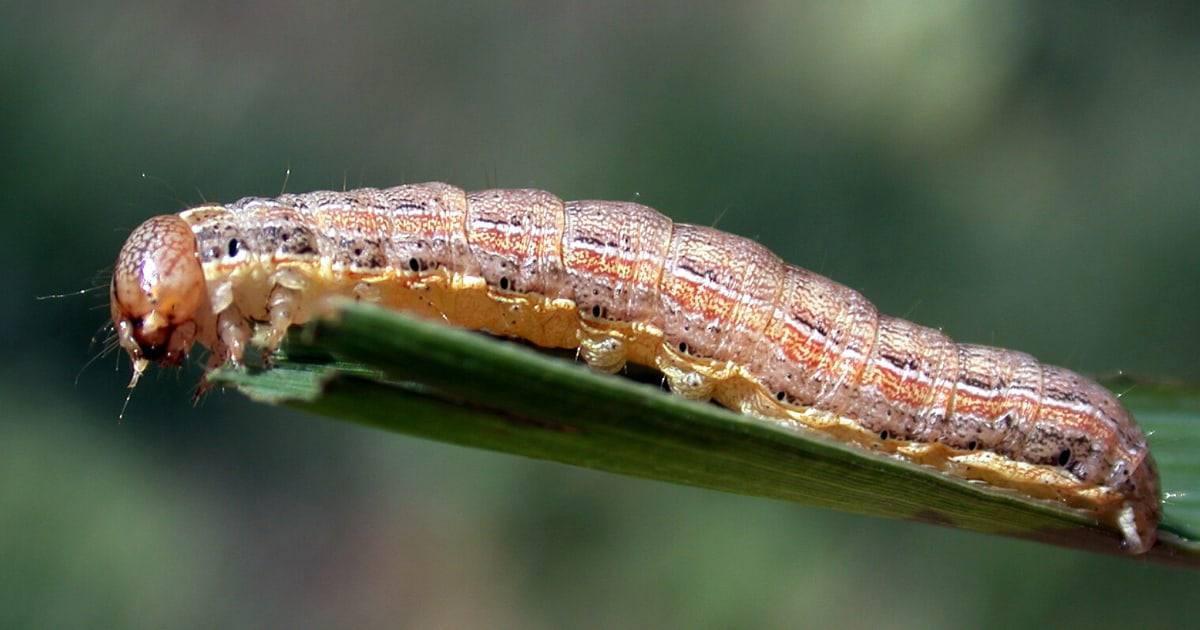
Several native scarab beetles have curl grubs that look much the same, and telling them apart takes a close look at the tail end under a magnifying glass. For your lawn, how many grubs there are and how much damage they’re doing matter far more than the exact species. Our article on the signs your lawn has grubs covers the wider group, including the caterpillars often lumped in with them.
The African black beetle life cycle
African black beetle usually has one generation a year. Knowing where it is in that cycle tells you when the lawn is at risk and when control is most effective.
| Time of year | What the beetle is doing | What you’ll notice |
|---|---|---|
| Late winter to spring | Adults that spent winter in the soil become active, fly and feed | Beetles at lights and in the pool, stems chewed at ground level |
| Spring to early summer | Females lay eggs in the soil, which hatch after two to three weeks | Usually nothing yet |
| Summer | Young larvae feed on roots, growing through three stages | Patches that dry out faster than the rest of the lawn |
| Late summer to autumn | Large third-stage larvae feed hardest, then pupate | Straw-coloured patches, turf lifting like carpet, birds digging |
| Autumn into winter | New adults emerge, feed, then shelter in the soil | A second round of beetles at lights |
The timing shifts by a few weeks from year to year with the weather, so treat the table as a guide rather than a calendar. The most useful thing to take from the table is that the grubs are smallest and easiest to deal with in early summer, well before the big damage shows.
Signs of African black beetle damage
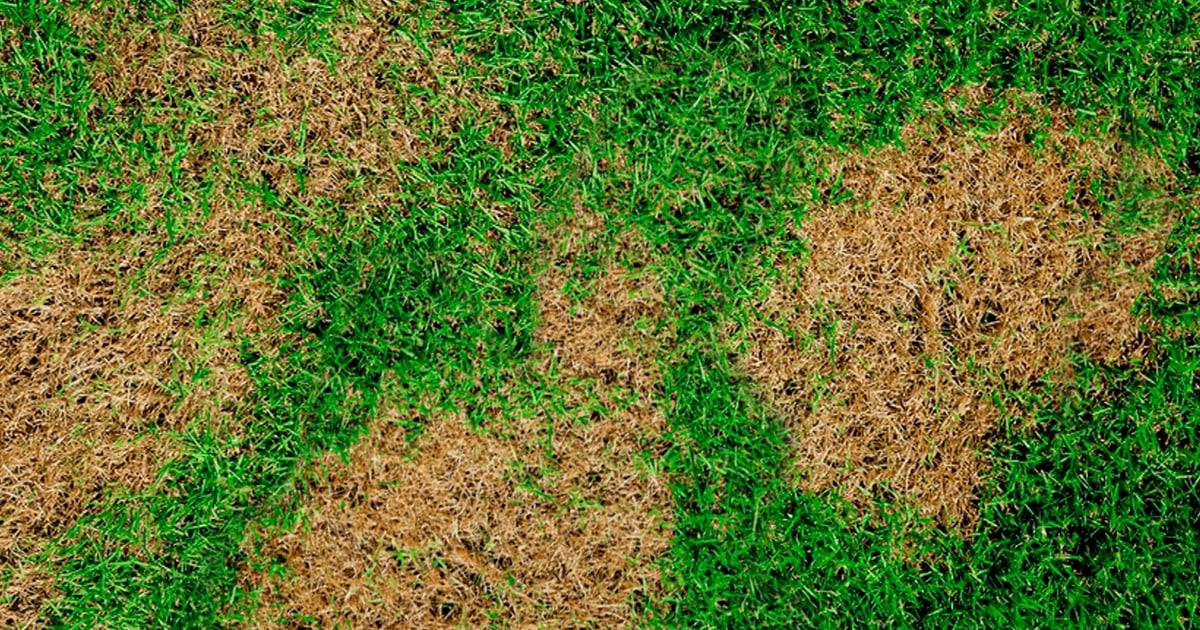
- Patches that wilt and dry off even though you’re watering, because without roots the grass can’t take water up
- Fertiliser and wetting agents that seem to make no difference
- Turf that peels back easily, with grubs curled in the soil underneath
- Ibis, magpies and crows digging in the same spots, or small holes dug overnight by bandicoots
- A soft, spongy feel underfoot
- Adult beetles around lights, in the pool or on paths in spring and autumn
- Ragged stems at soil level on newly laid turf or seedlings, where adults have been feeding
How to check for African black beetle
The dig test is the only way to be sure.
- Pick a spot at the edge of a damaged patch, where brown grass meets green.
- Cut three sides of a square of turf about 30 cm across and fold it back like a flap.
- Crumble the top 5 cm or so of soil and count the grubs.
- Repeat in two or three other spots, then press the turf back down and water it.
A few grubs in a square is common, and most lawns cope with that. When you find a cluster every time you dig, and the turf comes away with almost no roots, they’re the cause.
Rule out the look-alikes too. Dry patch, where the soil starts repelling water, gives a similar straw colour but the turf stays anchored. Lawn fungal diseases tend to show as roughly circular patches, often with an orange or bronze edge while active, and are most common in autumn and spring when the nights turn cool and damp.
How to control African black beetle
There’s no ridding a whole neighbourhood of African black beetle, because adults fly in from surrounding yards, parks and paddocks. The realistic goal is to keep grub numbers below the point where they kill the lawn, and keep the lawn strong enough to cope with the rest.
Keep the lawn growing strongly
A deep-rooted, well-fed lawn can lose some roots without dying back. Water deeply and less often, mow at the right height for your grass, and feed during the growing season. If you want the feeding done for you, our lawn fertilising service times each feed to the season and your grass type.
Let the chickens and birds in
Chickens love curl grubs. If you keep them, let them work over an affected patch for a few days. Birds do the same job for free, and a bird bath nearby helps. Both reduce numbers rather than clear them, and some scratched turf is the price.
Turn down the lights in flight season
Adults are drawn to lights on warm spring and autumn evenings. Switching outdoor lights off on those nights, or keeping them away from the lawn, means fewer beetles landing and laying eggs nearby.
Beneficial nematodes
Microscopic nematodes that parasitise soil-dwelling larvae are sold as a living biological product. They need moist, warm soil and careful handling, and the results are less predictable than a conventional treatment, so they suit light infestations and prevention better than a lawn that’s already in trouble.
A targeted treatment when numbers are high
When the dig test keeps turning up clusters of grubs, or the damage is spreading, a targeted treatment is the practical option.
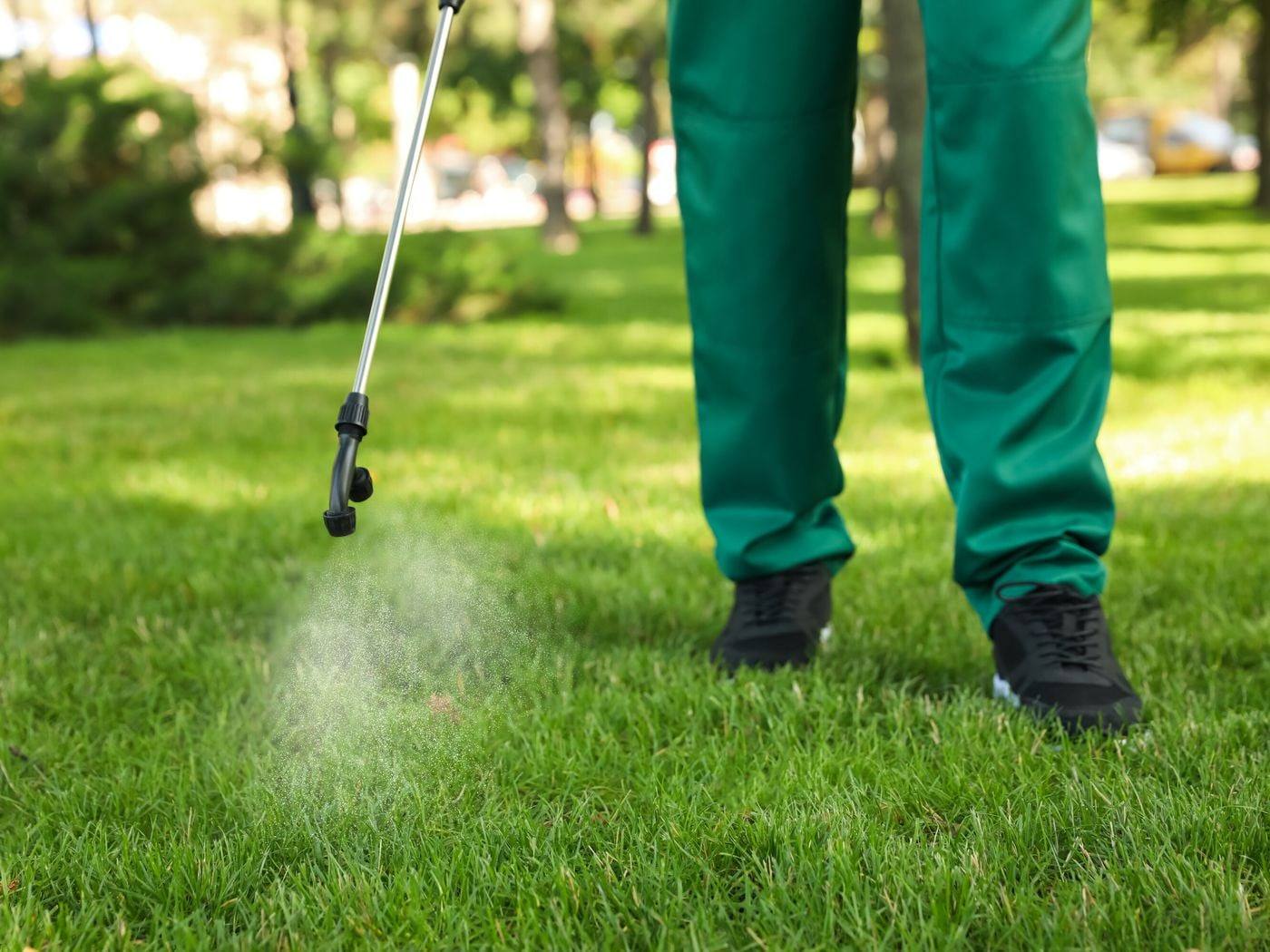
Three things make the difference.
- Timing. Young larvae in early summer are easier to deal with, and catching them then gives the best chance of avoiding the late-summer damage. Once large grubs have stripped the roots, treatment is aimed at stopping further feeding, and the lawn still has to regrow.
- Reaching the roots. Curl grubs live in the soil, so their treatment has to be watered in to reach the root zone. One that stays on the leaves won’t get to them.
- Covering the margin. Grubs at the edge of a patch are the ones still feeding, so we treat the damaged area plus a band of healthy-looking lawn around it.
We confirm the grubs before anything goes on, and let you know when kids and pets can go back on the lawn.
Helping the lawn recover
Most warm-season lawns regrow from their runners once the grubs stop feeding, but root damage takes time to repair. Water deeply to draw new roots down, feed once the grubs are under control, and spread a light top dressing over thin patches so the runners have something to grow into. Where the grass has died completely, patching or new turf is the quicker fix.
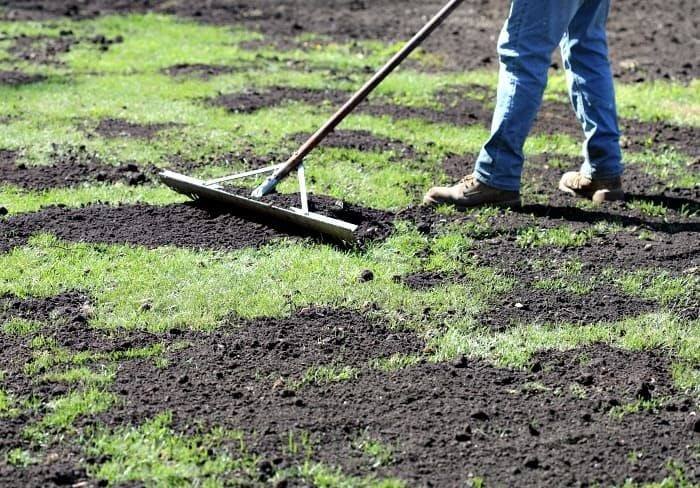
Come spring, core aeration helps a recovering lawn root deeper, which leaves it better placed to handle the next season’s grubs.
If your lawn has gone patchy and you suspect African black beetle, we can confirm it and lay out the fix. Our lawn grub treatment service covers homes within 100 km of Beenleigh, from Logan and Brisbane Southside to the Gold Coast, Ipswich and the Redlands. Every job starts with a free onsite check, so you know what’s under your lawn and what dealing with it will cost before any work begins.