How to get green grass in Brisbane, starting with lawn aeration
A pale, patchy lawn is often a soil problem rather than a fertiliser problem. Here's how coring opens the way to greener grass, and the feeding, watering and mowing habits that keep it green through a Queensland summer.
When a lawn loses its colour, most people reach for the fertiliser. Sometimes that’s all it needs. But if you’ve fed it and watered it and it’s still pale, thin or slow to green up in spring, the problem is probably underneath. Roots growing in compacted soil can’t reach the water and nutrients you’re putting down, so the grass goes hungry however much you give it. Coring fixes that, which is why our lawn coring service in Brisbane is so often the first step towards a greener lawn rather than the last.
Why compacted lawns lose their colour
Grass gets its green from chlorophyll, and making chlorophyll takes a steady supply of nitrogen, iron, magnesium and water drawn up through the roots. In compacted soil the roots stay shallow and short of oxygen, so they take up less of all of it. The result is a lawn that looks washed out or yellowish, even when there’s fertiliser sitting in the soil.
Compaction also makes the colour fade faster. Shallow roots dry out within days of the first hot spell, so a compacted lawn browns off well before a healthy one next door. And where water pools after storms, roots sitting in waterlogged soil can’t breathe, which shows up as yellow patches in the low spots.
How coring brings the colour back
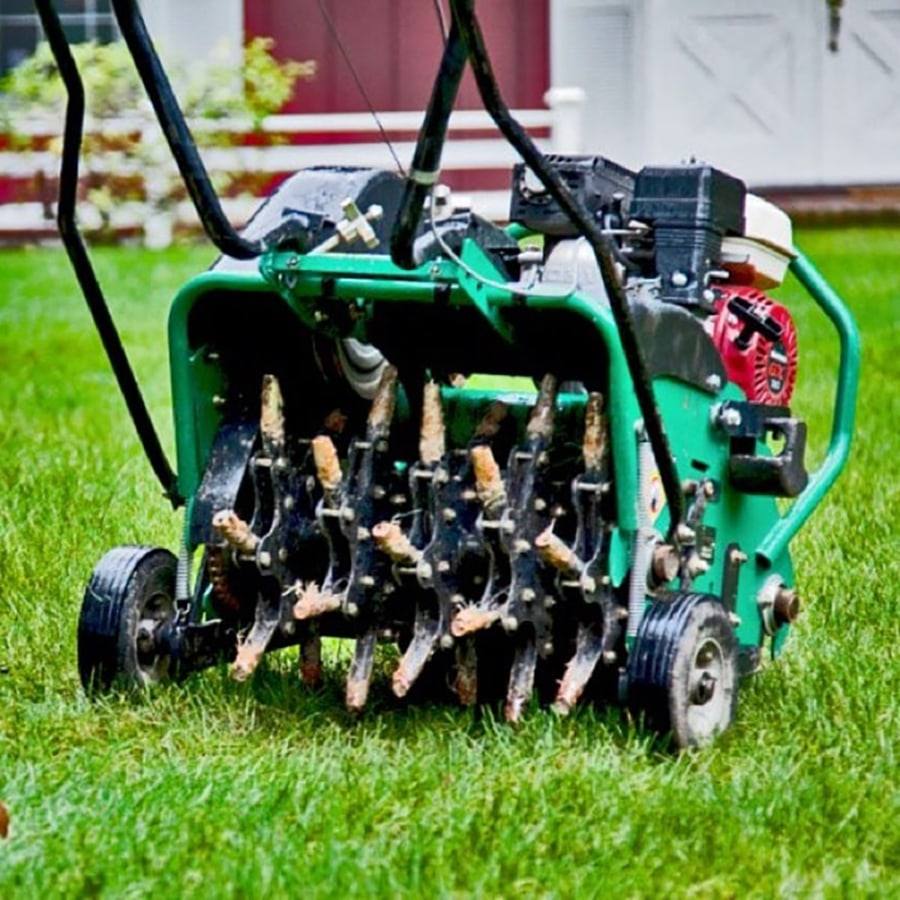
Coring uses hollow tines to pull small plugs of soil out of the lawn, leaving thousands of open holes behind. Air gets back into the root zone, water gets into the soil rather than running off, and fertiliser has a direct path down to the roots. Over the following weeks the grass grows new roots into those channels and pushes runners across the holes, and the lawn thickens and greens up as it does. Our guide on what core aeration is explains the method in more detail.
The lawn will look worse before it looks better. For the first week or so there are cores and holes all over the surface. In the growing season that gives way to noticeably thicker, greener grass within about a month, as long as the lawn gets what it needs next.
Feed it straight after coring
The best time to fertilise is the day the lawn is cored. Granules drop down the open holes into the root zone instead of sitting on the surface. A slow-release or organic-based lawn fertiliser gives a steadier feed than a quick hit of nitrogen, and is less likely to burn the grass in hot weather.
For warm-season lawns in South East Queensland, the main feeds go on in spring as the grass wakes up and again in late summer or early autumn to carry it into the cooler months. Lawns that get heavy use can take light feeds through summer as well. Winter feeding is optional at best, because the grass is barely growing and uses very little.
If a lawn stays yellow even after it’s been cored and fed, the soil itself may be the issue. Soil that is too acidic or too alkaline locks nutrients away from the roots, and soil testing will show whether that’s what’s happening. Our lawn fertilising service picks the product and timing to suit your grass and soil.
Fill the gaps with top dressing
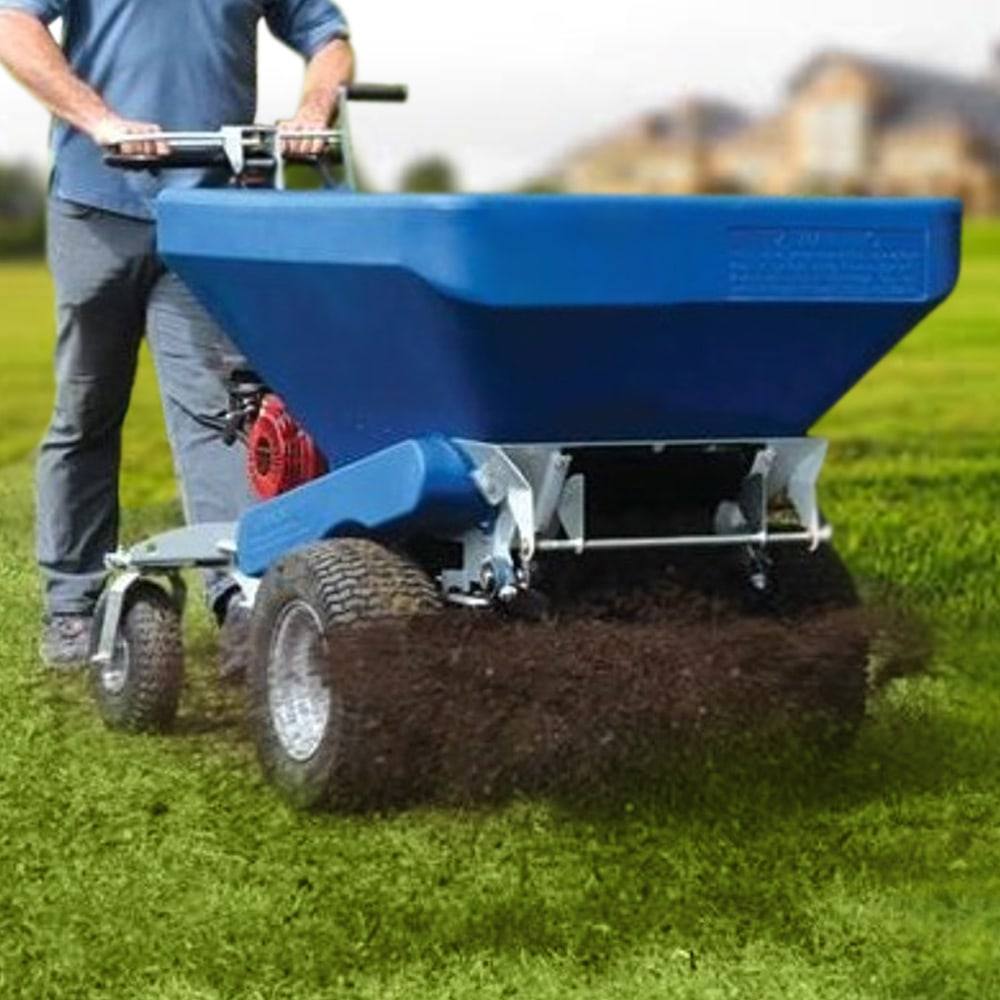
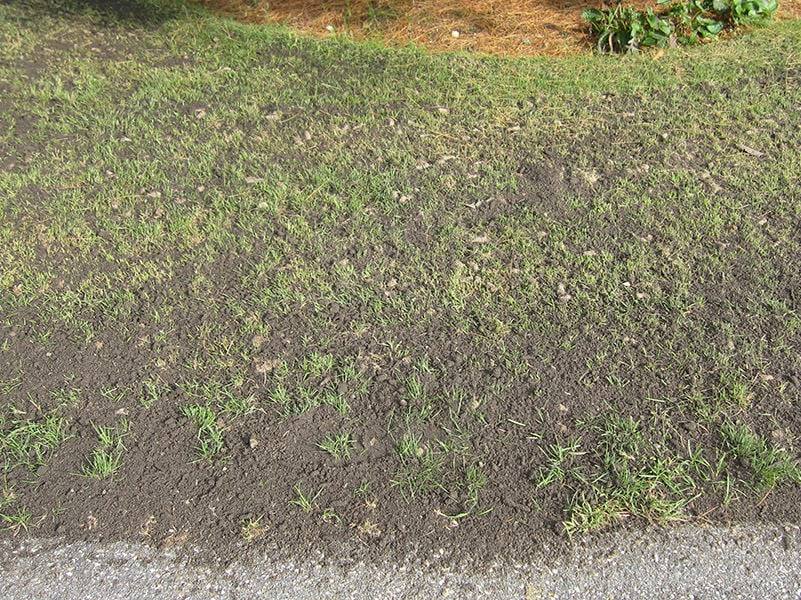
Coring opens up the soil, and top dressing fills it back in with something better. Spread thinly, a sandy loam or a mix of coarse washed sand and quality topsoil works its way into the holes, evens out low spots and builds better soil with each renovation. Keep it thin: you should still see grass leaves poking through once it’s spread. Our residential top dressing service spreads it evenly by machine.
Thin and bare patches are worth fixing while the soil is open. Couch and kikuyu spread quickly by runners and can also be over-seeded, so a cored and top dressed lawn often fills in on its own within a season. Buffalo and most zoysia lawns are grown from turf rather than seed, so larger bare patches are best repaired with a few pieces of new turf.
Water deeply, not daily
How you water decides how deep the roots go. A light sprinkle every evening only wets the top centimetre or two, so the roots stay near the surface where they dry out fastest. A deep soak once or twice a week sends water further down, and the roots follow it.
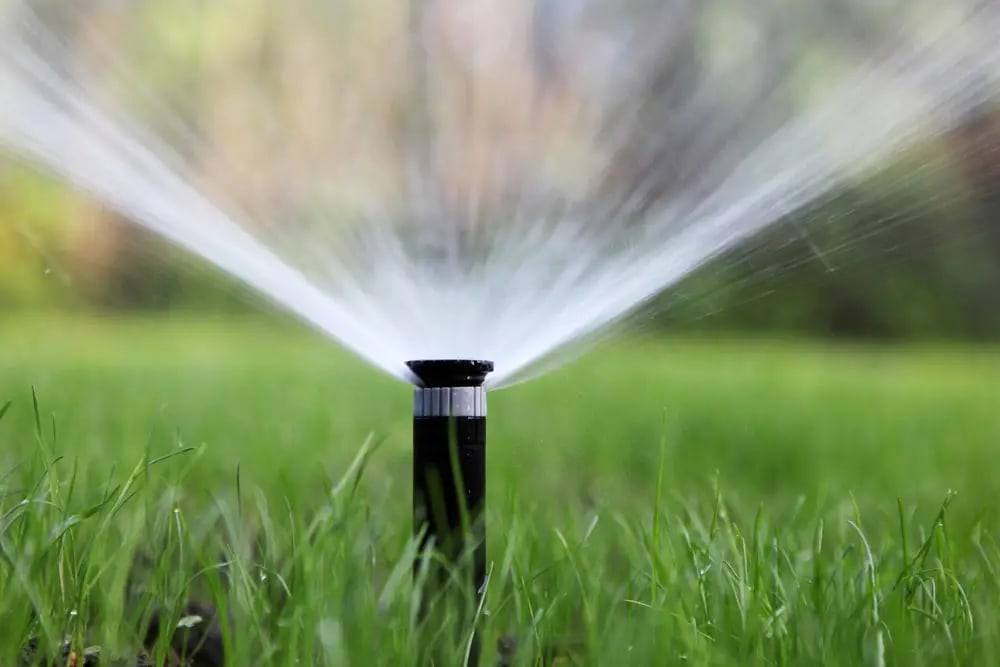
- Water early in the morning, so less is lost to evaporation and the leaves dry off during the day, which helps keep fungal disease at bay.
- Give it a proper drink, around 20 mm each time. An empty tuna tin on the lawn makes a handy gauge.
- Go by the weather, not the calendar. In a wet summer you may barely need to water. In a dry spring you’ll need to water more.
- After coring, keep the soil moist for the first couple of weeks while the lawn recovers.
Our article on getting the most from watering and feeding goes into more detail.
Mow higher than you think
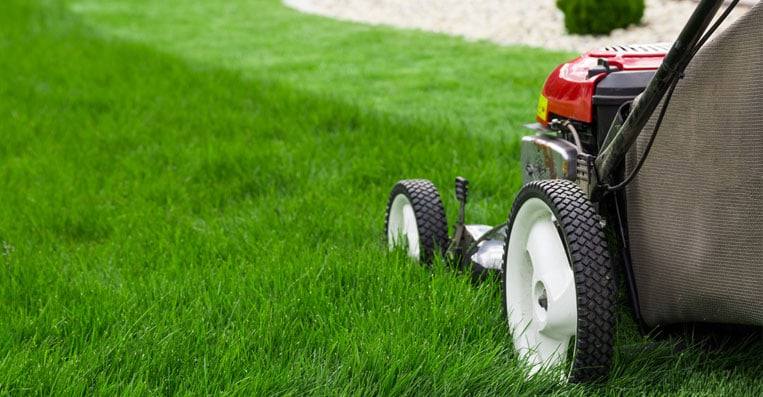
Cutting the lawn short might look neat for a day or two, but it’s one of the quickest ways to lose colour. Scalped grass has less leaf to feed itself, the soil underneath dries out and heats up, and weeds get the light they need to move in. As a rule, never take more than a third of the leaf off in one cut.
| Grass | Mowing height for a home lawn |
|---|---|
| Couch | 15 to 25 mm |
| Kikuyu | 25 to 40 mm |
| Soft-leaf buffalo (such as Sir Walter) | 30 to 50 mm |
| Zoysia | 20 to 40 mm |
Raise the mower a notch in hot, dry spells and in shady spots, and keep the blades sharp. Blunt blades tear the leaf tips, which turn brown and dull the whole lawn. After coring, give the lawn a week’s break from the mower, then keep the cutting height up for the first few mows. There are more mowing pointers in our 10 best tips for grass maintenance.
Keep weeds out of the space
Weeds compete with grass for the same water, nutrients and light, and they move into any gap a thin lawn leaves them. The best long-term defence is a thick, healthy lawn that shades the soil. Pull small numbers by hand before they set seed, and if you treat a larger outbreak, use a product labelled for your grass type, because some that are fine on couch will damage buffalo. If weeds keep coming back, our weed control service can work out why and what to do about it.
When green grass needs more than aeration
Coring fixes compaction, but it isn’t the answer to every brown or yellow lawn. Other common causes in South East Queensland include:
- Lawn grubs. Armyworm, curl grubs and African black beetle larvae can damage large areas in summer and autumn, sometimes within days. Brown patches that spread quickly, or turf that lifts like a loose carpet, are the signs to look for. See our lawn grub treatment page.
- Shade. Couch and kikuyu need plenty of sun. Under trees or beside tall fences they thin out however well they’re fed. Buffalo and zoysia cope with shade better.
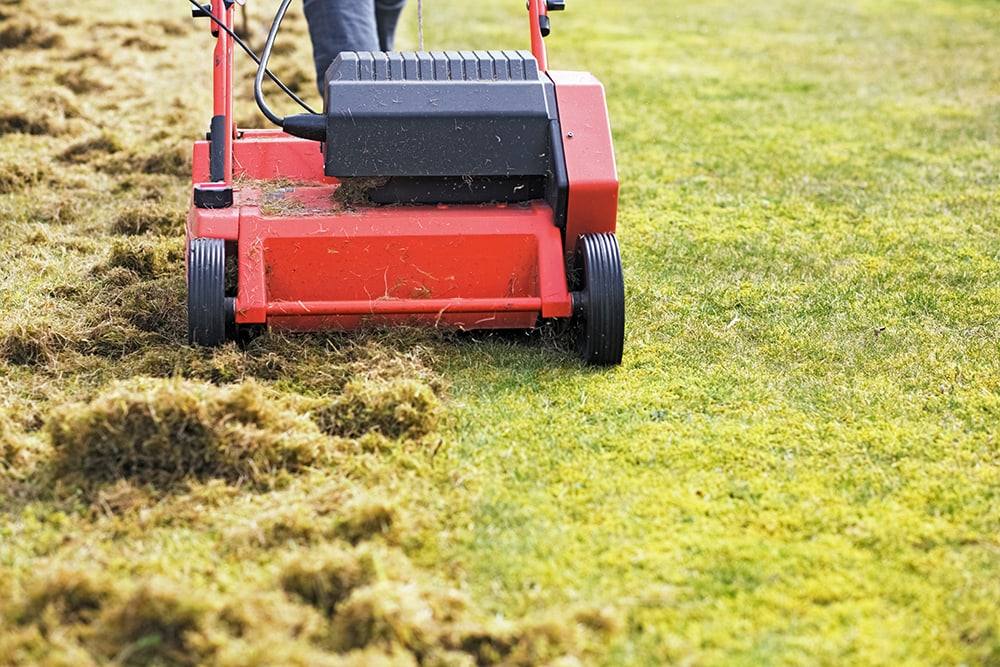
- Thatch. A spongy layer more than 10 to 15 mm thick holds water and fertiliser above the soil, and needs scarifying.
- Fungal disease. Spreading brown patches in warm, humid weather can be fungal, especially on lawns watered in the evening.
Working out which of these is going on is the step most people skip, and it’s why throwing more fertiliser at a struggling lawn so often goes nowhere.
A simple plan for a greener lawn this season
- Check the soil with a spade or screwdriver, or book a free onsite check.
- Scarify first if the thatch is thick.
- Core the lawn in spring or early summer, while the grass is growing.
- Fertilise the same day.
- Top dress to fill the holes and level the surface.
- Water deeply for two weeks, then once or twice a week as the weather needs.
- Mow high and keep the blades sharp.
- Feed again in late summer or early autumn.
Green grass doesn’t come from one product or one job. It comes from soil that lets the roots grow, and a few good habits after that. If you’d like a hand, our lawn coring service covers homes within 100 km of Beenleigh, with jobs from $220. We start with a free onsite check, tell you what’s holding your lawn back and lay out the work step by step.