A beginner's guide to top dressing a lawn
Top dressing is one of the few lawn renovation jobs a keen beginner can do well with a barrow, a rake and some patience. Here's how to prepare the lawn, choose and order the material, spread and level it, and water it in, plus when it makes sense to call in a pro.
Top dressing has a reputation as a greenkeeper’s job, but the basics are simple: spread a thin layer of good material over the lawn, work it into the low spots and let the grass grow up through it. Get the material, the timing and the depth right and a home lawn can be noticeably smoother and healthier within a season. Get them wrong and you can smother the grass or bury a layer that causes problems for years. This guide covers how to do it properly yourself, and when it’s worth handing the job to our lawn top dressing service instead. If you’re still deciding whether it’s worth doing at all, start with the four benefits of top dressing.
Step 1: Make sure top dressing is the right fix
Top dressing levels a lawn and improves the soil it grows in. It doesn’t fix everything, so spend ten minutes checking for the other usual suspects first.
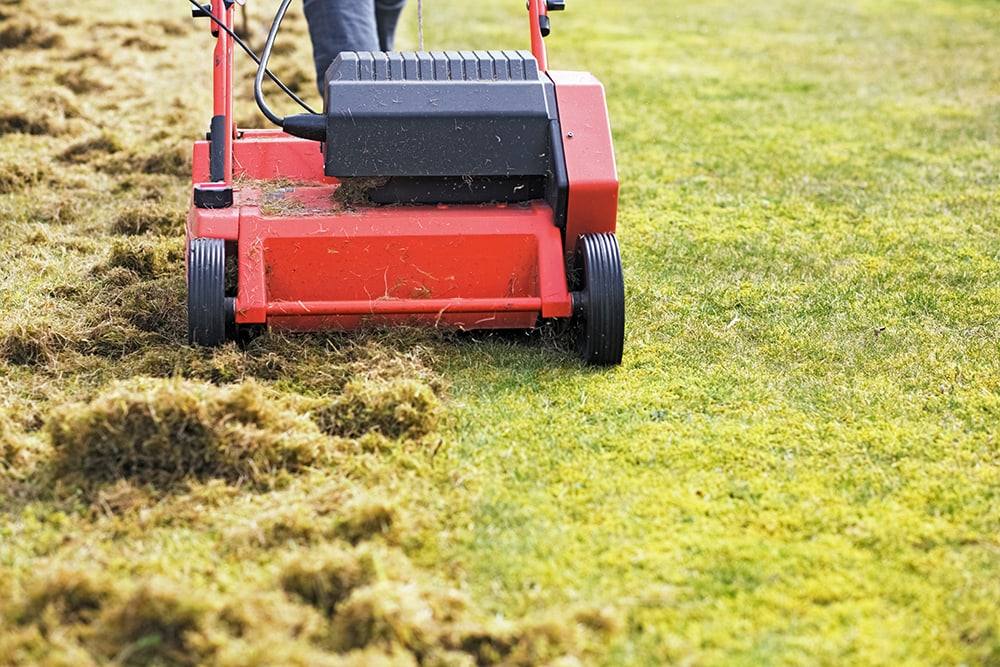
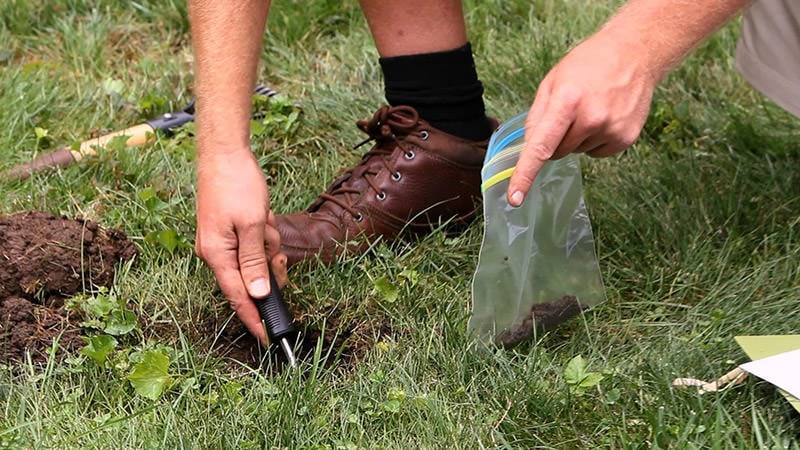
- Thatch. Cut a small wedge out of the lawn. If there’s more than 10 to 15 mm of brown, spongy material between the leaf and the soil, the lawn needs dethatching or scarifying before it’s dressed, or the dressing just sits in the thatch.
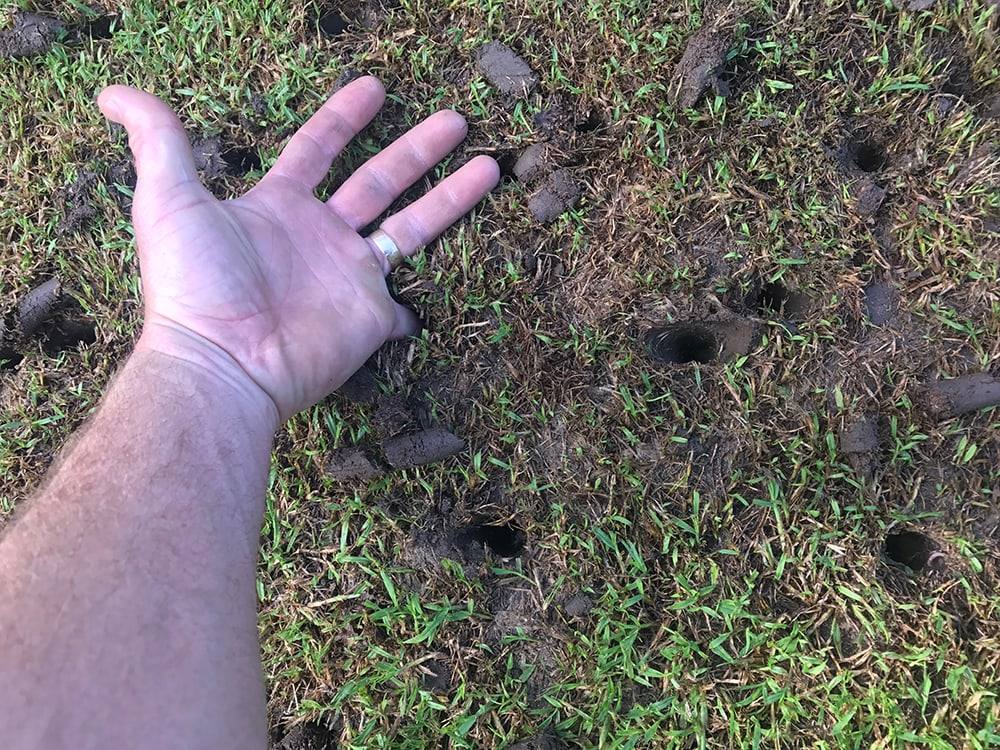
- Compaction. Push a screwdriver into moist soil. If it’s a struggle, core the lawn first so the dressing has somewhere to go.
- Pests. Dead patches that peel back like carpet usually point to grubs. Deal with those first; see lawn grub treatment.
- Soil pH and nutrients. If the lawn has struggled for a while despite feeding, a soil test shows whether the pH or nutrients need correcting. It’s much easier to fix before the dressing goes on.
Step 2: Pick the right time
Top dress when the grass is actively growing, so it can push up through the dressing quickly. In South East Queensland that means spring to early summer, roughly September to December, and it can carry on into early autumn. Avoid winter, when couch, kikuyu, buffalo and zoysia barely grow, and avoid the middle of a heatwave. Choose a dry day to spread, because damp material clumps and won’t run off the rake, and plan to water straight afterwards.
Step 3: Choose your material and work out how much
This is the decision that matters most. Buy from a landscape supplier and ask for a lawn top dressing mix, not general garden soil.
- Washed sand (washed river sand or washed pit sand). Clean, free-draining and free of weed seeds. The best choice for levelling, and for well-kept lawns that are fed and watered regularly.
- Sandy loam blend. Mostly sand with a smaller share of loam or organic matter. Better for lawns that are thin or short on organic matter, because it holds more moisture and nutrients.
- What to avoid. Heavy clay, garden soil, builder’s fill, unwashed sand and straight compost. They can set hard, stay soggy, bring in weeds or form a layer that water and roots won’t cross.
Whatever you choose, try to stick with the same type in future years. Switching between very different materials builds up layers in the soil that water doesn’t move through evenly.
How much to order
Most lawns want 5 to 10 mm of dressing per application. As a rule of thumb, one cubic metre covers about 100 square metres at 10 mm deep, or about 200 square metres at 5 mm. Measure the lawn, decide on the depth, and add a little extra if you have hollows to fill. Have it delivered as close to the lawn as the truck can get, and onto a tarp if it’s going on the driveway.
Step 4: Prepare the lawn
- Mow a day or two beforehand, a notch lower than usual, and catch or rake up the clippings so the dressing reaches the soil.
- Core the lawn if the soil is compacted. The dressing drops into the holes and improves the soil below the surface. Our lawn coring page explains what’s involved.
- Fertilise now if the lawn is due, so the feed sits underneath the dressing. Our guide to top dressing and fertilising covers the timing in more detail.
- Sort out weeds before you start, so you’re not burying them and giving them a fresh bed to grow in.
- Mark sprinkler heads and anything else you don’t want to bury.
Step 5: Spread it in small sections
Barrow the material onto the lawn and tip it in small piles spaced evenly across one section, rather than dumping it all in one spot. Finish one patch of two or three square metres before moving on to the next.
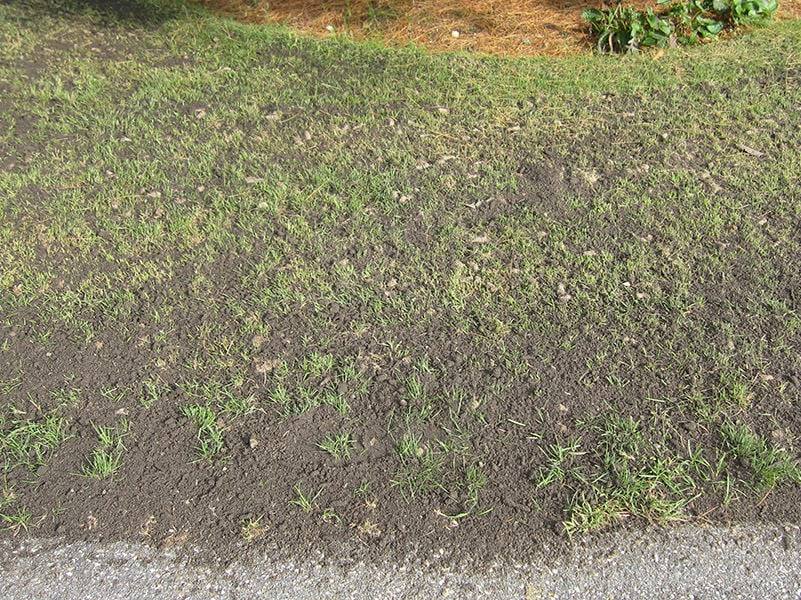
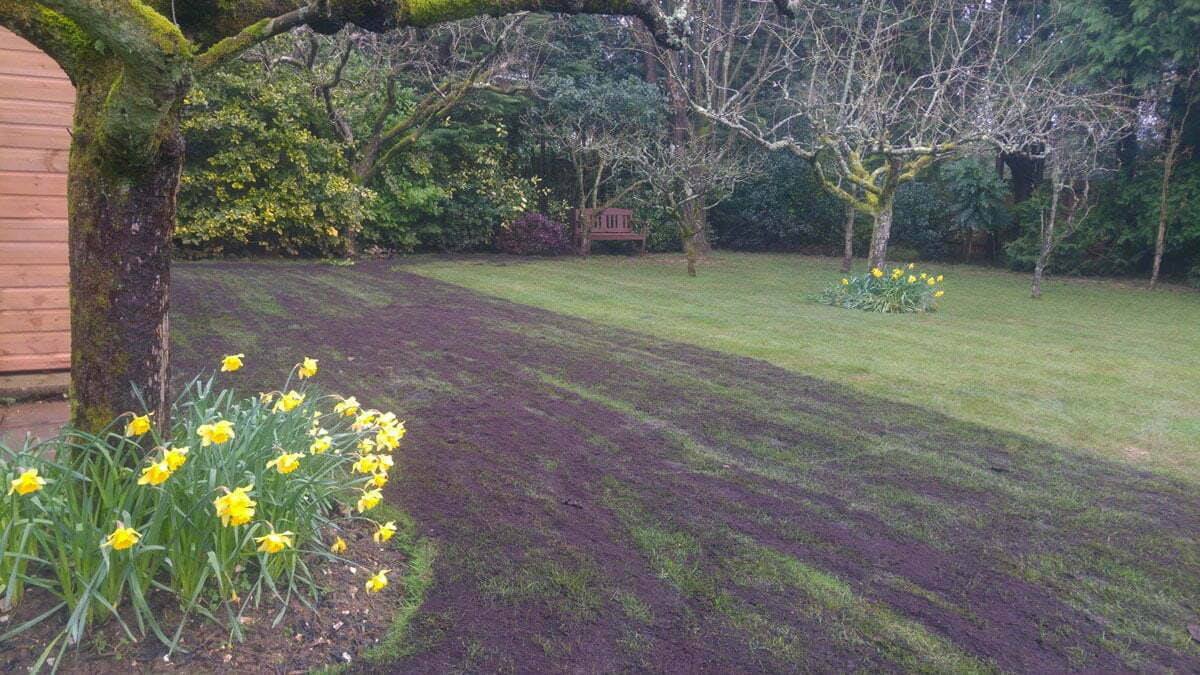
Spread each pile with the back of a landscape rake, pulling it across the surface in different directions. You want a thin, even layer, with more going into the low spots and very little left on the high ones. Keep checking as you go: if you can’t see grass leaves poking through, it’s too thick. Shaded parts of the lawn need an even lighter touch, because grass that’s short of light can’t afford to have its leaves covered.
Step 6: Level it and rub it in
Once a section is spread, level it. A levelling rake (a wide, flat-headed tool sometimes called a lute) or a straight length of timber or aluminium dragged across the surface takes the dressing off the high spots and pushes it into the hollows.
Then rub it in. Greenkeepers use a drag mat; at home, a stiff broom or the back of the rake does the same job. Working it in moves the dressing down off the leaves and into the base of the lawn, so less of it washes around when you water.
For a hollow deeper than about 25 mm, don’t try to fill it in one go. Either build it up over several dressings a few weeks apart, or cut and peel back the turf, fill the soil underneath and lay the turf back down.
Step 7: Water it in, then leave it alone
Water the lawn gently straight away to settle the dressing around the base of the grass. Use a sprinkler or a fine spray rather than a strong jet, which can wash the material into piles. After that:
- water lightly most days for the first week or two, unless it rains
- hold off mowing until the grass has grown through the dressing
- brush or rake out any spots where the grass is still buried after a few days
- keep heavy traffic off while it settles
In the warmer months, couch and kikuyu usually grow through within one to two weeks. Buffalo and zoysia take a little longer.
How often to top dress
Once a lawn is level, most only need dressing every one to two years, ideally in spring, and each dressing improves the soil a little more. Coring first, every year or every second year on heavier clay, gives the best result. A lawn with a lot of levelling to do may need two or three dressings in its first season before it settles into that routine.
When to get a pro
Plenty of people top dress a small, flat lawn themselves and do a good job of it. It’s worth calling in help when:
- The lawn is big. A cubic metre of damp sand weighs well over a tonne, and a 200 square metre lawn at 10 mm takes two of them. That’s a lot of shovelling and barrowing.
- It needs coring or scarifying first. Hiring a corer and a scarifier for the weekend, then dressing on top, is a big job, and the machines are heavy and awkward on slopes.
- The levels are badly out. Deep hollows, drainage problems or water sitting against the house need more than a dressing.
- Access is difficult. Narrow side paths, steps and long barrow runs make every load harder.
- You’re not sure what’s wrong. If the lawn is struggling and you don’t know why, dressing over it can hide the problem rather than fix it.
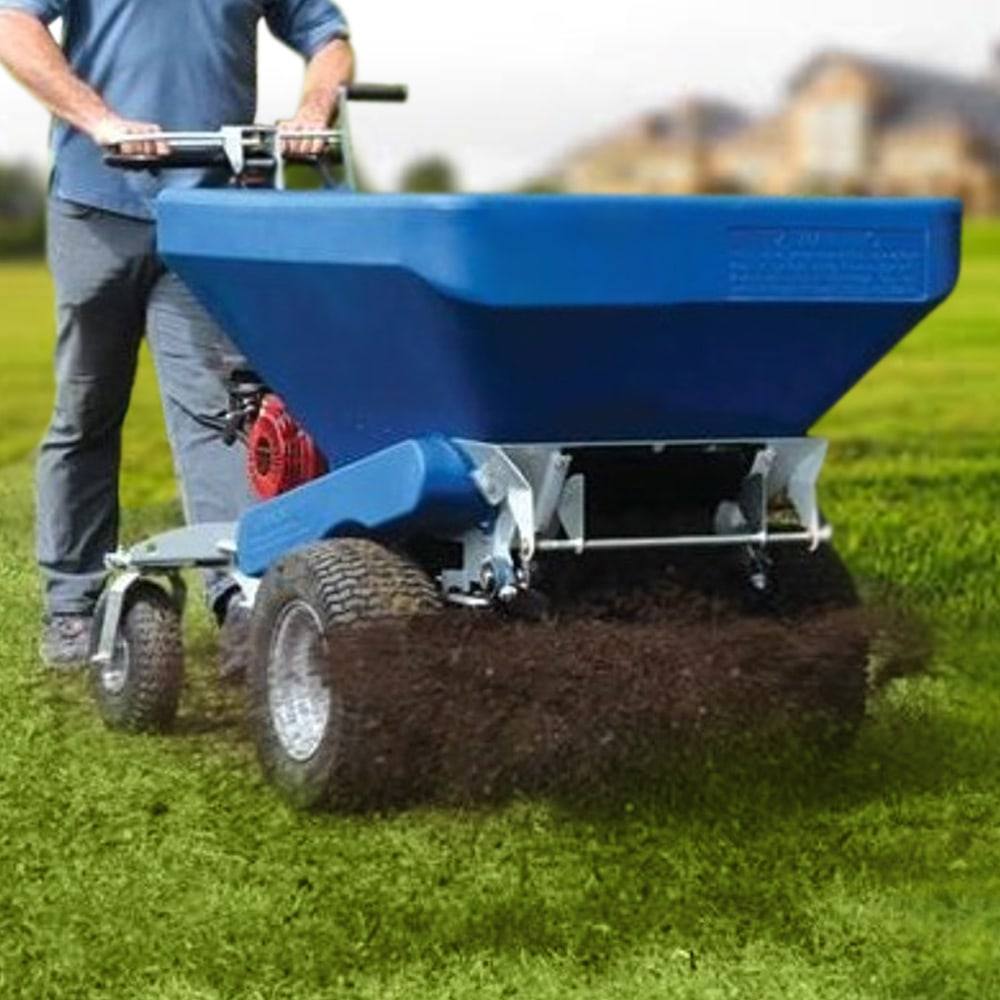
Our ECOLAWN 250 and Metermatic machines meter the dressing out at a set rate, so the layer is even from one side of the lawn to the other, and the hollows are finished by hand. If you’d rather hand the job over, our top dressing service covers homes within 100 km of Beenleigh, from Logan and Brisbane Southside to the Gold Coast, Ipswich and the Redlands. It begins with a free onsite check of the levels, soil and thatch. We’ll tell you whether the lawn needs coring or scarifying before it’s dressed, and give you a firm price for the work.