Scarifying 101: what it is and why your lawn might need it
Scarifying cuts out thatch, the spongy mat of old runners and stems that builds up under couch and kikuyu lawns. Here's what it does, the signs your lawn needs it, and how to time it in South East Queensland.
Plenty of lawns around Logan, Brisbane and the Gold Coast look tired for a reason you can’t see from the street. Under the green leaf sits a layer of old runners, stems and roots that the grass has produced faster than it can break down. Walk on it and the lawn feels springy. Mow it and it scalps. Water it and the soil underneath stays dry. That layer is thatch, and scarifying is how you get rid of it. It’s the job our lawn scarifying and dethatching service is built around.
What scarifying actually is
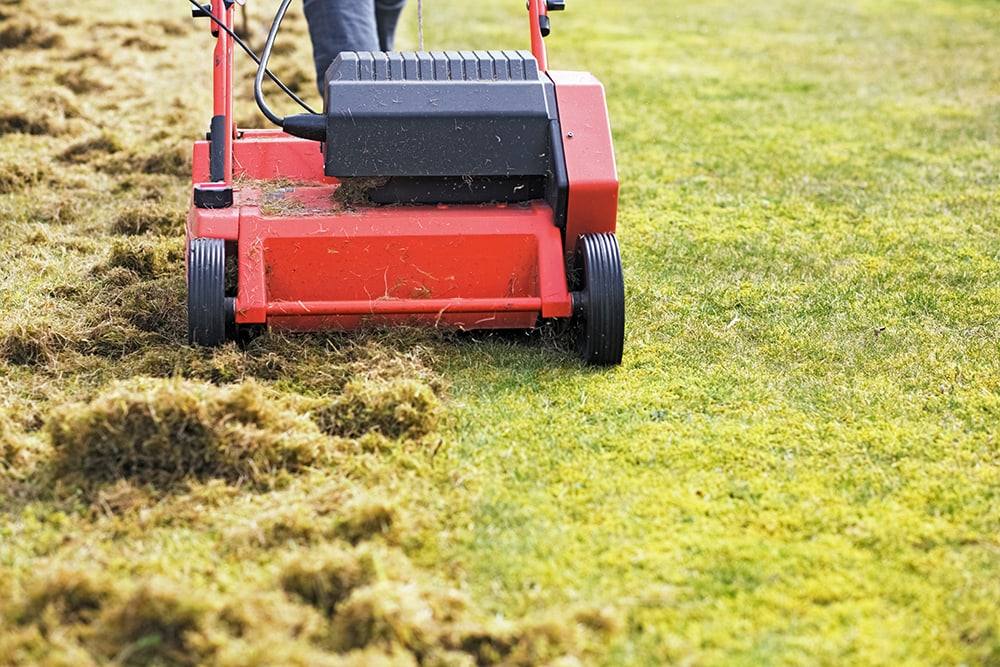
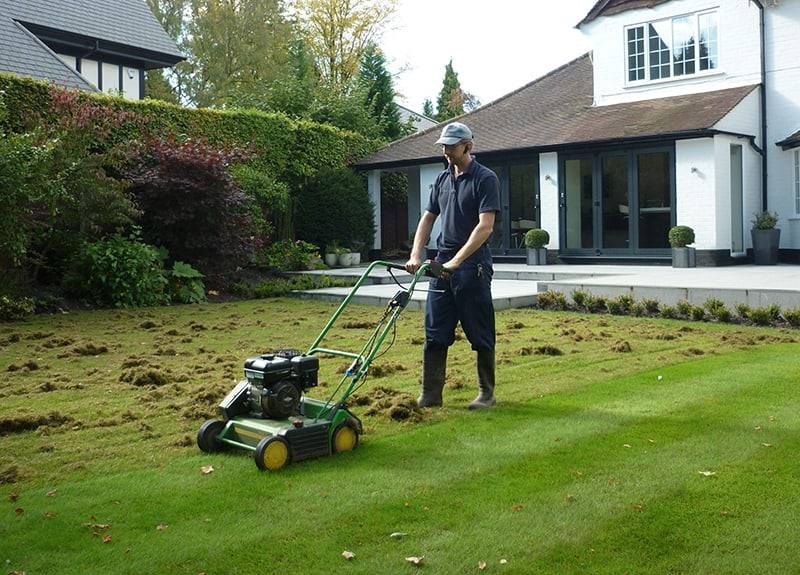
A scarifier has a row of steel blades on a spinning shaft, set on edge so they slice down into the lawn rather than across it like a mower. As the machine moves forward, the blades cut through the thatch, sever old runners and flick the dead material onto the surface to be raked up and cleared away.
You’ll hear three words used for much the same job. Dethatching is the lightest version, using spring tines or flails to comb loose material out. Verticutting uses shallow blades to slice and thin the lawn. Scarifying is the heavier pass, with blades set to cut through the whole thatch layer and just touch the soil.
What thatch is, and how much is too much
Thatch is mostly the tough, slow-to-rot parts of the grass plant: runners (stolons), underground stems (rhizomes), roots and old leaf sheaths. Grass clippings often get the blame, but they’re mostly water and break down quickly, so leaving them on the lawn isn’t what causes a thatch problem.
A thin layer is actually useful. Around 5 to 10 mm cushions the crowns of the grass, softens the surface underfoot and slows evaporation. Trouble starts when it builds past that and the grass begins rooting into the thatch instead of the soil.
Why thatch builds up in South East Queensland lawns
Couch and kikuyu are built to spread, sending runners across the surface and through the top of the soil all season. A lawn that’s fed and watered well grows faster than soil life can break the old material down, and a few habits speed it up:
- heavy fertilising, especially high-nitrogen feeds that push leaf and runner growth
- light, frequent watering that keeps roots shallow and near the surface
- leaving the lawn long between cuts, then taking a lot off at once
- compacted, heavy clay or acidic soil, where the earthworms and microbes that break thatch down struggle
Soft-leaf buffalo such as Sir Walter, and zoysia, build thatch more slowly than couch and kikuyu, but they still get there over a few more years and need a gentler approach when they do.
Signs your lawn needs scarifying
Look for:
- a lawn that feels spongy or bouncy when you walk on it
- scalped, yellow patches after mowing, even on your usual height
- rain or sprinklers that wet the surface while the soil below stays dry
- brown, straw-like runners showing between the green leaf and the soil
- a lawn that has risen above the edges of paths, driveways and garden beds
- moss creeping into damp, shady corners
The simplest test is to cut a small wedge out of the lawn with a spade or an old knife and look at the side. If there’s more than 10 to 15 mm of brown, spongy material between the green leaf and the soil, it’s worth dealing with.
Reasons to scarify your lawn
Taking the thatch out fixes several problems at once, which is why scarifying is often the first step in a lawn renovation.
Water gets back into the soil
In a light shower, thatch behaves like a sponge: it soaks up the water and holds it near the surface, where it evaporates. In a hot, dry spell it does the opposite, drying out and turning water-repellent so rain runs straight off. Either way the roots miss out, and the lawn browns off at the first hint of dry weather. With the thatch gone, water soaks down to the root zone and stays there longer.
Fertiliser reaches the roots
Granular fertiliser that lands on a thick mat tends to sit in it, feeding the thatch more than the soil. After scarifying, the feed gets down to where the roots can use it, which is why we usually fertilise straight afterwards, often on the same visit through our lawn fertilising service.
A more even cut and a thicker lawn
On a thatchy lawn the mower rides up on the spongy layer, then drops into soft spots and scalps them. Scarifying brings the surface back down so you can mow at a sensible height without cutting into the runners. Cutting through old runners also prompts new shoots, so the lawn grows back denser than it was.
Less moss, and fewer places for pests and disease
The base of a thick thatch layer stays damp, especially in shade, which suits moss and some fungal diseases. It also gives armyworm and other insects somewhere sheltered to hide. Scarifying won’t fix a shade or drainage problem on its own, but it takes away the damp, sheltered layer these problems do best in. If you’re also seeing dead patches, check for lawn grubs or read our guide to lawn fungal diseases, because those need a different fix.
When to scarify in South East Queensland
Timing matters more with scarifying than with most lawn jobs, because the lawn has to regrow from what’s left.
- Spring is best. From about September to November, couch, kikuyu, buffalo and zoysia are growing strongly and recover within weeks.
- Summer and early autumn can work, as long as you can water the lawn while it recovers.
- Avoid winter. Warm-season grasses barely grow in the cooler months, so a scarified lawn can sit thin and brown until spring and give weeds a head start.
- Avoid heatwaves and water restrictions. A freshly scarified lawn needs regular water for the first couple of weeks.
- Don’t scarify a waterlogged lawn. Wet soil tears and smears under the blades. Moist soil with a dry surface is ideal.
What happens on the day, and afterwards
On a typical home lawn, the grass is mown low first so the blades can get at the thatch. The scarifier then goes over the lawn once, or twice at different angles where the thatch is heavy, with the blades set to just reach the soil surface. Going deeper only rips out runners the lawn needs to regrow. The lifted thatch is then cleared away, and on an overgrown couch lawn there’s usually far more of it than people expect.
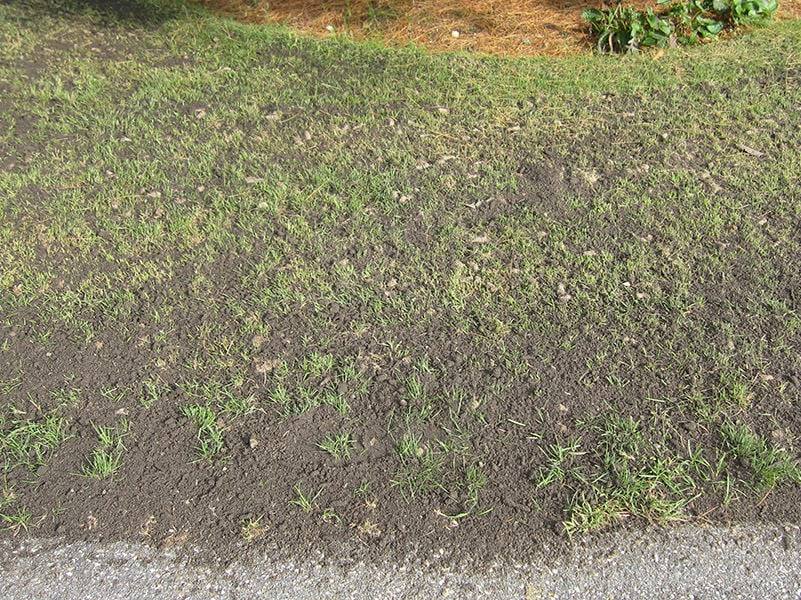
Be ready for how it looks. Straight after a proper scarify the lawn is thin, brown and stripy, with bare soil showing in places. That’s normal. With warmth and water, new shoots appear within one to two weeks, and the lawn knits back together in three to six weeks, lower and thicker than before.
Aftercare speeds that up:
- Water every day or two for the first fortnight, unless the rain does it for you.
- Feed the lawn straight away to push new growth.
- Hold off mowing for around two weeks.
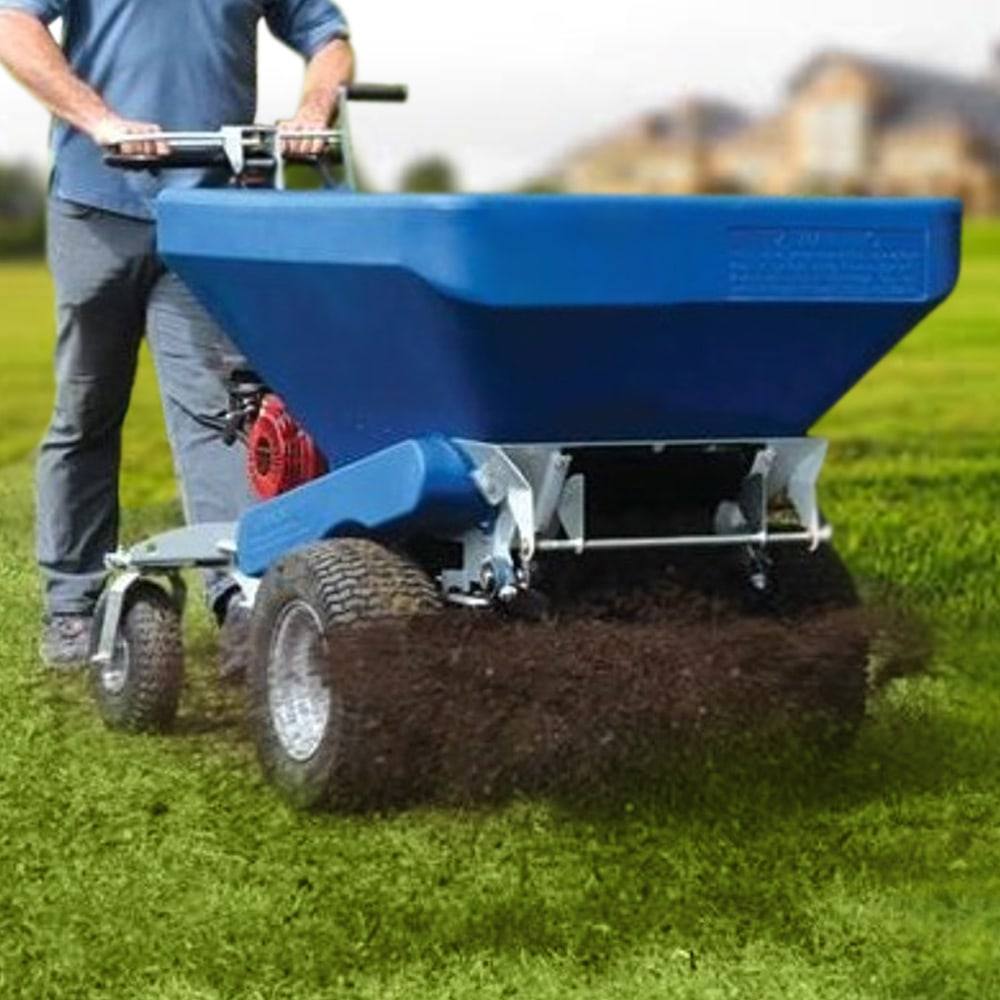
- Spread a light top dressing to fill gaps and even out the surface. Here’s why top dressing helps.
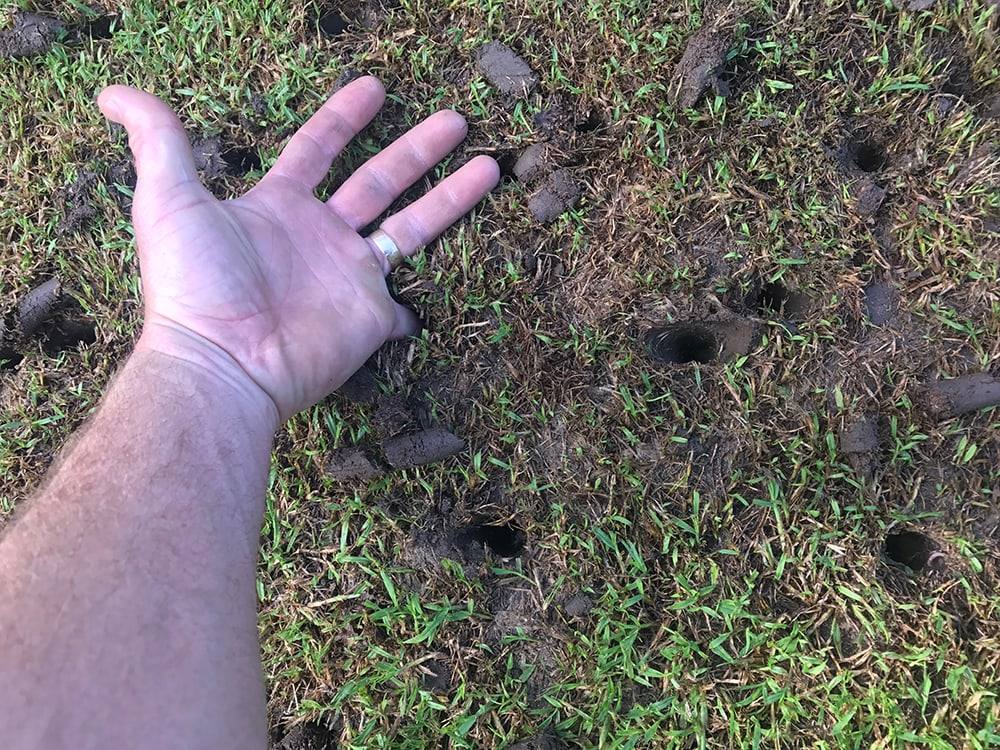
- If the soil underneath is compacted, core the lawn while it’s open.
Put together, that’s a full lawn renovation: scarify first, then core, then feed and top dress. Plenty of lawns only need one or two of those jobs, and the onsite check is where that gets worked out.
DIY scarifying or getting it done
Hire shops rent walk-behind scarifiers and dethatchers, and on a small, flat couch lawn with moderate thatch a careful DIY job can work. A few things catch people out:
- Setting the depth. Too shallow does little. Too deep tears out runners, and buffalo in particular, with its thick surface runners, doesn’t take kindly to aggressive blades.
- The clean-up. Raking up and disposing of the thatch is often the hardest part.
- Misreading the problem. Brown, spongy or dying patches can also be grub damage, disease or compaction. Scarifying a lawn that grubs are already eating only sets it back further.
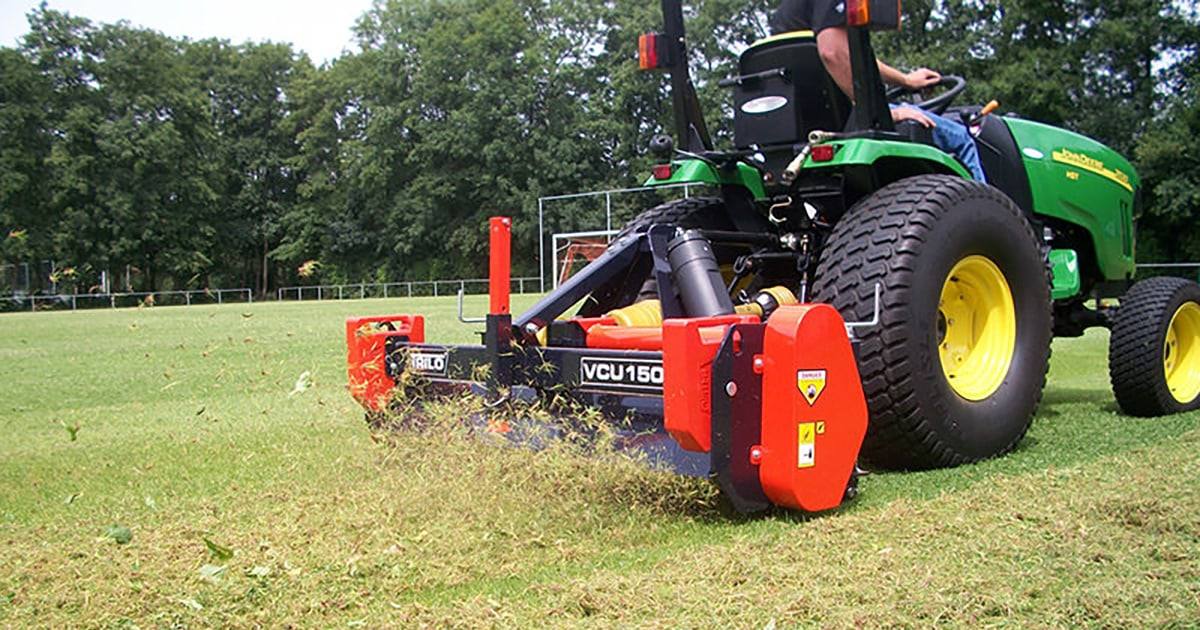
That last one is the main reason to have someone look first. Big open areas and sports fields are a different job again, done with tractor-mounted gear. If you look after an oval, see scarifying for sports fields.
If your lawn is spongy, scalping or browning off in patches, our dethatching and scarifying service covers homes within 100 km of Beenleigh, including Logan, Brisbane Southside, the Gold Coast, Ipswich and the Redlands. It starts with a free onsite check: we cut a small section to measure the thatch, check the soil, and give you a clear plan and a firm price before any work is booked.