4 benefits of top dressing your lawn, and when it's worth doing
A thin layer of sand or sandy loam does a lot more than smooth out the bumps. Here are the four main benefits of top dressing a lawn, what it won't fix, and when it's worth doing in South East Queensland.
Most lawns don’t fail all at once. They sink a little over an old trench, wear thin along the dog’s track, scalp on a high spot here and hold a puddle there, until the whole thing looks tired. Top dressing is one of the simplest ways to turn that around without ripping the lawn up and starting again. It’s a big part of what our lawn top dressing service does around Brisbane, Logan and the Gold Coast, and it pays off in four main ways.
What top dressing is
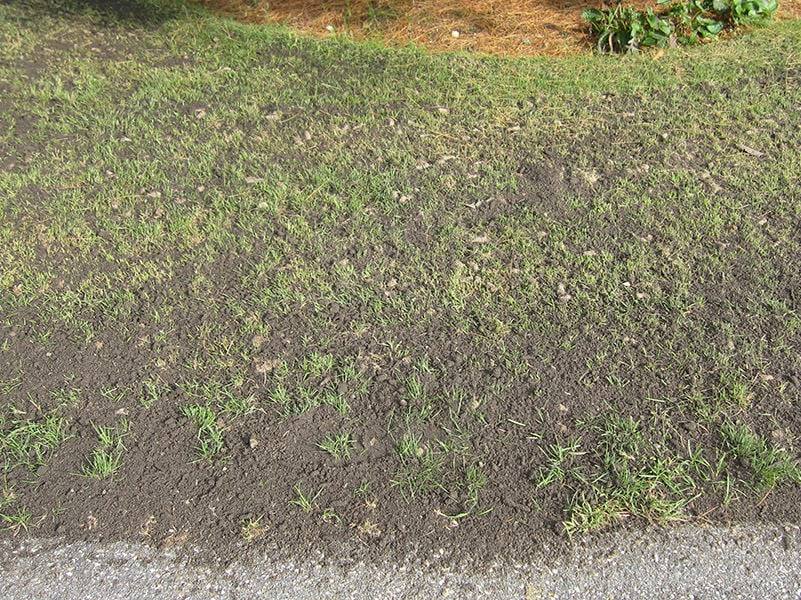
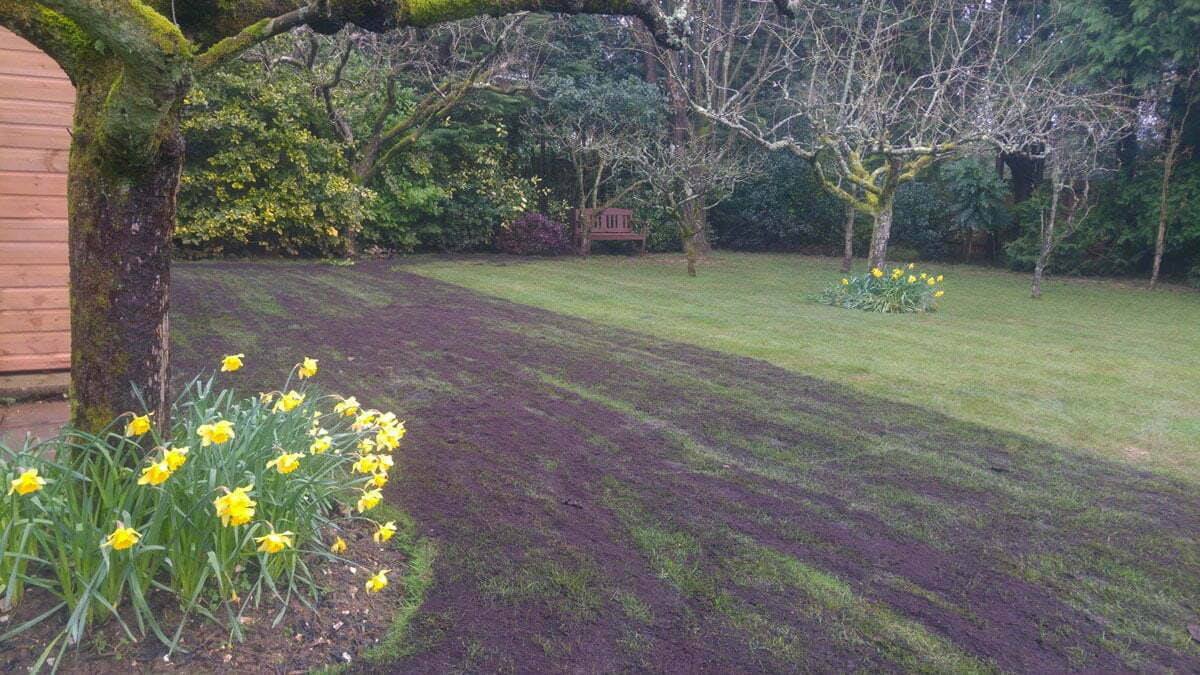
Top dressing (or topdressing) means spreading a thin, even layer of material over an established lawn and working it down into the grass. For home lawns in South East Queensland that material is usually washed sand or a sandy loam blend, which is mostly sand with a smaller share of loam or organic matter. It isn’t a thick layer of garden soil, and it isn’t straight compost. Both can smother the grass and form a layer that water struggles to get through.
The important word is thin. Around 5 to 10 mm at a time suits most lawns, with the leaf tips still showing when the job is finished. The grass then grows up through the dressing within a couple of weeks in the growing season. Doing it yourself? Our beginner’s guide to top dressing a lawn covers the material, the depth and the watering in.
1. A smoother, more level lawn
Bumps and hollows are the most common reason people top dress. Soil settles over plumbing trenches and old tree roots, turf rolls shrink apart at the seams, and heavy use wears ruts into the surface. The mower then scalps the high spots and leaves the low ones long, puddles sit in the same places after every storm, and the dips turn into ankle-turners for kids and visitors.
Each dressing fills the low spots a little and lifts them towards the level of the rest of the lawn while the grass grows up through it. Shallow hollows can be fixed in one go. Deeper ones are filled over two or three dressings a few weeks apart, because burying the grass under too much at once smothers it.
A level lawn is easier to mow and safer to play on. It also drains more evenly, so you get fewer of the soggy patches where fungal lawn diseases tend to get started.
2. Thin and bare patches fill in faster
Couch, kikuyu and buffalo all spread by runners. When those runners have loose, moist material to grow into, they root down and fill gaps much faster than they can across bare, crusted soil. A light dressing over a thin patch gives them exactly that.
It’s also a good finish for a newer lawn whose turf rolls have pulled apart and left seams and low edges. And it helps seed take. If you’re patching a couch lawn with seed, sowing just before the dressing keeps the seed in contact with the soil and protects it while it germinates. Soft-leaf buffalo varieties aren’t grown from seed, so bare spots in a buffalo lawn are better patched with a few pieces of turf and then dressed.
3. Better soil, one thin layer at a time
This is the benefit you can’t see, and over a few years it’s the one that matters most. A lot of South East Queensland lawns grow on heavy clay, or on compacted fill left behind by the builders. Both hold water at the surface after rain, set hard when they dry out and give roots very little room to grow.
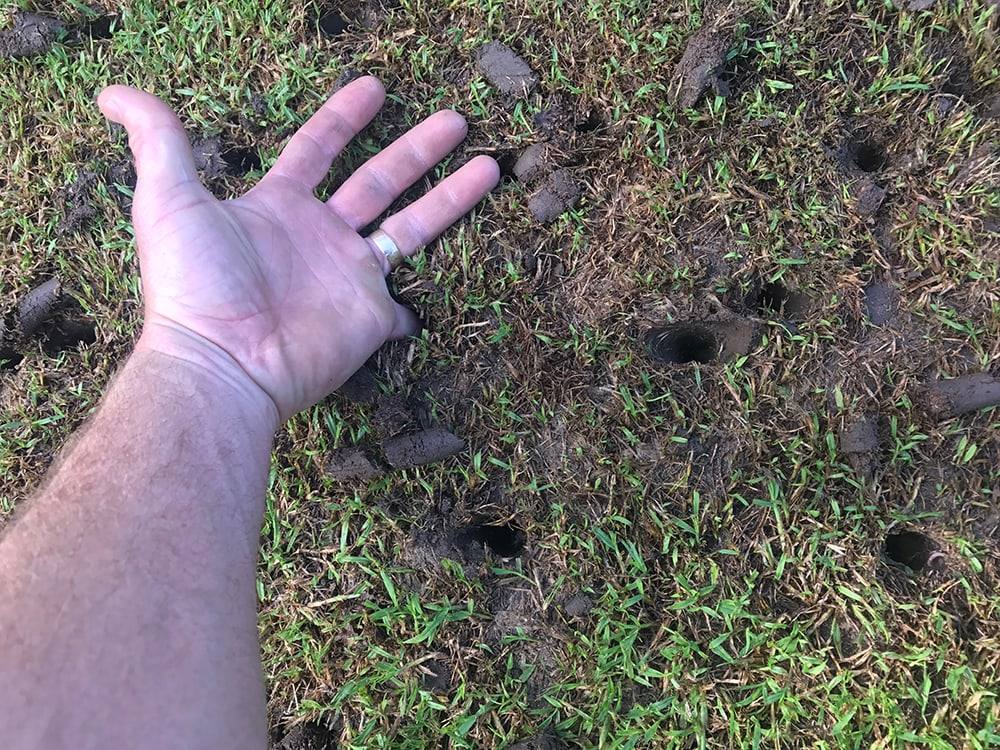
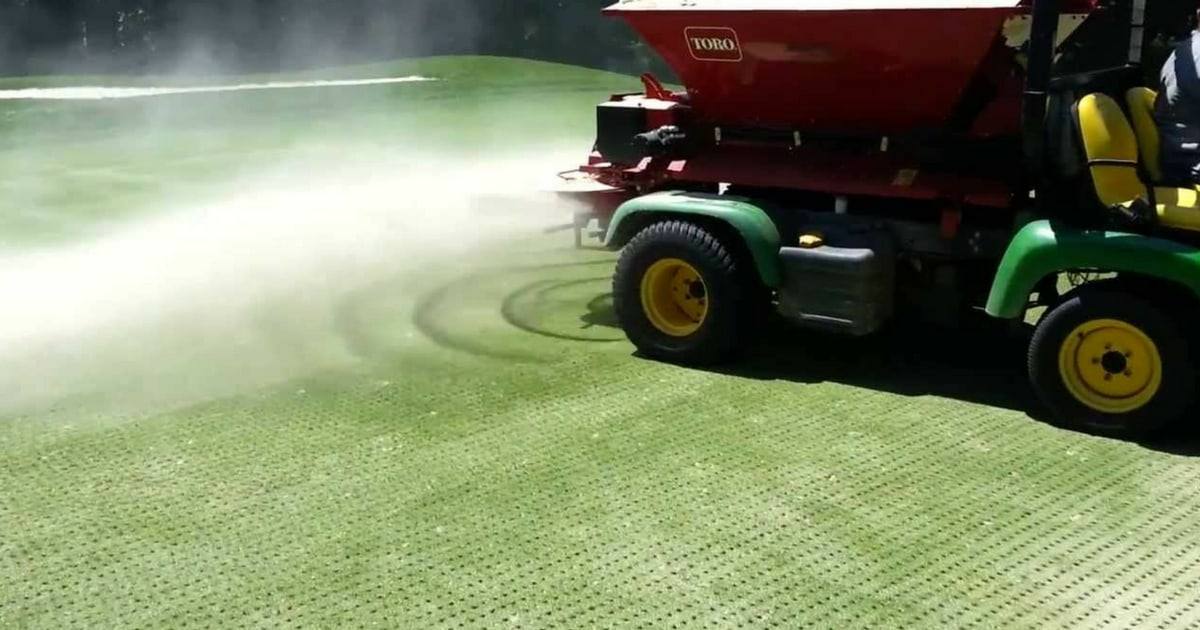
Top dressing straight after lawn coring is how you change that. Coring pulls thousands of small plugs out of the lawn, and the dressing drops into the holes, replacing some of that heavy soil with free-draining material that air, water and roots can move through. Repeat it each spring for a few years and the soil your grass grows in is genuinely better than it was. A sandy loam blend adds organic matter too, which helps the soil hold moisture and nutrients and feeds the earthworms and microbes that keep it healthy.
4. It helps keep thatch in check
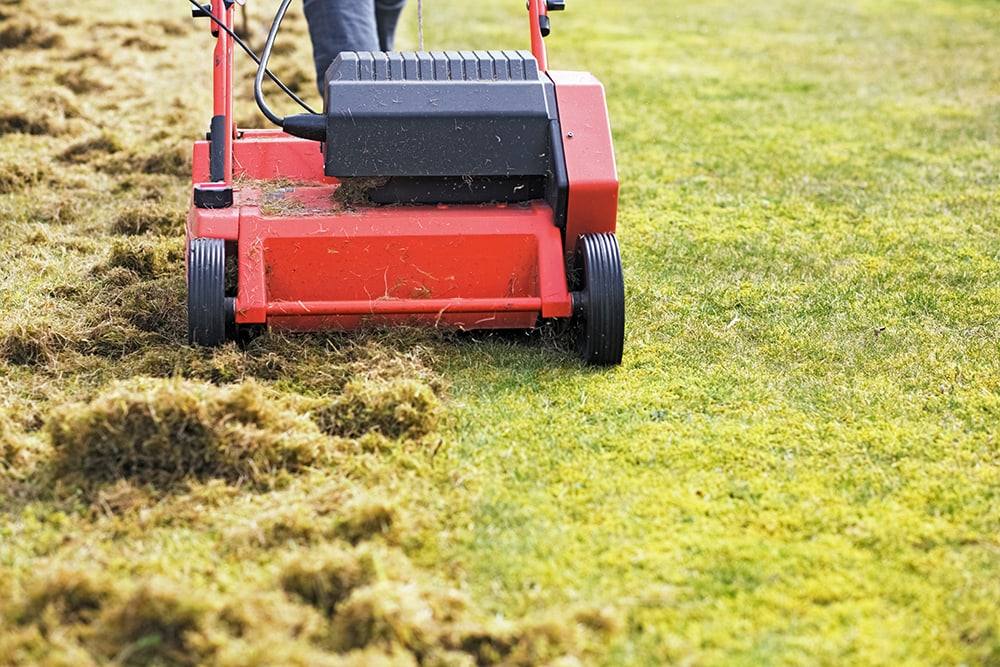
Thatch is the layer of old runners and stems that builds up between the green leaf and the soil, especially in couch and kikuyu. A little is harmless. A thick layer stops water and fertiliser getting through and leaves the lawn spongy and prone to scalping.
Regular light dressings help by mixing soil, and the microbes that live in it, into the thatch, where they speed up its breakdown. It’s a gentle, gradual approach that won’t leave the lawn looking stripped. What it won’t do is clear a heavy build-up. If a wedge cut out of your lawn shows more than 10 to 15 mm of brown, spongy material, the lawn needs scarifying first, with the dressing going on afterwards to help it recover.
What top dressing won’t fix
It’s worth being clear about the limits, because top dressing sometimes gets sold as a cure-all.
- Lawn grubs and other pests. Dead patches that lift like a loose carpet are often grub damage. Dressing over them doesn’t help; finding the cause does. See our lawn grub treatment page.
- Compaction on its own. Dressing spread over hard clay mostly sits on top. Core first.
- Heavy shade. Grass that’s short of light stays thin however good the soil is, and shaded lawns need an especially light dressing so the leaf is never buried.
- Weeds. Dressing doesn’t control weeds, and cheap, unwashed material can bring new weed seeds in with it.
- The wrong material. Clay, garden soil or builder’s fill can set into a layer that blocks water and roots, leaving the lawn worse off than before.
When top dressing is worth doing
In South East Queensland the best time is spring to early summer, roughly September to December, when warm-season grasses are growing hard and push up through the dressing quickly. It can carry on through summer and into early autumn. Winter is the time to leave it alone, because the grass barely grows and the dressing just sits on top.
Top dressing gives the most when it follows other work. In a full lawn renovation, the lawn is scarified if it needs it, then cored, fed and dressed, so each step makes the next one work better. Our article on top dressing and fertilising together explains how the two work as a pair.
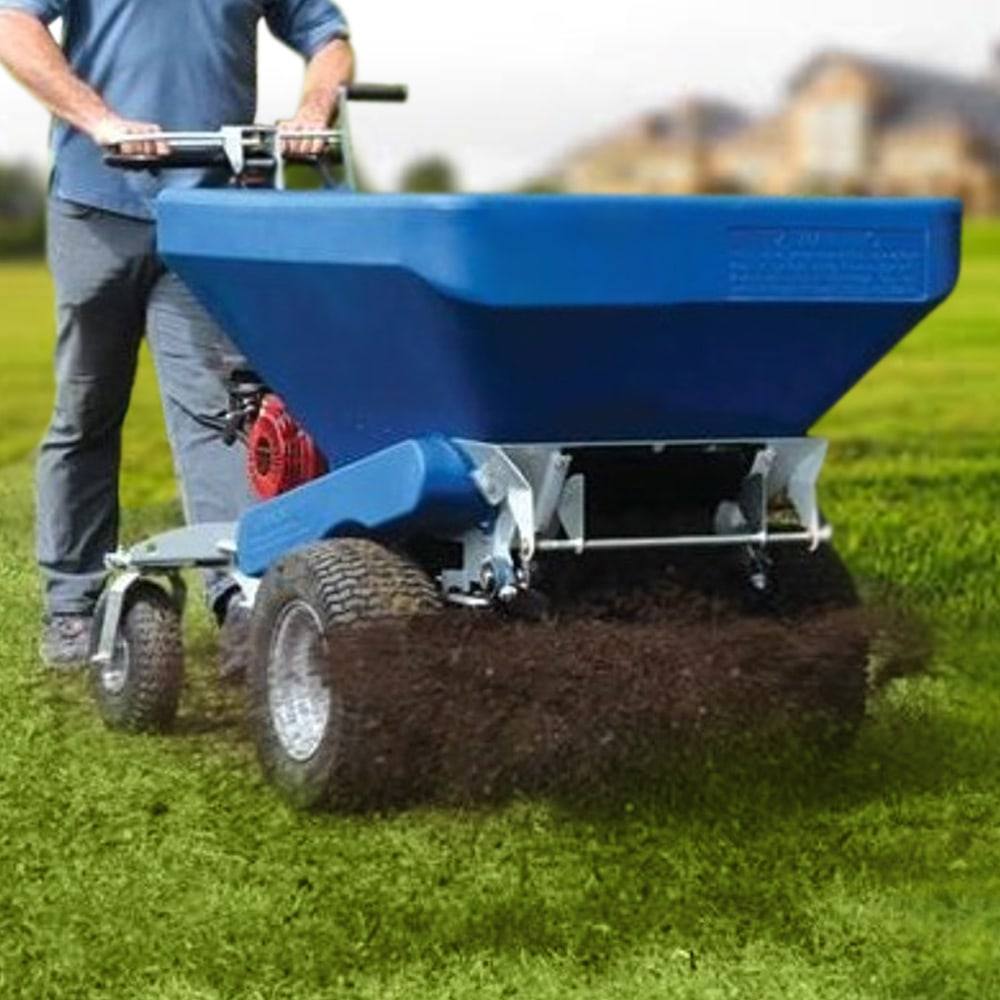
If your lawn is bumpy, thin or holding water, our top dressing service covers homes within 100 km of Beenleigh, including Logan, Brisbane Southside, the Gold Coast, Ipswich and the Redlands. We spread the dressing with our ECOLAWN 250 and Metermatic top dressers for an even layer, then work it into the low spots with levelling tools. It starts with a free onsite check, so you’ll know which mix suits your lawn, whether anything needs doing first, and what it will cost.