6 reasons to aerate your lawn in South East Queensland
If your lawn is hard underfoot, sheds water after rain or stays thin however much you feed it, compacted soil is the likely cause. Here are six ways aeration fixes it, plus a simple spade test to check your own lawn.
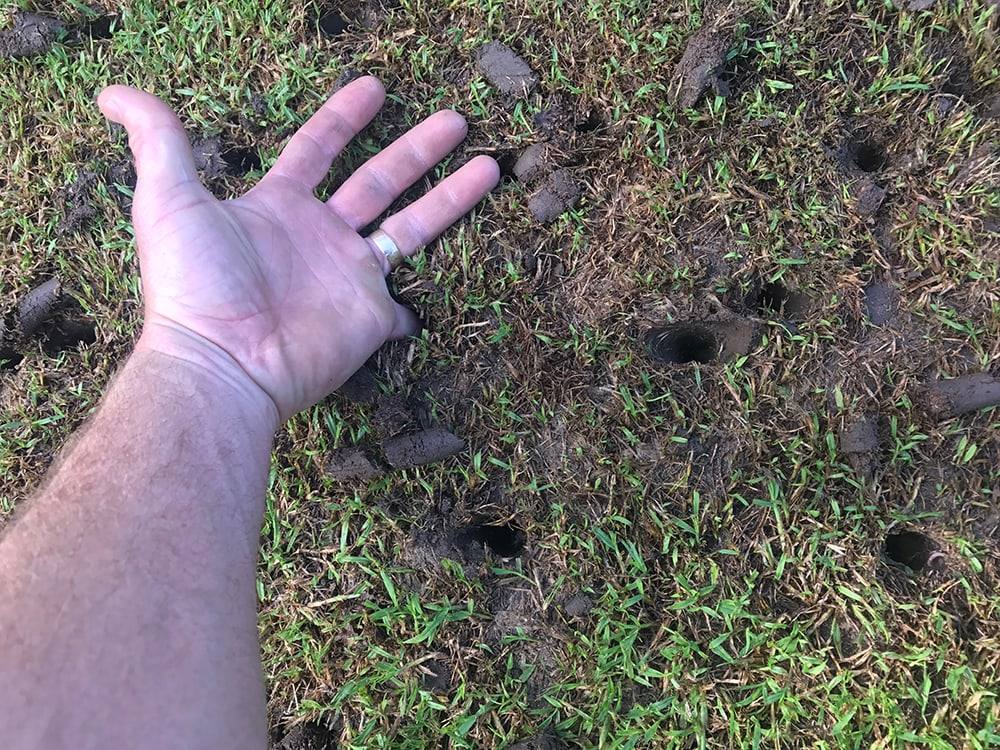
Aeration is an easy job to put off. For the first week the lawn looks messier, with cores scattered across it, and the payoff comes over the following weeks from underneath. But most tired lawns in South East Queensland aren’t short of water or fertiliser. They’re growing in soil packed so tight that roots, water and air can’t move through it. Here are six reasons aerating fixes that, and how to check whether your lawn needs it. When it does, our lawn aeration service in Brisbane can take care of it.
1. Air, water and nutrients reach the roots again
Roots breathe. They take in oxygen and give off carbon dioxide, and in healthy soil the two swap freely through the small gaps between soil particles. Compaction squeezes those gaps shut. Oxygen runs short, carbon dioxide builds up around the roots, and the grass slows down even when it has plenty of water and food on top.
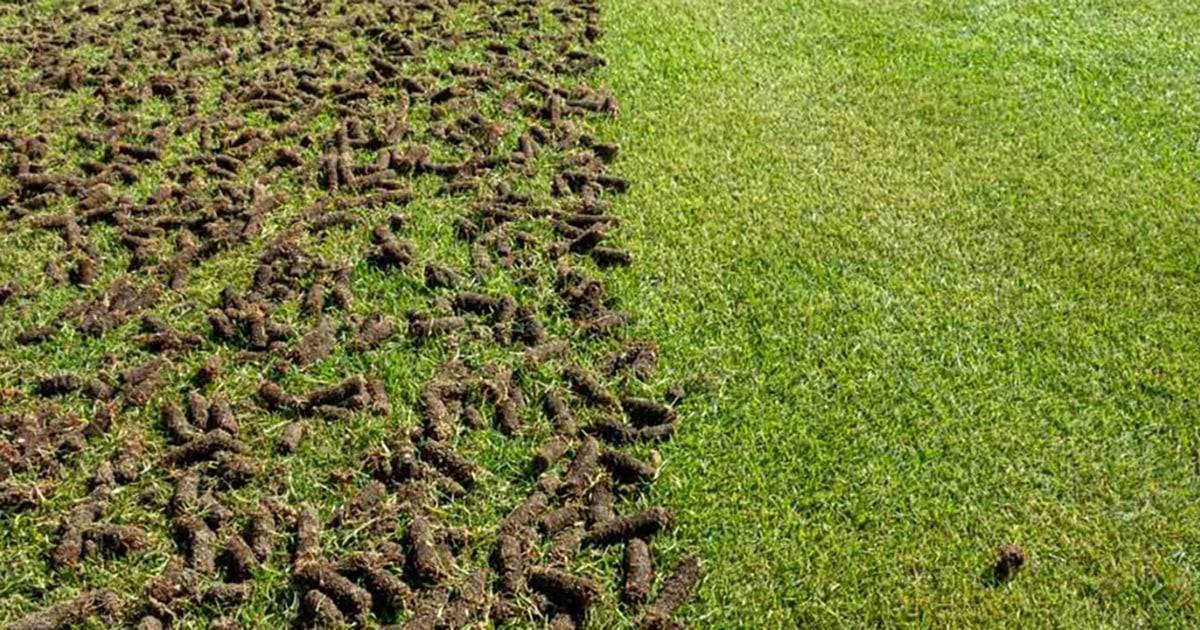
Aeration pulls out thousands of small plugs of soil and leaves open channels in their place. Air moves back into the root zone, and water and nutrients follow the same paths down. It’s the most direct fix for a lawn that’s being starved from below.
2. Roots grow deeper and stronger
Roots take the easiest path. In compacted ground they spread sideways through the top few centimetres, where the soil is loosest, and rarely go much deeper. A shallow-rooted lawn dries out the moment the weather turns hot and tears up easily under feet and paws.
The channels left by aeration give roots a way down. Over the following weeks they grow into the holes and into the loosened soil around them, building a deeper root system that can reach moisture lower in the soil. That’s why a well-aerated lawn holds up better through dry spells, and also bounces back faster after a week of heavy rain.
3. Rain and irrigation soak in instead of running off
A summer storm can drop a lot of rain in a short time. On compacted clay, most of it never gets into the soil. It sheets across the surface and into the gutter, or pools in low spots where it sits for days and drowns the roots underneath.
Opened-up soil takes water in much faster. More of every downpour, and more of every session with the sprinkler, ends up in the root zone where the grass can use it. Over a season that means less watering for the same result, and fewer soggy patches that turn rock hard once they dry.
4. Fertiliser stays where you put it
Fertiliser spread on compacted ground tends to stay on the surface. The next heavy rain washes much of it off the lawn and into stormwater drains, where it does nothing for your grass and adds to the nutrient load in creeks and waterways downstream.
When the soil is open, fertiliser washes down into the root zone instead. You get more out of every bag, and over time a lawn that roots deeply and takes up nutrients properly needs less feeding to stay green. The best time to feed is straight after aerating, while the holes are still open, which is how our lawn fertilising service times it.
5. Thatch is kept in check
Thatch is the layer of runners, roots and dead material that builds up between the green leaves and the soil. A thin layer is normal and even cushions the lawn. Once it gets thicker than about 10 to 15 mm, it behaves like a sponge: water and fertiliser get caught in it, roots grow into it instead of the soil, and the lawn feels springy underfoot.
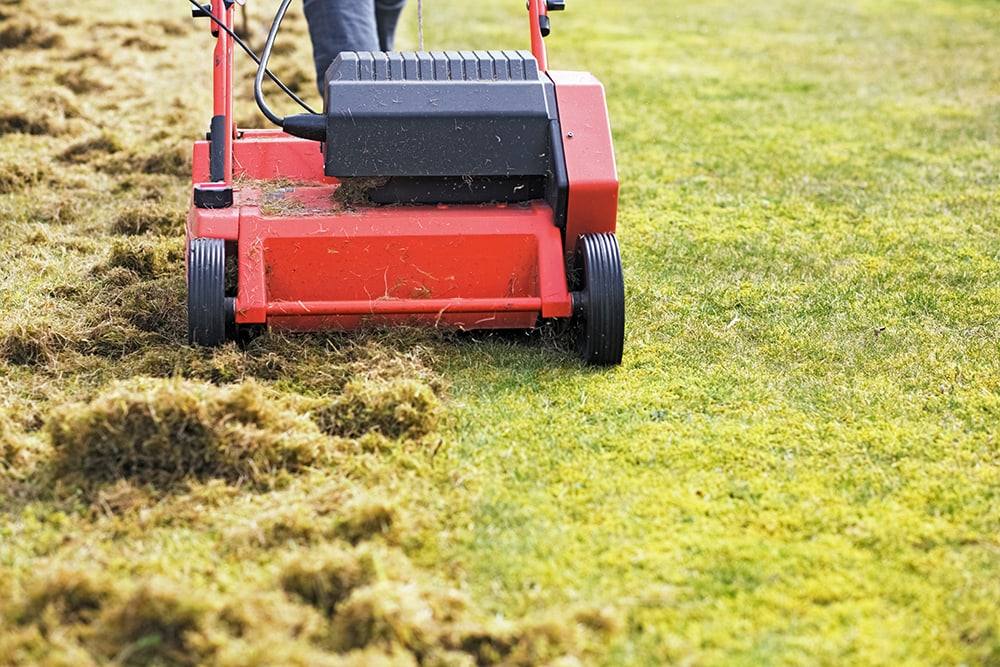
In healthy soil, microbes break thatch down about as fast as it forms. Compacted soil doesn’t hold enough oxygen to keep them working, so thatch piles up. Aeration helps in two ways. The tines remove some thatch with every plug, and as the cores crumble they mix soil into what’s left, bringing in the microbes that break it down. On a lawn with heavy thatch, scarifying or dethatching before coring clears the worst of it first.
6. The soil under your lawn gets better over time
Soil is alive. Bacteria, fungi and earthworms break down organic matter, release nutrients the grass can use and build the crumbly structure that holds air and water. All of them need oxygen, and compacted soil starves them along with the roots.
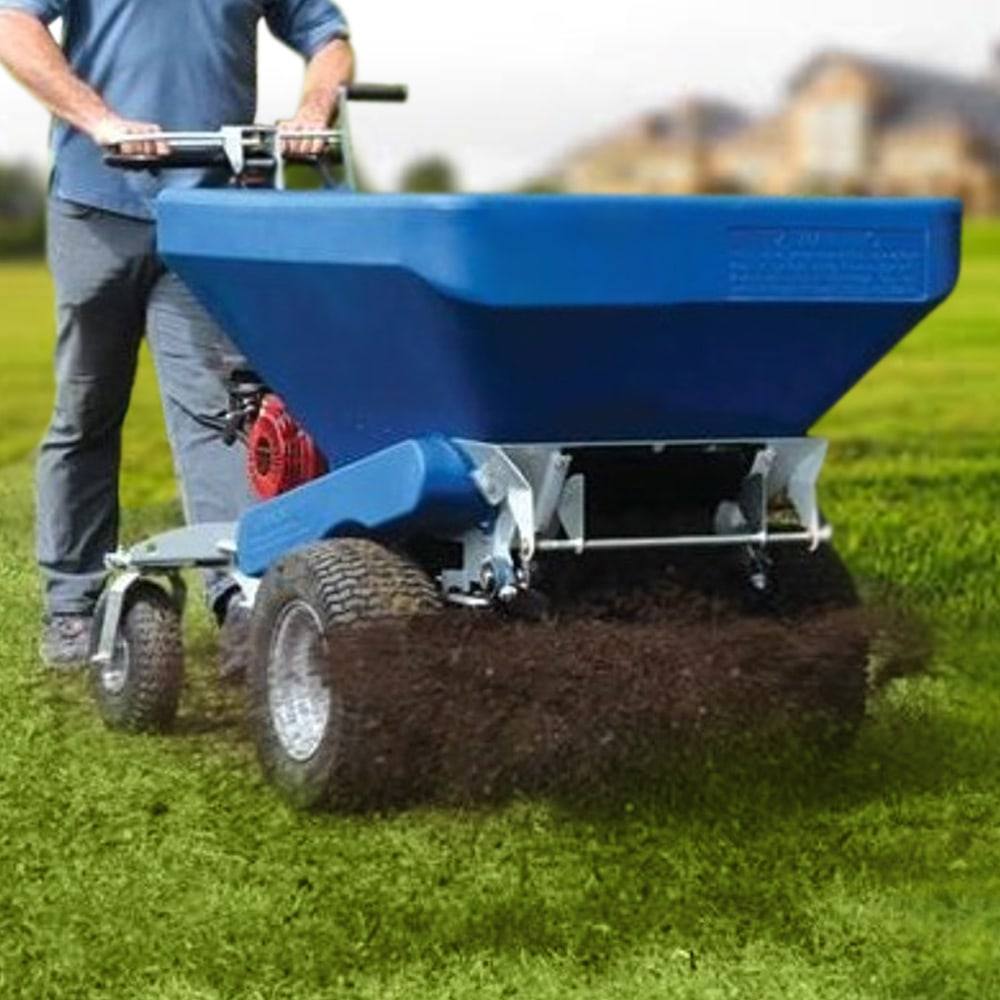
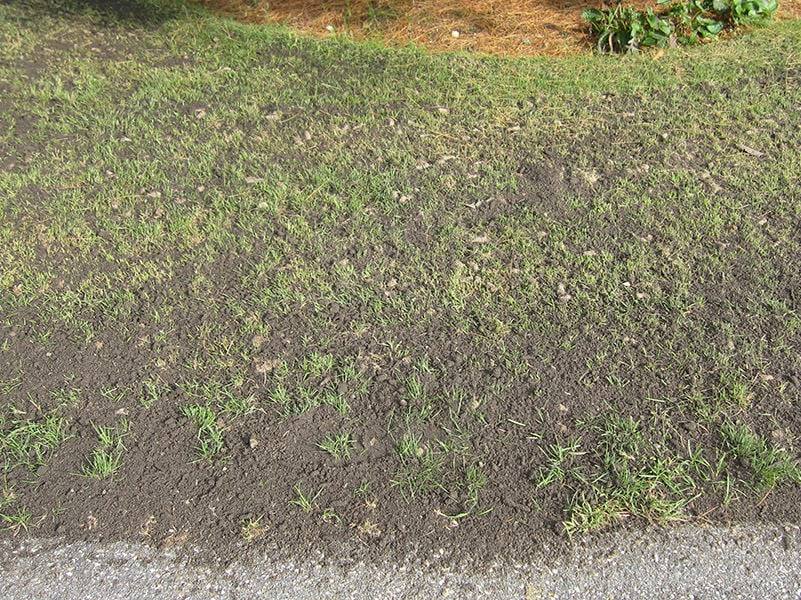
Each round of aeration lets that soil life recover a little more. The cores left on the surface break down and return organic matter, and if you top dress after coring, a sandy loam fills the holes with better material than what came out. Repeat that over a few springs and you end up with a deeper layer of good topsoil under the grass, and a lawn that needs less water, less fertiliser and less fixing.
A bonus for sports fields: safer, more even surfaces
On ovals and playing fields, compaction isn’t only a turf problem. A hard surface is less forgiving for players who fall or get tackled, and turf managers generally regard softer, well-aerated surfaces as safer to play on. Compacted fields also drain poorly, so games get washed out more often and the wet areas get torn up.
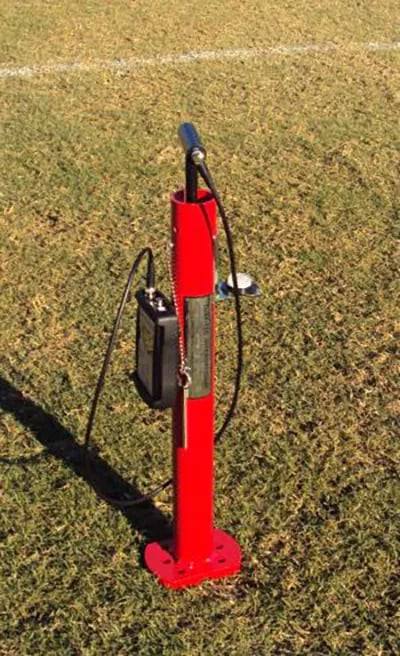
Surface hardness can be measured with a Clegg hammer, a weighted cylinder dropped onto the turf to record how hard it is. Readings taken across the field show where compaction is worst, and regular turf aeration, backed by good watering, is the main way to bring those numbers down. Our Clegg hammer testing gives councils, schools and clubs a written report of the readings, so you can see where the field stands and track it from season to season.
How to tell if your lawn needs aerating
The easiest check needs only a spade. Pick a spot that gets regular use, wait until the soil is moist, and dig out a wedge of lawn about 15 cm deep. Then look at the side of the hole:
- Roots. In loose soil, the roots of a warm-season lawn run well below the top few centimetres. If most of them stop at around 5 cm, the soil underneath is likely compacted.
- Thatch. Measure the spongy brown layer between the leaves and the soil. More than 10 to 15 mm is too much.
- Soil. Dense, sticky clay that comes out as a solid block compacts easily and benefits from regular aeration.
Lawns that take heavy traffic from kids, dogs, cars or trailers are almost always worth aerating, even if they still look reasonable. If the spade test points to compaction, our guide on why and when to aerate explains how to time the job for your grass.
Getting the most from aeration
Aeration does the most good in spring and early summer, when couch, kikuyu, buffalo and zoysia are growing strongly and can close the holes quickly. Leave the cores on the lawn to break down, feed and top dress while the holes are open, and water deeply for the next couple of weeks. Our guide to core aeration covers the process and aftercare step by step.
If your lawn is showing the signs, our lawn aeration service covers homes within 100 km of Beenleigh, with jobs from $220, and every job starts with a free onsite check. We’ll look at the soil, explain what’s going on and lay out what the lawn needs, with a firm price before any work starts.