Top dressing and fertilising your lawn: which comes first?
Top dressing and fertilising do their best work together, but only when they go down in the right order. Here's how to combine them on a South East Queensland lawn, what to spread and when to do it.
Warm soil and longer days get South East Queensland lawns growing again in spring, which makes spring to early summer the best time of year to top dress and fertilise. The two jobs work best together, but plenty of people do only one of them, or do both and put them down in the wrong order. That wastes fertiliser and slows the lawn’s recovery. Our lawn top dressing service can include the feed on the same visit for exactly that reason. If the lawn also needs thatch taken out or compacted soil opened up, both jobs become part of a full lawn renovation, and the same order applies.
Why top dress and fertilise at the same time
The two jobs solve different problems. Top dressing looks after the surface and the soil: a thin layer of sand or a sandy blend fills hollows, smooths out bumps, fills core holes and, year by year, builds better soil around the roots. What it doesn’t do is feed the grass much. Washed sand carries almost no nutrients, and blends with organic matter only release a little, slowly.
Fertiliser does the feeding. A lawn with enough nitrogen and potassium in the root zone pushes new leaf up through a fresh dressing far sooner, and fills thin patches before weeds get a foothold in the bare sand. A hungry lawn under a fresh dressing tends to just sit there.
Doing both on the same day also means the lawn only gets knocked about once, recovers in one burst of growth, and needs the extra watering only once.
The right order on the day
Whether it’s a full renovation or a simple feed and dress, the steps go in this order:
- Mow. Cut a notch lower than usual a day or two beforehand, so the dressing settles down around the leaf instead of sitting on top of long grass.
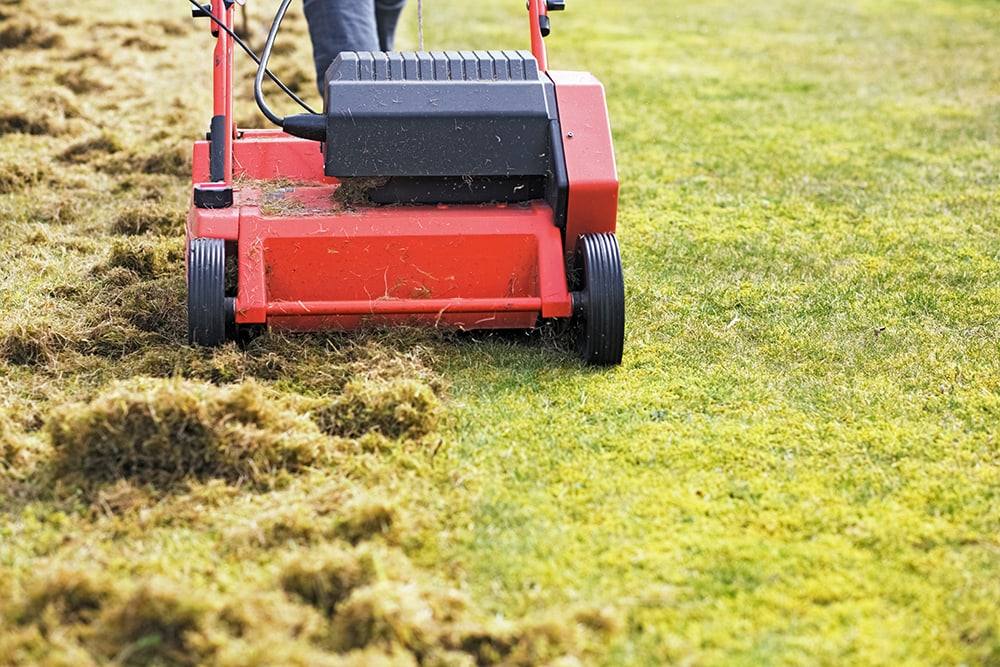
- Scarify, if there’s thatch. A spongy mat of old runners and dead leaf stops dressing and fertiliser reaching the soil. Dethatching and scarifying comes first, because doing it later rips the new material straight back out.
- Core, if the soil is compacted. Hollow tines pull thousands of plugs of soil and leave holes for the feed and dressing to drop into. See how lawn coring works.
- Fertilise. Spread granular fertiliser while the holes are still open.
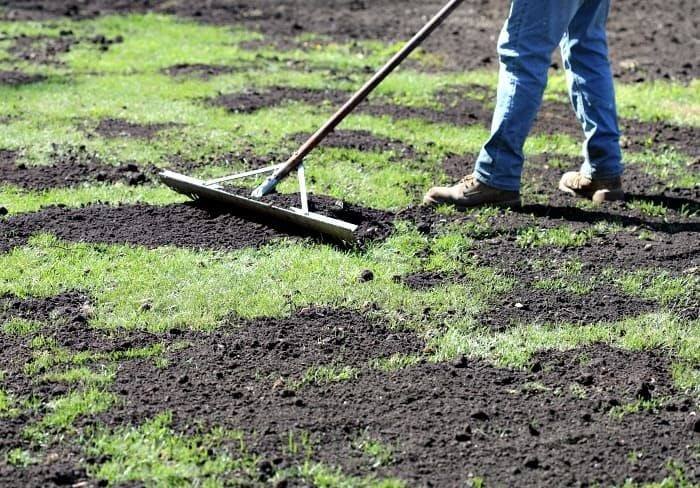
- Top dress. Spread the dressing over the top, then work it into the holes and hollows with a levelling rake until the leaf tips show.
- Water in. Soak the lawn straight away to wash the dressing down around the leaf and get the fertiliser dissolving.
Not every lawn needs steps 2 and 3. A lawn with decent soil and little thatch can go straight from mowing to fertilising and dressing.

Why the fertiliser goes on before the dressing
Dressing first and feeding afterwards is tempting, but feeding first works better for three reasons.
- It ends up where the roots are. On a cored lawn the granules roll down the holes into the root zone, and the dressing goes in on top of them. Spread over fresh dressing, they sit in a layer of sand above the roots.
- Less of it is lost. Granules lying on the surface are the first thing a summer storm washes onto the path and into the stormwater drain. Under a layer of dressing they stay put while they dissolve.
- It’s easier to spread evenly. You can see granules on mown grass and spot the strips you’ve missed. On a lawn freshly covered in sand they disappear, and doubled-up strips that later show as burnt lines become much more likely.
Liquid feeds are the exception. A liquid fertiliser or seaweed-based product suits the weeks after, once the grass has grown up through the dressing and there’s leaf to take it in.
Choosing the top dressing
The dressing should suit the soil the lawn is growing in, so water and roots can move freely from one into the other.
- Washed sand is clean, drains freely and is the best choice for levelling and for filling core holes in heavy clay. It holds very little water or nutrient, so a lawn dressed with sand relies on its fertiliser.
- A sandy blend with organic matter, roughly three parts sand to one part screened organics, holds more moisture and releases a small amount of nutrient as it breaks down. It suits tired lawns on sandy or worn-out soil.
- Heavy clay, garden soil and straight manure or compost are best avoided. They set hard or stay soggy, can bring weed seeds in with them, and leave a layer that water and roots struggle to cross.
Whichever mix goes down, the lawn still needs its feed: even a blend with organic matter supplies only a small part of what a growing lawn uses. We match the mix to your soil at the onsite check, and our top dressing page compares the options in more detail.
How thick to spread it
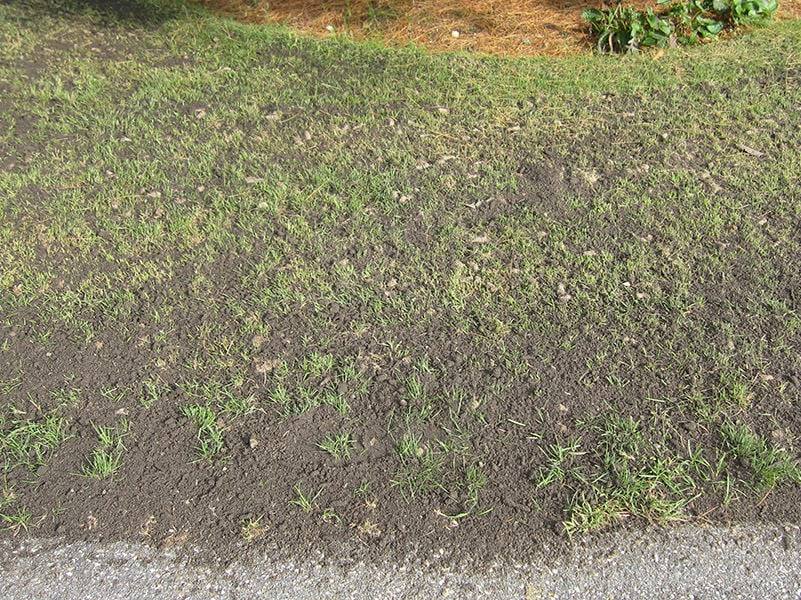
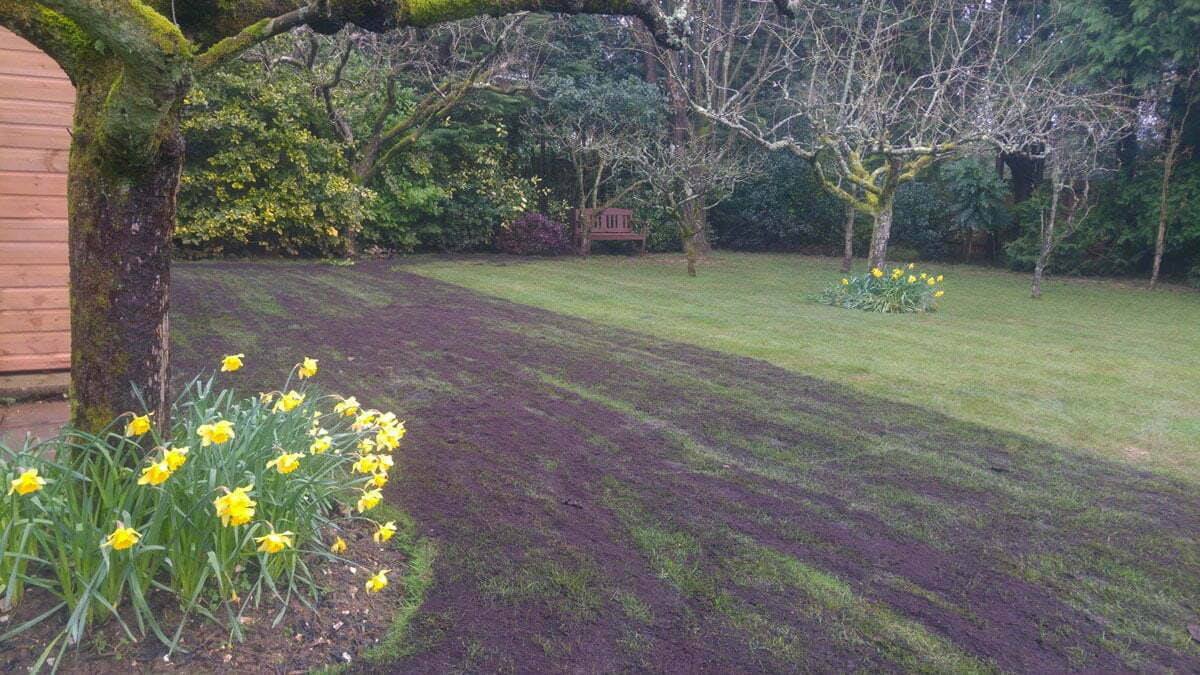
Keep it thin: 5 to 10 mm per application on most lawns, with the leaf tips still poking through when you’ve finished. Grass that is completely buried can’t make food from sunlight, so it yellows or dies off under the dressing.
Deep hollows are filled in stages: no more than about a centimetre at a time, with the next layer going on once the grass has grown through the last one. Couch and kikuyu grow up through dressing quickly. Soft-leaf buffalo such as Sir Walter, and zoysia, prefer a lighter touch.
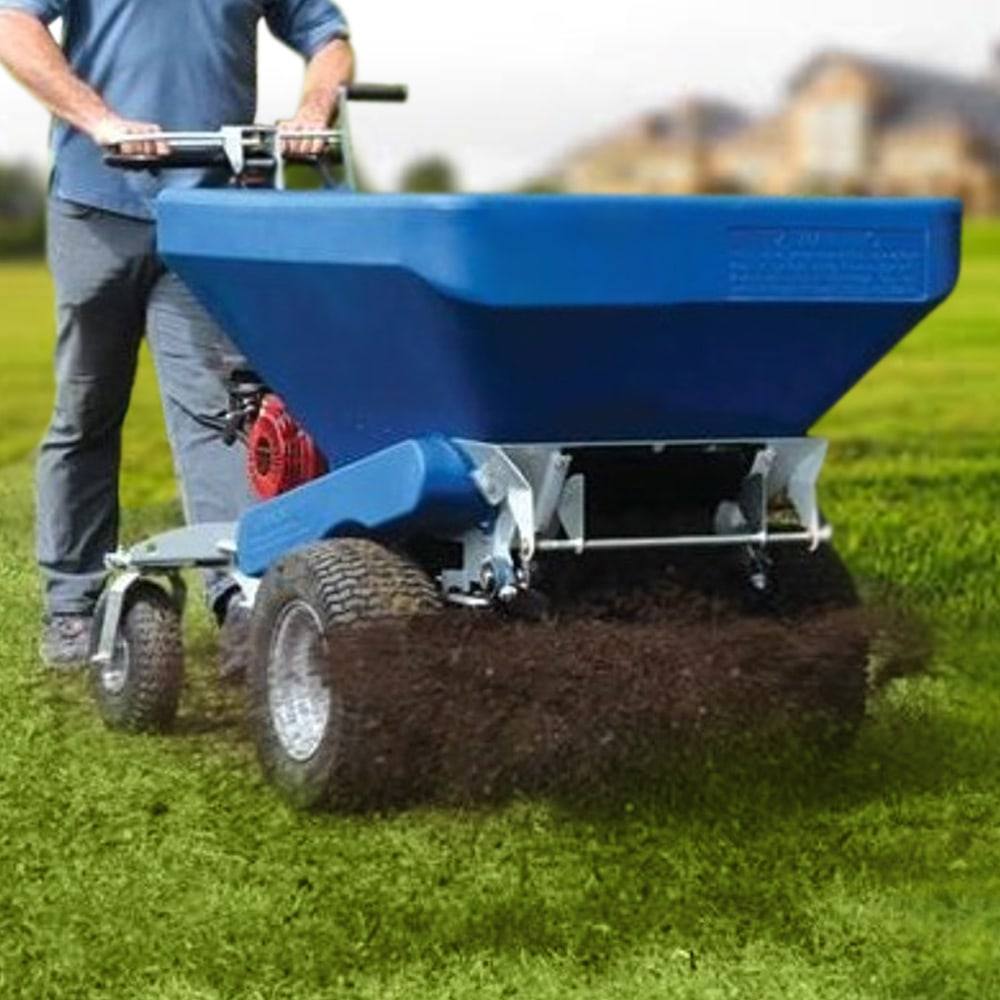
A barrow and shovel tend to leave heaps in some places and almost nothing in others. Our ECOLAWN 250 and Metermatic top dressers meter out a consistent depth across the whole lawn, and we then work the dressing into the low spots with levelling rakes.
Feeding and watering in the weeks afterwards
The first fortnight decides how quickly the lawn recovers.
- Water lightly and often at first. A short watering most days keeps the dressing moist while new shoots push through. After a week or two, switch to deeper, less frequent watering so the roots follow the water down. Our guide to getting more from the water you give your lawn explains how.
- Hold off mowing until the grass is back through the dressing, usually a week or two in warm weather. Raise the mower a notch for the first couple of cuts: the new surface scalps easily, and sand left in the leaf blunts the blades.
- Top up with a liquid feed three or four weeks later if the colour needs a lift.
After that, the lawn goes back onto a normal feeding program. Most home lawns in South East Queensland do well on three or four slow-release feeds between spring and autumn, roughly every eight to ten weeks through the growing season, with light liquid feeds in between for hungry grasses like couch and kikuyu. Our guide to lawn fertilisation covers fertiliser types and timing, and our lawn fertilising service can take it off your hands.
When to do it in South East Queensland
Couch, kikuyu, buffalo and zoysia all grow hardest from spring to early autumn, so that’s when both jobs pay off. Spring into early summer, roughly September to December, is the best window. The soil is warm, the grass grows through the dressing quickly, and the fertiliser gets used rather than sitting idle.
- Once a year suits most lawns. A very uneven lawn, or one you’re building up in stages, may need a second, lighter dressing in late summer, before growth slows in autumn.
- Skip winter. With growth almost stopped, the dressing can smother the grass for weeks, and the lawn can’t use much of the fertiliser.
- Avoid heatwaves and dry spells. Don’t feed a lawn that is already wilting, and don’t bury heat-stressed grass under fresh dressing.
- Check the forecast. A heavy storm straight after spreading can wash dressing and fertiliser off slopes and into the gutter.
Doing it yourself, or getting it done
A small, flat lawn can be fed and dressed by hand over a weekend, as long as you’re ready to barrow plenty of material around the yard: a 1 cm layer takes about a cubic metre for every 100 square metres of lawn. Bigger lawns, uneven yards and lawns that also need scarifying or coring are where the right machinery and some experience save a lot of sweat and wasted material.
If you’d rather have it done for you, our lawn top dressing service reaches homes up to 100 km from our Beenleigh base, so Logan, the Redlands, Ipswich, Brisbane’s southside, the Gold Coast and the Tweed are all in range. We start with a free onsite check of the soil, the thatch and the levels, then tell you which steps your lawn needs, in what order and for what price, before anything is booked in.