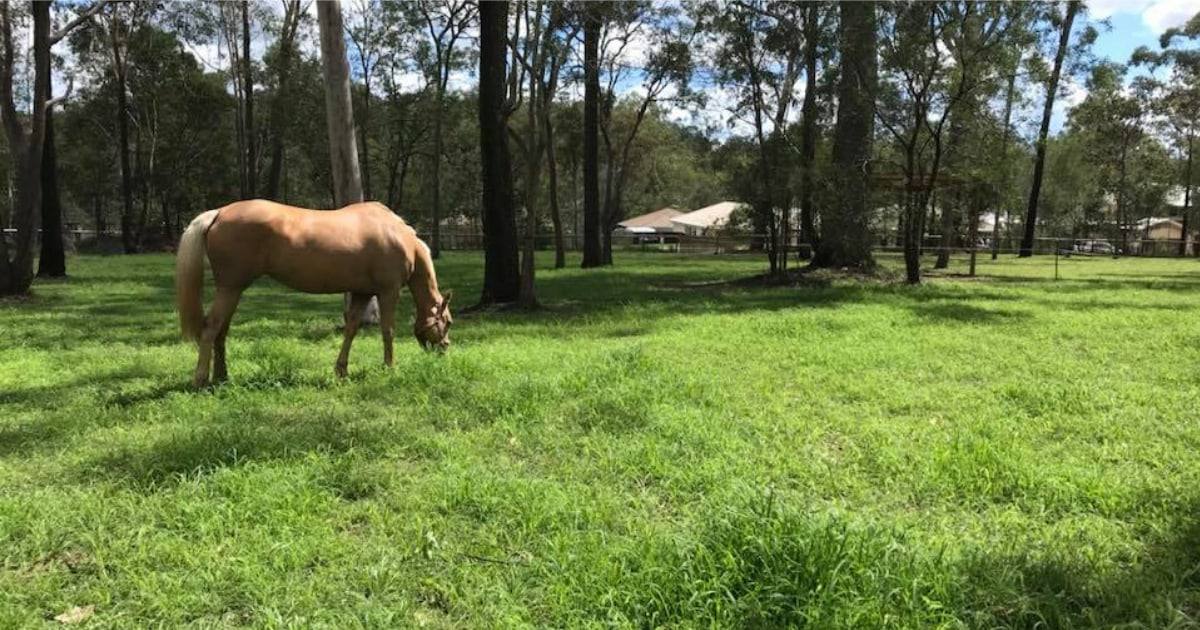
4 tips to maintain your horse paddock in South East Queensland
A well-kept paddock feeds your horses better and costs less to run. These four habits, from picking up manure to keeping water moving, make the biggest difference on acreage in South East Queensland.
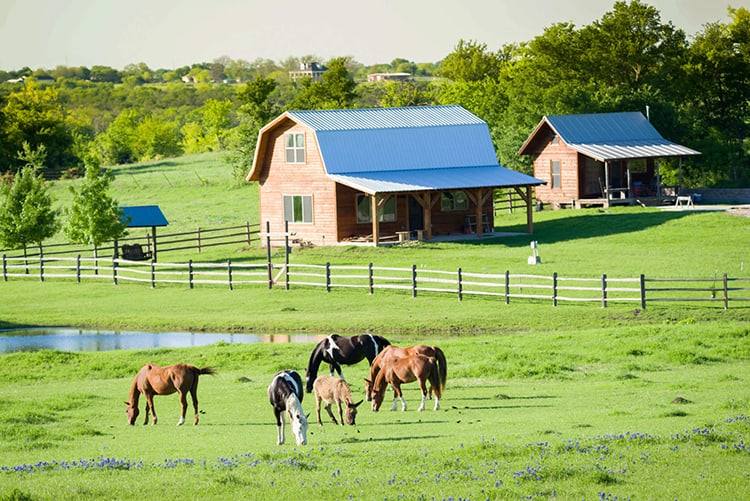
A paddock is more than somewhere to turn the horses out. It’s their feed, their exercise yard and, for many horses, where they spend most of the day. Look after it and they graze more evenly, stay settled and need less hay. Let it slide and the same problems turn up on almost every block: sour patches around the dung, ground grazed to dirt, weeds moving in and gateways that turn to mud. Most of that can be prevented with a few regular habits, and the bigger jobs are what our horse paddock maintenance service is for.
Here are the four habits that matter most.
1. Pick up the droppings
Horses are fussy about where they eat. They’ll graze right up to the edge of a manure pile but not over it, so a paddock that’s never cleaned splits into two kinds of ground: closely cropped “lawns” the horses keep coming back to, and long, rank “roughs” around the dung that they won’t touch. Over time the lawns get grazed bare and the roughs become a nursery for weeds.
Droppings also carry worm eggs. The larvae hatch in the manure and move onto the surrounding grass, so a dirty paddock keeps reinfecting the horses that graze it.
- Pick up manure once or twice a week, and more often in small paddocks and yards.
- If you harrow instead, do it in hot, dry weather, when sun and heat dry out the spread manure. Harrowing in mild, damp weather can spread worm larvae across the paddock instead of killing them.
- Talk to your vet about worming and faecal egg counts, which work hand in hand with a clean paddock.
2. Don’t let it get overgrazed
Overgrazing is the most common reason paddocks go backwards, and it creeps up quietly. Grass needs leaf to grow. Graze it to the dirt again and again and the plants run out of energy, the roots shrink and bare patches open up. Weeds take those patches first, and once the ground is bare, heavy rain strips the topsoil and wind carries off what’s left.
How much land a horse needs depends on your soil, your rainfall and how much hay you feed. A figure you’ll often hear is about 1.5 acres (roughly 0.6 hectares) per horse, but in a dry year, or on poor or compacted soil, the same paddock may carry fewer horses. If you’re feeding hay year-round just to keep condition on the horses, the paddock is telling you it’s overstocked.
Ways to take the pressure off:
- Rotate. Divide the paddock with electric tape and graze one section while the others rest.
- Watch the height. Move the horses on when the grass is down to about 5 cm, and let it recover to 10 to 15 cm before they go back.
- Use a sacrifice yard in droughts and wet spells, and feed hay there, so the rest of the paddock gets a break.
- Fix bare patches before the weeds do. Aeration and over-seeding after rain gives new grass the best start. Our pasture management guide walks through the whole process.
3. Find and remove poisonous plants
Most horses leave toxic plants alone while there’s plenty of good grass. The danger comes when feed runs short, which is exactly what happens in an overgrazed paddock. Some plants do harm in a single feed; others cause damage slowly over months of nibbling.
In South East Queensland, keep an eye out for:
- Fireweed, a small daisy with bright yellow flowers that spreads quickly into thin pasture, particularly through the cooler months.
- Crofton weed, a shrubby weed of creek banks and shady gullies, known to cause lung damage in horses.
- Garden plants along fences and around the house, such as oleander, which is highly toxic.
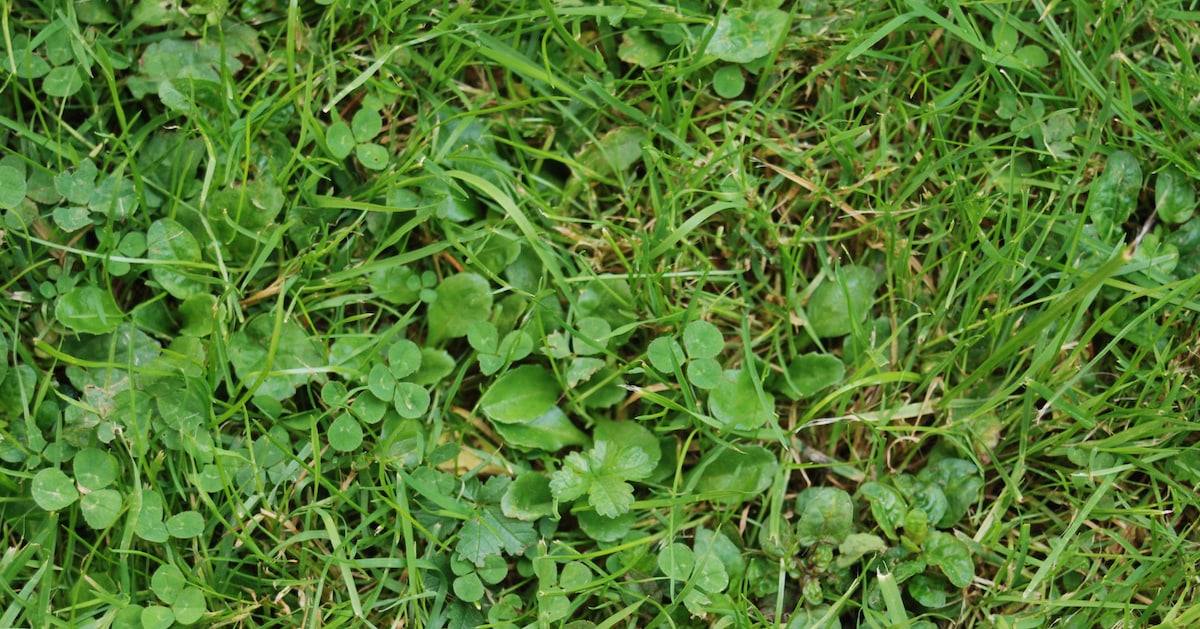
If you’re not sure what something is, take a sample to your local council or a rural supplier for identification, or ask your vet. Hand-pull the odd plant before it sets seed, wearing gloves, and bag them rather than leaving them lying in the paddock. Larger infestations usually need spot spraying or wick wiping, followed up season after season, because new seed keeps arriving. Our weed control service can help with identification and treatment. The best long-term defence is still tip 2: thick, healthy pasture leaves weeds less room to get started.
4. Keep water moving off the paddock
Standing water does more damage than it looks. Wet ground pugs badly under hooves, turning gateways, troughs and feed areas into deep mud that sets like concrete when it dries. Grass can’t survive being waterlogged for long, and horses that stand in mud day after day are more prone to hoof and skin problems.
Good drainage starts with a walk around the paddock after heavy rain, when you can see exactly where water sits and where it runs:
- Clear drains and ditches so water has somewhere to go, and check them again after big storms.
- Remove fallen trees and branches that block natural flow paths.
- Harden the high-traffic spots. A compacted gravel pad at gateways, troughs and feeders stops the worst of the pugging.
- Open up compacted ground. A lot of the water lying on paddocks here isn’t a drainage problem at all. It’s hard, packed soil that won’t let rain soak in. Aeration fractures that layer so the paddock takes in more of the rain it gets, and it’s the same kind of work we do when aerating acreage lawns.
- Level hollows and wheel ruts where water collects, either with a light grade or a top dressing of soil.
When to call in the machinery
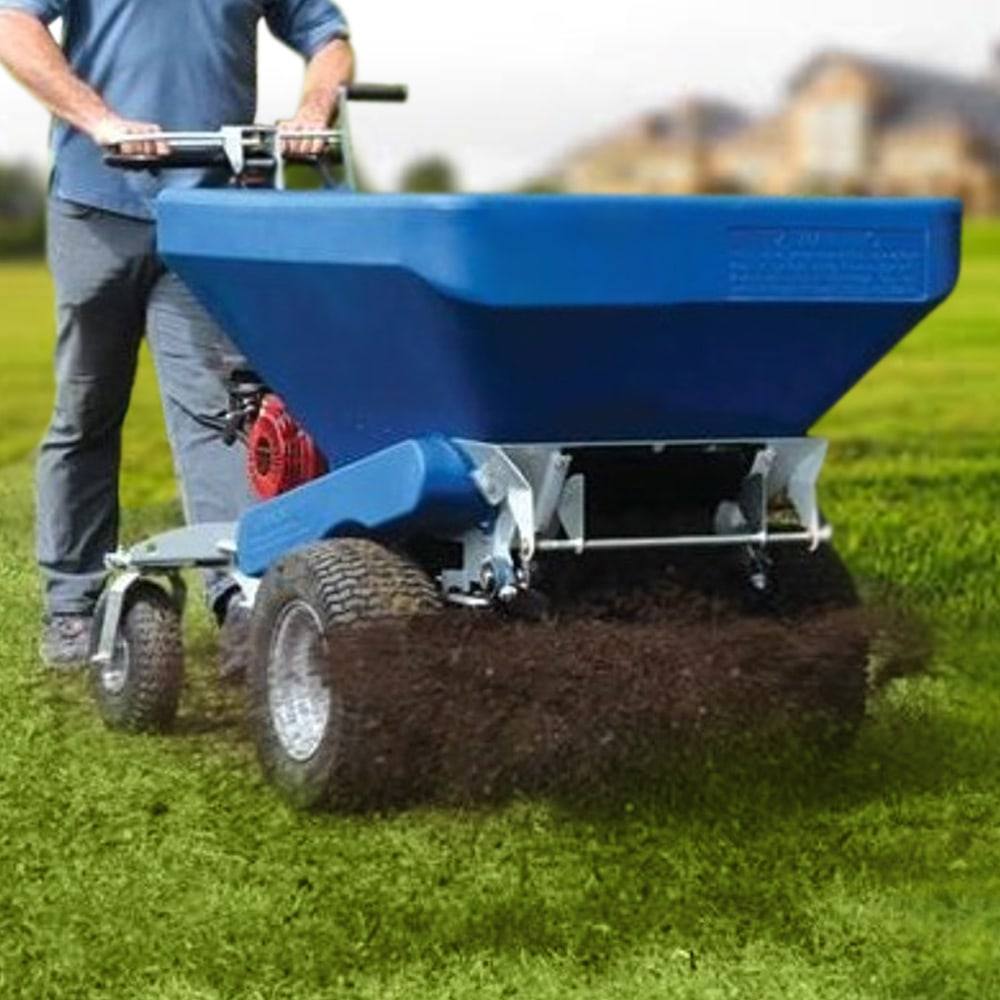
All four of these tips start with you, and most of the day-to-day work is simple. Some jobs, though, go much faster and turn out much better with the right equipment: aerating a whole paddock after rain, stick raking and sweeping away fallen timber and old manure, levelling uneven ground, and seeding and fertilising bare areas at the right rate.
Our horse paddock maintenance service takes on those jobs for acreage within 100 km of Beenleigh. It starts with a free onsite check: we walk the paddock with you, look at the soil, the pasture and how the horses use it, and lay out the work step by step with a firm price. Jobs start from $220.